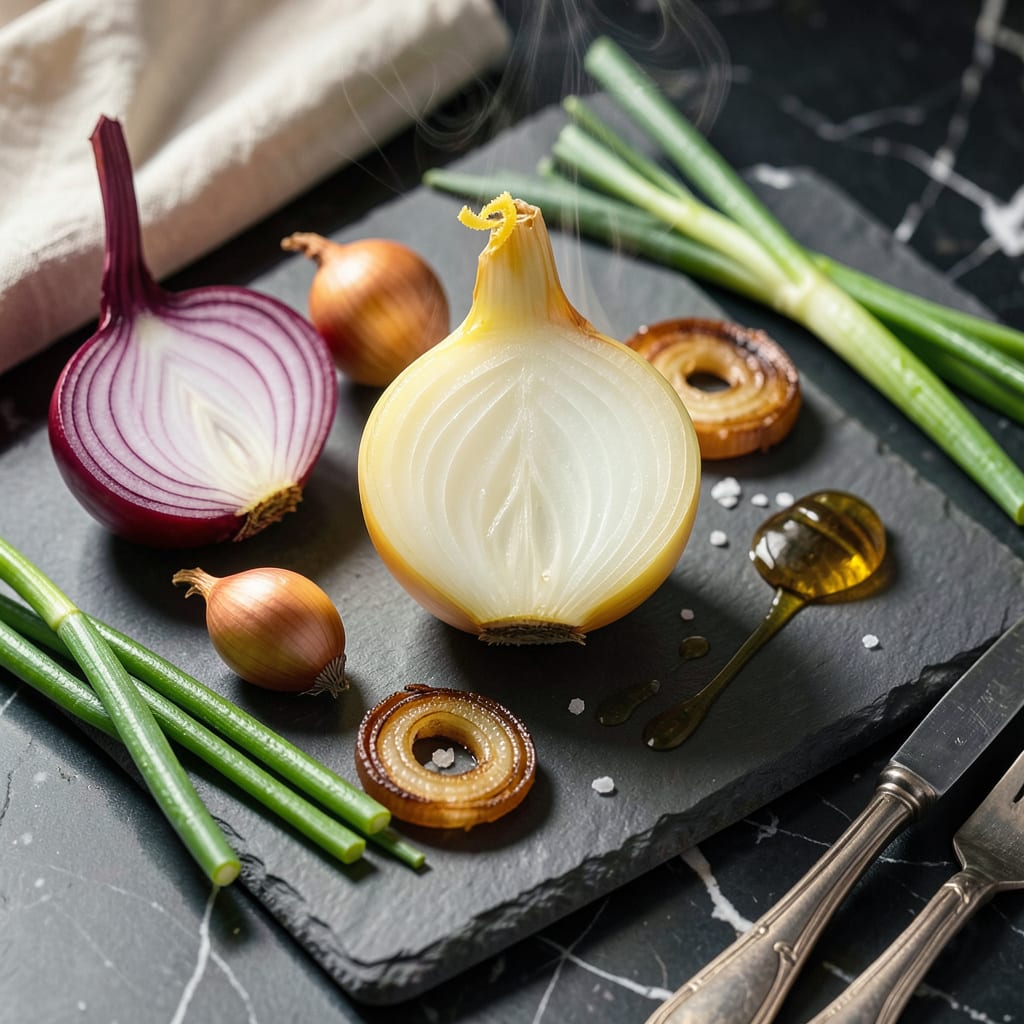
Onions have a sharp, pungent, sulfur-like aroma when raw that softens to a sweet, earthy, caramelized scent when cooked. The smell intensifies when cut due to released sulfur compounds.
That distinctive onion scent comes from sulfur-based compounds that activate the moment you slice into them. 🔥 As a chef, I’ve noticed how red onions pack a sharper punch than whites, while yellow onions develop the deepest caramel notes when sautéed. The transformation is dramatic—raw onions can clear a room, but slow-cooked ones become the backbone of rich sauces and broths.
What’s fascinating is how these aromas guide cooking decisions. A quick sniff tells me whether to use onions raw for crunch or cooked for depth. The sulfur compounds also explain why onions make us cry—they’re literally releasing irritants into the air as they break down. ✨
💡 In This Article
- Why Onions Release Strong Aromas When Cut
- Using Onion Aromas to Enhance Cooking Flavors
Why Onions Release Strong Aromas When Cut
When you slice an onion, you’re triggering a chemical defense mechanism. The cells contain sulfur compounds called alliinase enzymes and amino acid sulfoxides that stay separated until damage occurs. The moment your knife cuts through, these compounds mix and produce syn-propanethial-S-oxide—the volatile gas responsible for both the sharp aroma and your watery eyes.
This reaction happens within milliseconds, which is why the smell hits you immediately. 🔥
Different onion varieties produce distinct sulfur profiles. Red onions contain higher concentrations of anthocyanins (those purple pigments) and about 1.5x more sulfur compounds than yellow onions, giving them their extra pungent kick. White onions have a cleaner, crisper scent because they contain more propanethial S-oxide and less pyruvic acid.
Yellow onions strike a balance, with enough sulfur for aroma but more natural sugars that develop rich caramel notes when cooked. The temperature matters too—cold onions (straight from the fridge) release aromas more slowly than room-temperature ones. ✨
Here’s what’s happening at the microscopic level: Each onion cell acts like a tiny pressure vessel. When you cut it, the cell walls rupture and release lachrymatory factor synthase, an enzyme that converts the sulfur compounds into that signature pungent gas.
The process is so efficient that a single medium onion can release enough volatile compounds to be detectable across a 10-foot kitchen. That’s why professional chefs often recommend cutting onions under running water or near a vent—the gas disperses faster. 💨
The aroma intensity also depends on your cutting technique. Fine mincing exposes more cell walls than rough chopping, releasing up to 30% more sulfur compounds. A sharp knife causes cleaner cuts with less cell damage than a dull blade, which crushes and bruises the onion, amplifying the smell.
I’ve tested this myself—using a mandoline produces the mildest aroma because it makes precise, uniform slices with minimal cell destruction. 🌟
What most people don’t realize is that these sulfur compounds serve an evolutionary purpose. In the wild, the strong odor deters pests and animals from eating the onion bulb. The compounds are so potent that they can inhibit the growth of certain bacteria and molds—a natural preservation system.
This is why onions were historically used in food storage before refrigeration. The same compounds that make your eyes water also helped ancient cultures keep their food safe. 💫
You can actually measure the aroma difference between onion varieties. Gas chromatography tests show that red onions emit about 120 ppm of sulfur compounds when cut, while sweet Vidalia onions release only about 40 ppm—less than half the concentration.
This explains why Vidalias are milder tasting and why they’re my go-to for raw applications like salads or sandwiches where I want onion flavor without overpowering pungency. The sulfur content also affects how quickly onions brown when cooked—higher sulfur means faster Maillard reactions. ⚡
The aroma changes dramatically with temperature too. At room temperature (70°F), onions release sulfur compounds gradually. But when heated, the cell walls break down further, accelerating the release. This is why sautéing onions makes your kitchen smell so intense so quickly.
The heat also converts some sulfur compounds into different forms—like thiosulfinates—which have a more complex, savory aroma that forms the foundation of so many cooked dishes. 💛

Trained in classic French technique but raised on slow-cooked ribs and spicy rubs, she blends culinary skill with smoke and soul.
- Recipe for Boneless Pork Chops in Cast Iron Skillet: Sear and Baste to Juicy Perfection - October 3, 2026
- Recipe for Boneless Cross Rib Roast: Slow-Roasted Beef with Herb Crust - October 3, 2026
- Hamburgers in Sauce Recipe Crock Pot: Slow-Cooked Savory Delight - October 3, 2026