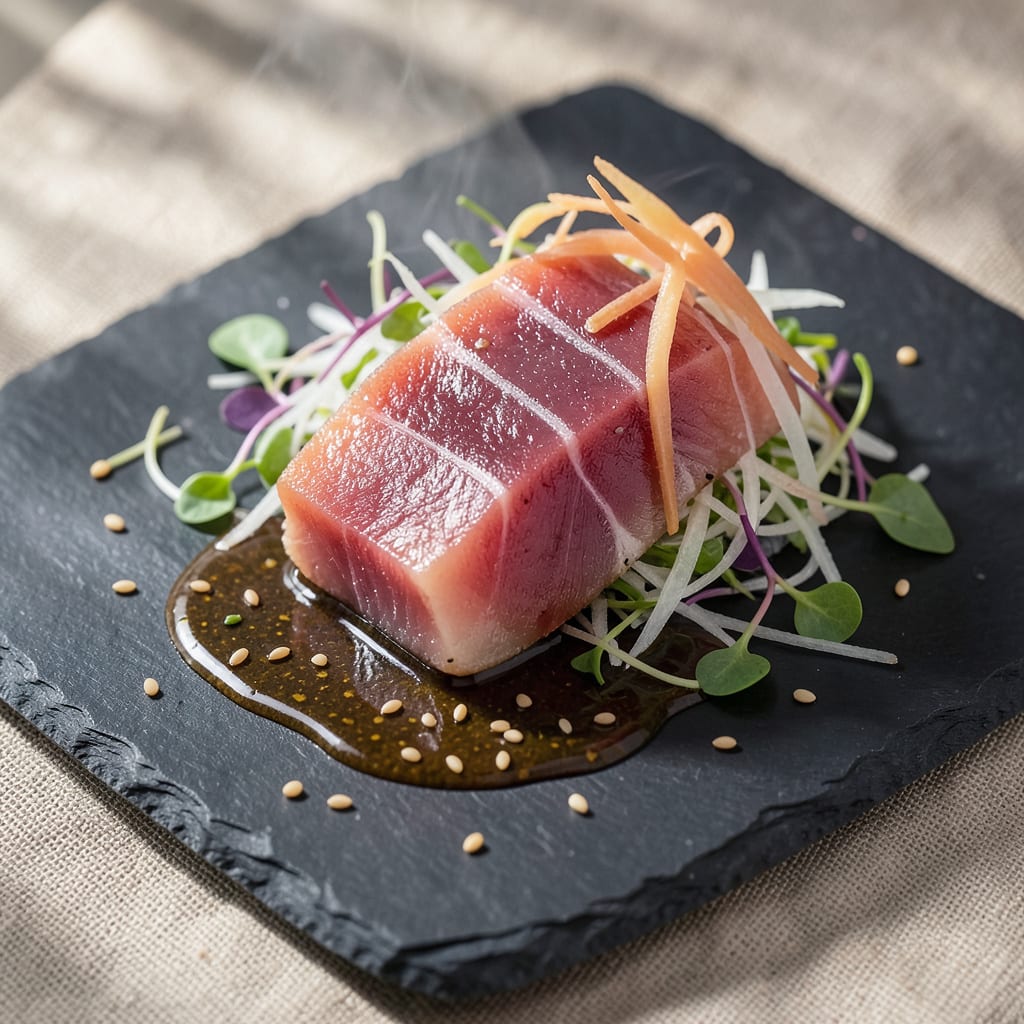
Yes, you can eat raw tuna steak if it’s sushi-grade, properly handled, and frozen first to kill parasites. High-quality, fresh ahi or bluefin tuna is safest, but risks like mercury and bacteria still exist for vulnerable groups.
I’ve worked with raw fish for years, and the key difference between safe and risky consumption comes down to sourcing and preparation. 🔥 Sushi-grade doesn’t just mean “fresh”—it means the fish has been flash-frozen at -4°F for at least 7 days, a process that eliminates parasites like anisakis. Even then, I always recommend checking for bright red color and a clean ocean smell before serving. Pregnant women, young children, and those with compromised immune systems should still exercise caution due to potential mercury levels.
💡 In This Article
- Why Sushi-Grade Tuna Is Safe for Raw Consumption
- How to Select and Prepare Raw Tuna Steak at Home
Why Sushi-Grade Tuna Is Safe for Raw Consumption
The term “sushi-grade” isn’t just marketing—it’s a strict standard backed by science. The FDA mandates that raw fish must be frozen at -4°F (-20°C) for at least 7 days or flash-frozen at -31°F (-35°C) for 15 hours to kill parasites like anisakis and tapeworms. This process crystallizes the parasites’ cellular structure, effectively neutralizing them.
Commercial suppliers use specialized blast freezers that reach these temperatures within minutes, preserving texture while ensuring safety. 🔥
What most people don’t realize is that “fresh” and “sushi-grade” aren’t the same. A tuna steak straight from the ocean might contain live parasites, while sushi-grade has undergone controlled freezing that disrupts their life cycle. The difference is visible under a microscope—parasites in properly frozen fish appear as inert, fractured remnants rather than viable organisms.
This is why reputable sushi restaurants only use fish that’s been frozen, even if it’s labeled “fresh.” ✨
The handling chain matters just as much as the freezing process. Sushi-grade tuna is typically processed on dedicated boats with refrigerated holds, then transported in temperature-controlled containers. At each step, the fish is kept below 41°F (5°C) to prevent bacterial growth.
I’ve visited processing facilities where workers wear gloves and use sanitized tools to portion the fish—this level of care is what separates sushi-grade from regular seafood. ⚡
Even with these precautions, not all tuna is equal. Bluefin and ahi (yellowfin) are preferred for raw consumption because their higher fat content (about 12-15%) makes them more resistant to spoilage than leaner varieties. The fat acts as a natural preservative, while the dense muscle structure holds up better to freezing and slicing.
When I select tuna for raw dishes, I look for deep red coloration and marbling—signs of both freshness and fat content. 💫
Here’s what happens when you skip proper freezing: Live parasites can survive in your digestive tract, causing symptoms from mild nausea to severe abdominal pain. The CDC reports about 1,000 cases annually in the U.S. from raw seafood consumption.
Properly frozen sushi-grade tuna reduces this risk to near zero, which is why I never compromise on sourcing—even for home preparation. 🌟
For those concerned about mercury, the EPA recommends limiting tuna consumption to 4-12 ounces per week depending on the variety. Bluefin tends to have higher mercury levels than skipjack, so I often suggest mixing varieties if you’re eating raw tuna regularly.
The freezing process doesn’t affect mercury content, which is why portion control remains important even with sushi-grade products. 💛

Trained in classic French technique but raised on slow-cooked ribs and spicy rubs, she blends culinary skill with smoke and soul.
- Recipe for Boneless Pork Chops in Cast Iron Skillet: Sear and Baste to Juicy Perfection - October 3, 2026
- Recipe for Boneless Cross Rib Roast: Slow-Roasted Beef with Herb Crust - October 3, 2026
- Hamburgers in Sauce Recipe Crock Pot: Slow-Cooked Savory Delight - October 3, 2026