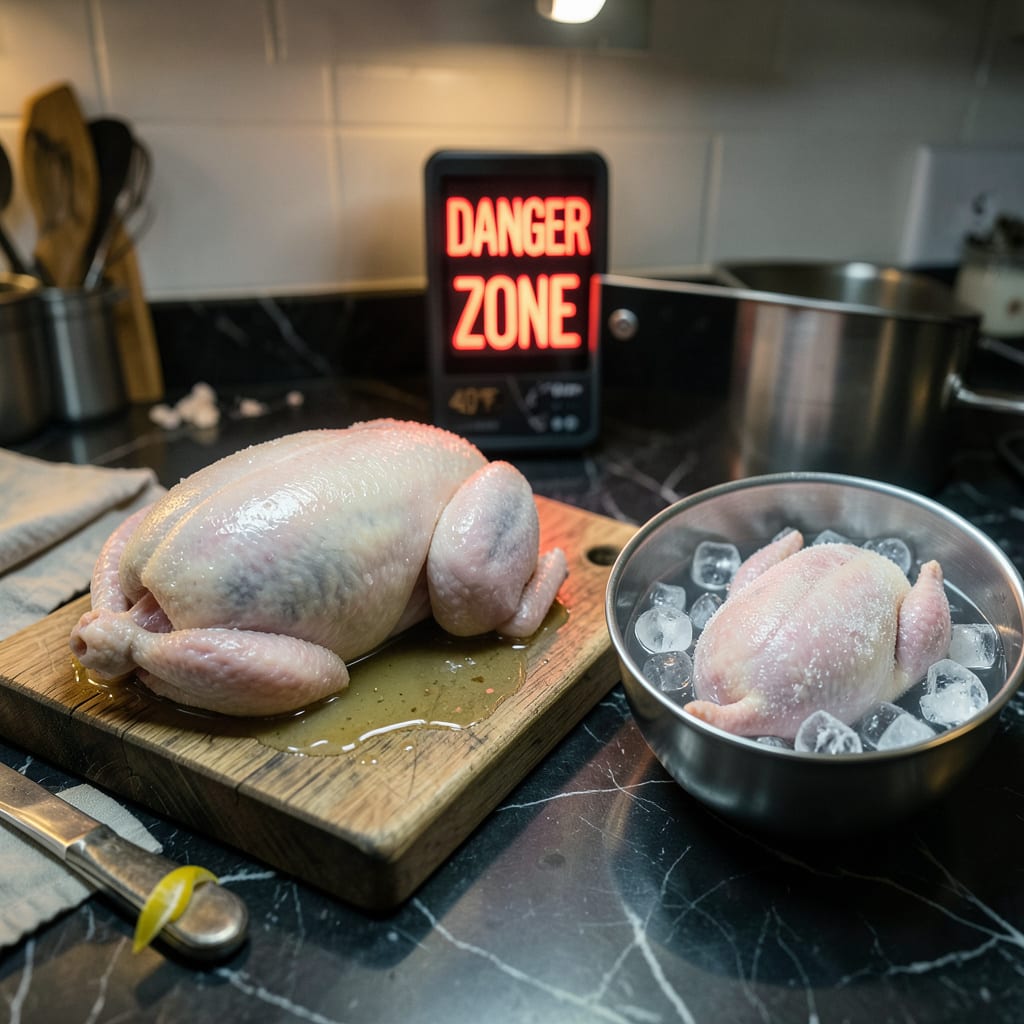
No, leaving frozen chicken out overnight is unsafe. Temperatures between 40°F and 140°F allow bacteria like Salmonella to multiply rapidly, risking foodborne illness. Always thaw chicken safely in the fridge, cold water, or microwave.
This isn’t just about spoilage—it’s about invisible dangers multiplying at room temperature. 🔥 The USDA warns that even small amounts of bacteria can double every 20 minutes in the “danger zone,” turning your chicken into a breeding ground for pathogens before you notice any changes. I’ve seen cases where people assume overnight thawing is harmless because the chicken still looks and smells fine, but that’s exactly when the risk is highest. The fridge method might take longer, but it keeps temperatures consistently below 40°F, where bacterial growth slows dramatically.
💡 In This Article
- Why Overnight Thawing of Frozen Chicken Is Dangerous
- Safe Ways to Thaw Frozen Chicken Quickly and Correctly
Why Overnight Thawing of Frozen Chicken Is Dangerous
The “danger zone” isn’t just a catchy phrase—it’s a scientifically defined temperature range (40°F to 140°F) where bacteria like Salmonella and Campylobacter multiply exponentially. When frozen chicken sits at room temperature (typically 68-72°F), the outer layers thaw first, creating a moist environment perfect for bacterial growth.
These pathogens can double every 20-30 minutes in ideal conditions, turning safe-to-eat chicken into a health hazard within hours. 🔥
What makes overnight thawing particularly risky is the extended time in this danger zone. A 5-pound chicken might take 12+ hours to fully thaw at room temperature, giving bacteria ample time to colonize.
USDA research shows that even if the center remains frozen, the outer 1-2 inches can reach dangerous temperatures long before the interior thaws. Unlike spoilage bacteria that cause obvious odors, pathogenic bacteria remain invisible and odorless. ✨
The thawing process itself creates ideal conditions for contamination. As ice crystals melt, they release moisture that spreads bacteria across the chicken’s surface. This liquid can also drip onto countertops or other foods, creating cross-contamination risks.
Studies from the Journal of Food Protection found that chicken thawed at room temperature had 100x more bacteria than properly refrigerated samples after just 4 hours. 💫
Your kitchen’s ambient temperature plays a bigger role than you might think. In summer or warm climates where room temps exceed 75°F, bacterial growth accelerates even faster. The USDA’s Food Safety Inspection Service reports that 24% of foodborne illnesses from poultry come from improper thawing practices.
What’s particularly insidious is that properly cooked chicken can still make you sick if it was contaminated during thawing—heat kills bacteria but doesn’t neutralize all toxins they produce. ⚡
Consider this real-world comparison: Chicken thawed in the fridge at 38°F shows minimal bacterial growth after 24 hours, while the same chicken left on the counter reaches dangerous levels in just 2-4 hours.
The difference comes down to temperature control—your fridge maintains a consistent 35-40°F, while room temperature fluctuates wildly, especially near heat sources like ovens or sunlight. 🌟
The moisture factor can’t be overstated. As chicken thaws, it releases about 5-8% of its weight in liquid—mostly water with dissolved proteins and nutrients that bacteria feast on. This creates what microbiologists call a “nutrient broth” on your countertop.
Even if you cook the chicken thoroughly afterward, any surfaces or utensils that contacted this liquid become potential contamination vectors. 💥
Here’s what most people miss: The bacteria that grow during improper thawing aren’t just on the surface. As the chicken thaws, bacteria migrate inward through the moisture channels, contaminating the entire piece.
This is why simply rinsing the chicken or cooking it extra-long doesn’t guarantee safety—the contamination is now throughout the meat, not just on the exterior. 💫

Trained in classic French technique but raised on slow-cooked ribs and spicy rubs, she blends culinary skill with smoke and soul.
- Recipe for Boneless Pork Chops in Cast Iron Skillet: Sear and Baste to Juicy Perfection - October 3, 2026
- Recipe for Boneless Cross Rib Roast: Slow-Roasted Beef with Herb Crust - October 3, 2026
- Hamburgers in Sauce Recipe Crock Pot: Slow-Cooked Savory Delight - October 3, 2026