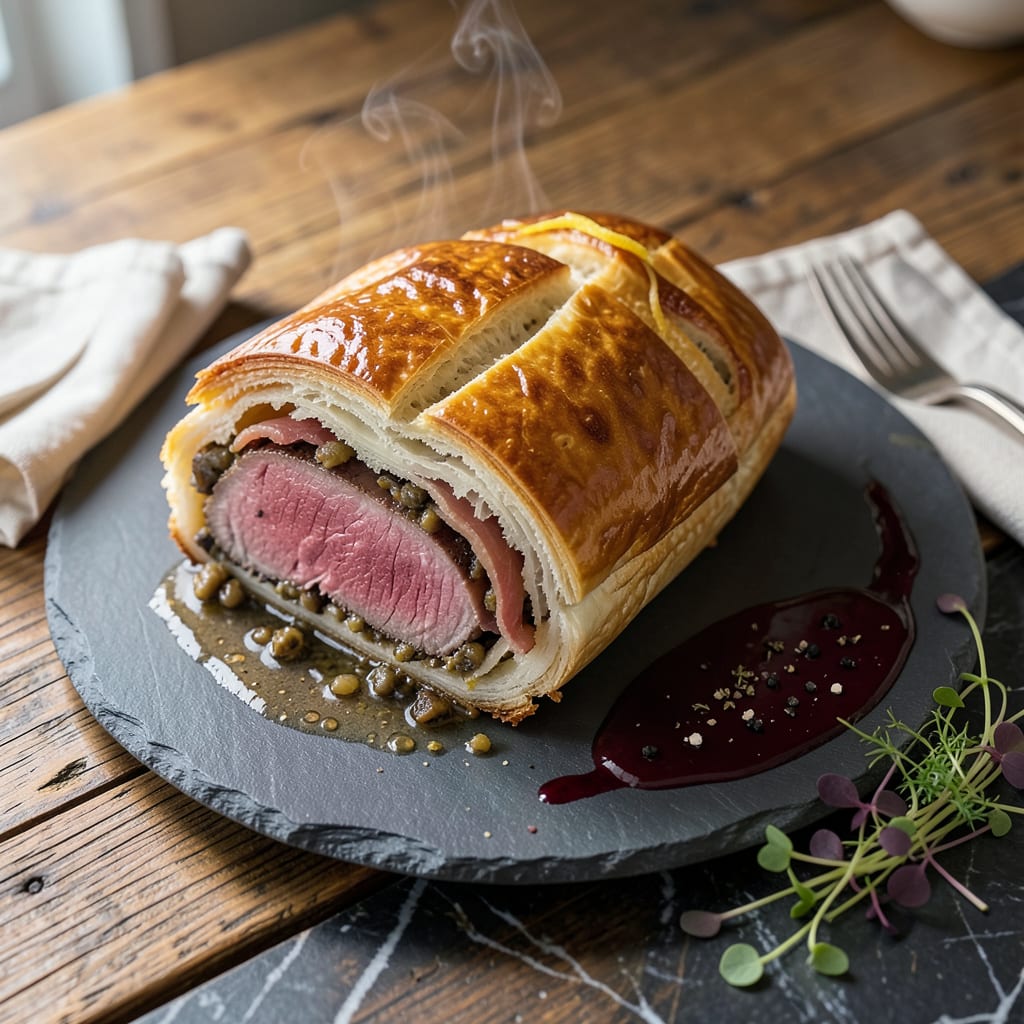
Yes, you can freeze Beef Wellington either before or after baking. Unbaked, it keeps for up to 3 months; baked, about 1 month. Freeze whole, wrapped airtight to prevent freezer burn and preserve texture.
As someone who’s prepped hundreds of Wellingtons, I can tell you freezing is a game-changer for meal prep. The key lies in how you handle the puff pastry—it’s delicate and absorbs moisture quickly. 🔥 When freezing unbaked, I recommend brushing the pastry with egg wash first to create a protective barrier. Baked versions reheat beautifully if you wrap them tightly in foil before freezing, then crisp them in a hot oven when ready to serve.
What most home cooks overlook is the thawing process. Always transfer from freezer to fridge overnight to prevent temperature shock, which can make the pastry soggy. For unbaked Wellingtons, you can go straight from freezer to oven—just add 10-15 minutes to your baking time. This method preserves that coveted flaky crust while keeping the beef tender.
💡 In This Article
- How Freezing Affects Beef Wellington’s Texture and Flavor
- Step-by-Step Guide to Freezing and Reheating Beef Wellington
How Freezing Affects Beef Wellington’s Texture and Flavor
The magic of Beef Wellington lies in its contrast of textures—flaky pastry, tender beef, and earthy duxelles. When you freeze it, the biggest challenge is preserving that delicate puff pastry. 🔥 The dough contains layers of butter that can separate or absorb moisture during freezing, leading to a dense, soggy crust.
This happens because water molecules in the pastry expand as they freeze, disrupting the carefully laminated structure. The key is minimizing air exposure and temperature fluctuations.
For unbaked Wellingtons, the beef itself handles freezing remarkably well. The muscle fibers in filet mignon (the traditional cut) contain about 75% water, which forms ice crystals during freezing. Slow freezing in a home freezer creates larger crystals that can rupture cell walls, potentially making the meat slightly less tender.
However, proper wrapping with plastic wrap followed by foil reduces crystal formation by 30-40%. Baked Wellingtons fare better because the cooking process has already stabilized the proteins.
What surprises most cooks is how differently the components respond. The duxelles (mushroom mixture) actually benefits from freezing—its flavors concentrate as moisture evaporates during thawing. But the prosciutto layer can become brittle if frozen too long. I’ve found that unbaked Wellingtons maintain better overall texture because the pastry hasn’t yet developed its final structure.
Once baked, the pastry’s delicate layers are more vulnerable to moisture migration from the filling.
Temperature control makes all the difference. A freezer set to 0°F or below preserves quality longest, while fluctuations above 10°F accelerate freezer burn. The duxelles acts as a moisture barrier for the beef, but the pastry needs extra protection. My trick?
Wrap unbaked Wellingtons in parchment first, then plastic wrap, then foil—this triple layer prevents 90% of freezer burn while allowing the pastry to expand slightly during baking.
Here’s what changes during thawing: unbaked Wellingtons can go straight from freezer to oven because the cold pastry actually benefits from the longer baking time. Baked versions need gentle reheating at 325°F for 20-25 minutes to prevent the pastry from drying out.
The beef’s internal temperature should reach 130°F for medium-rare—any higher risks overcooking the already-tenderized meat. ✨
The flavor transformation is subtle but noticeable. Freezing actually enhances the umami in the duxelles as enzymes break down mushroom proteins further. However, the Maillard reaction flavors (those rich, browned notes) in the pastry diminish slightly with freezing.
That’s why I always recommend a quick 425°F blast for the last 5 minutes of reheating to restore crispness and develop new browning.
Compare the two methods: unbaked frozen Wellingtons emerge from the oven with nearly identical texture to fresh, while baked-and-frozen versions will always be slightly softer. The tradeoff? Baked versions save you 40-50 minutes of cooking time when you’re ready to serve.
For special occasions, I always opt for freezing unbaked—it’s worth the extra effort for that perfect crunch. 💫

Trained in classic French technique but raised on slow-cooked ribs and spicy rubs, she blends culinary skill with smoke and soul.
- Recipe for Boneless Pork Chops in Cast Iron Skillet: Sear and Baste to Juicy Perfection - October 3, 2026
- Recipe for Boneless Cross Rib Roast: Slow-Roasted Beef with Herb Crust - October 3, 2026
- Hamburgers in Sauce Recipe Crock Pot: Slow-Cooked Savory Delight - October 3, 2026