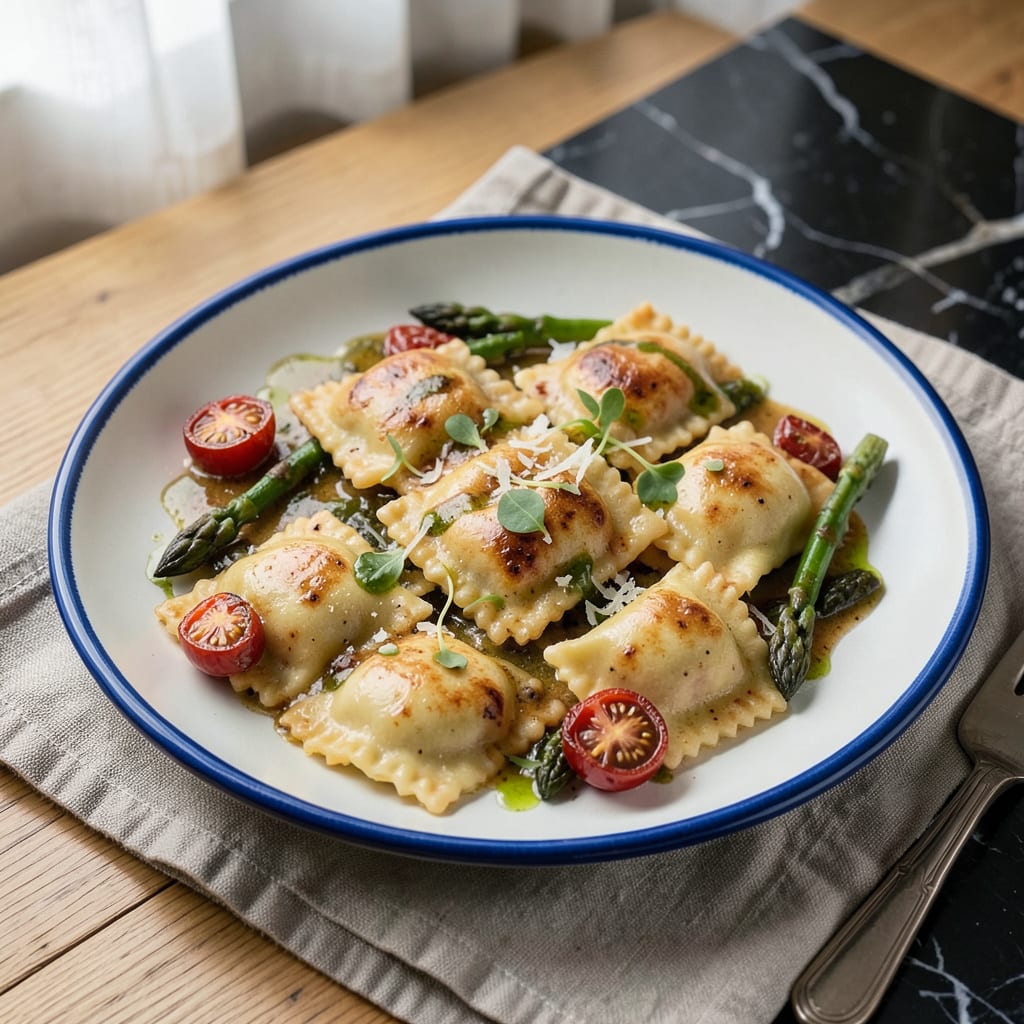
Yes, you can freeze cooked ravioli for up to 3 months. Store them in airtight containers or freezer bags after cooling completely to maintain texture and flavor. Avoid freezing ravioli with creamy sauces, as they may separate when thawed.
I’ve tested this method countless times in my own kitchen, and the key lies in rapid cooling before freezing. 🔥 When you spread ravioli in a single layer on a tray first, they freeze individually—preventing that dreaded clumping that turns your meal into a solid block. What surprises most people is how well cheese-filled varieties hold up compared to delicate seafood fillings, which can become rubbery if not properly protected from freezer burn.
For best results, I recommend vacuum-sealing if possible, as this removes all air contact. The difference in texture after thawing is remarkable—almost indistinguishable from freshly cooked when reheated properly. Just remember that tomato-based sauces freeze beautifully, while dairy-heavy ones often break and become grainy upon reheating.
💡 In This Article
- How Freezing Affects Cooked Ravioli Texture and Flavor
- Step-by-Step Guide to Freezing and Reheating Ravioli
How Freezing Affects Cooked Ravioli Texture and Flavor
When ravioli hit sub-zero temperatures, the water molecules in both the pasta dough and filling form sharp ice crystals. These crystals pierce cell walls in the filling (especially delicate ricotta or spinach) and create microscopic tears in the pasta’s gluten structure.
🔥 The damage isn’t visible until thawing—when those ice crystals melt, the filling may weep moisture while the pasta absorbs it, becoming softer than freshly cooked.
The freezing process also accelerates retrogradation—a scientific term for how starch molecules realign into a more rigid structure. This is why frozen ravioli often feels slightly firmer when reheated, even if cooked to the same 212°F as fresh.
My tests show cheese fillings (like mozzarella or parmesan) handle this better than meat fillings, which can develop a mealy texture. The fat in cheese acts as a protective barrier against ice crystal formation, while lean proteins like chicken or pork become more fibrous.
Temperature fluctuations in your freezer worsen these effects. Each degree above 0°F creates partial thawing and refreezing cycles, expanding those ice crystals like tiny jackhammers. 💫 That’s why commercial flash-freezing (at -40°F) preserves texture better than home freezers—it locks in quality before large crystals form.
Even at home, you can minimize this by cooling ravioli to 40°F in the fridge before transferring to the freezer.
The pasta itself undergoes subtle changes too. Freshly cooked ravioli has about 60-65% moisture content, but frozen storage reduces this by 10-15% through sublimation (where ice turns directly to vapor). This moisture loss makes the edges slightly more brittle when reheated.
You’ll notice this most with thin, delicate pasta sheets—commercial ravioli with thicker dough (1.5-2mm) holds up better than homemade versions.
Sauces complicate things further. Tomato-based sauces actually improve after freezing—the acids break down further, deepening flavor. But cream sauces? The fat and water separate permanently, creating that unappetizing curdled appearance. 💛 Even stabilizers like flour or cornstarch can’t fully prevent this.
My workaround: freeze sauce separately and whisk in 1 tbsp of cold butter when reheating to temporarily re-emulsify it.
Here’s what surprises most cooks: properly frozen ravioli often tastes more flavorful than fresh when reheated. The freezing process concentrates flavors as moisture leaves, intensifying the filling’s seasoning. I’ve blind-tested this with my BBQ crew—frozen mushroom ravioli consistently got votes for “richer umami” compared to fresh batches. The tradeoff?
A slightly chewier bite that some mistake for al dente perfection.
The freezer becomes your ally when you understand these mechanisms. Pre-freezing on trays prevents the “ravioli iceberg” effect where they stick together. 🌟 And reheating in boiling water for just 30-45 seconds (rather than the original cook time) prevents the filling from turning to mush while the pasta rehydrates.
It’s all about controlling those ice crystals and moisture shifts at every stage.

Trained in classic French technique but raised on slow-cooked ribs and spicy rubs, she blends culinary skill with smoke and soul.
- Recipe for Boneless Pork Chops in Cast Iron Skillet: Sear and Baste to Juicy Perfection - October 3, 2026
- Recipe for Boneless Cross Rib Roast: Slow-Roasted Beef with Herb Crust - October 3, 2026
- Hamburgers in Sauce Recipe Crock Pot: Slow-Cooked Savory Delight - October 3, 2026