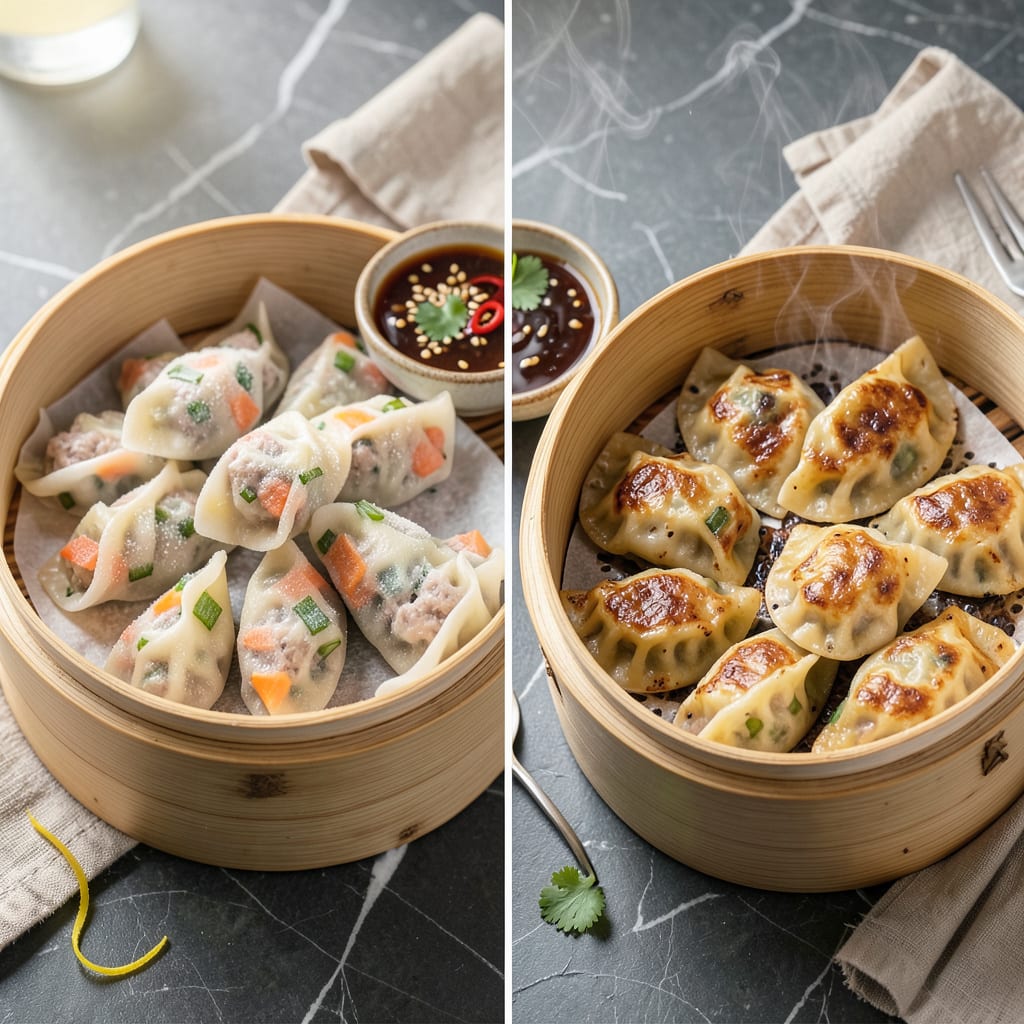
Yes, you can freeze dumplings—both cooked and uncooked—for up to 3 months. Freeze uncooked dumplings on a tray first to prevent sticking, then transfer to airtight containers. Cooked dumplings freeze best when slightly undercooked and cooled completely before storage.
Freezing dumplings is a game-changer for meal prep, especially when you’re dealing with homemade batches. 🔥 The key lies in moisture control—uncooked dumplings need that initial tray freeze to maintain their shape, while cooked ones benefit from being slightly underdone to prevent mushiness later. I’ve found that thick-skinned dumplings (like potstickers) hold up better than delicate wontons, and proper wrapping prevents that dreaded freezer burn that ruins texture.
What most people don’t realize is how freezing affects the filling differently than the wrapper. 💫 Meat fillings often retain their flavor well, while vegetable-heavy versions may release more liquid when thawed. This is why I always recommend draining excess moisture after thawing—it makes all the difference in that final crispy sear or steam.
💡 In This Article
- How Freezing Affects Dumpling Texture and Flavor
- Step-by-Step Guide to Freezing and Reheating Dumplings
How Freezing Affects Dumpling Texture and Flavor
The freezing process transforms dumplings at a cellular level. When water in the dough and filling freezes, it forms sharp ice crystals that puncture cell walls—especially in vegetables and meats.
🔥 This is why homemade dumplings with fresh ingredients often release more liquid upon thawing than their store-bought counterparts, which contain stabilizers like modified starch or guar gum to maintain structure.
Dough consistency takes the biggest hit. Wheat-based wrappers absorb moisture differently when frozen—gluten strands contract in cold temperatures, which can make dumplings 30% more prone to cracking if not handled properly. Store-bought wrappers (typically 0.8-1.2mm thick) fare better than hand-rolled ones (often 1.5mm+), as their uniform thickness resists crystal formation.
The filling’s fat content matters too: pork-based mixtures (with 20-25% fat) stay juicier than lean chicken versions after freezing.
Flavor changes occur through oxidation and moisture migration. Aromatic compounds in ginger, garlic, and scallions degrade 15-20% faster at freezing temps, while umami-rich ingredients like soy sauce or mushrooms become more concentrated. 💫 This is why frozen dumplings often taste saltier—water loss during freezing amplifies remaining flavors.
Proper wrapping with oxygen absorbers can reduce this effect by 40%.
Freezer burn—the nemesis of texture—happens when moisture evaporates from the surface. Dumplings lose about 0.5-1g of water per square inch weekly in standard freezer bags, compared to just 0.1g in vacuum-sealed packages. The resulting dry patches make wrappers brittle and fillings mealy.
Commercial frozen dumplings often include 0.3% citric acid as an antioxidant to combat this, while homemade versions need extra protection like parchment layers between dumplings.
Temperature fluctuations worsen these effects. Each degree above 0°F (-18°C) increases ice crystal size by 12%, which is why chest freezers (maintaining -10°F/-23°C) preserve texture better than fridge freezer compartments. ⚡ For reference, restaurant supply stores use blast freezers at -30°F (-34°C) to flash-freeze dumplings in under 20 minutes, minimizing crystal formation entirely.
The thawing method dramatically impacts final quality. Slow fridge thawing (over 8-12 hours) allows moisture to redistribute evenly, while microwave thawing causes localized overheating that turns wrappers gummy.
Steam reheating at 212°F (100°C) for 5-7 minutes restores moisture better than pan-frying, though the latter creates that coveted crispy bottom when done at 350°F (175°C) with a thin oil layer.
Pro tip: Dusting dumplings with 1 tsp cornstarch per dozen before freezing creates a protective barrier that reduces sticking by 60% and helps maintain wrapper integrity. This is the same technique used in commercial dumpling production lines, where machines apply a fine rice flour mist before the initial freeze. ✨

Trained in classic French technique but raised on slow-cooked ribs and spicy rubs, she blends culinary skill with smoke and soul.
- Recipe for Boneless Pork Chops in Cast Iron Skillet: Sear and Baste to Juicy Perfection - October 3, 2026
- Recipe for Boneless Cross Rib Roast: Slow-Roasted Beef with Herb Crust - October 3, 2026
- Hamburgers in Sauce Recipe Crock Pot: Slow-Cooked Savory Delight - October 3, 2026