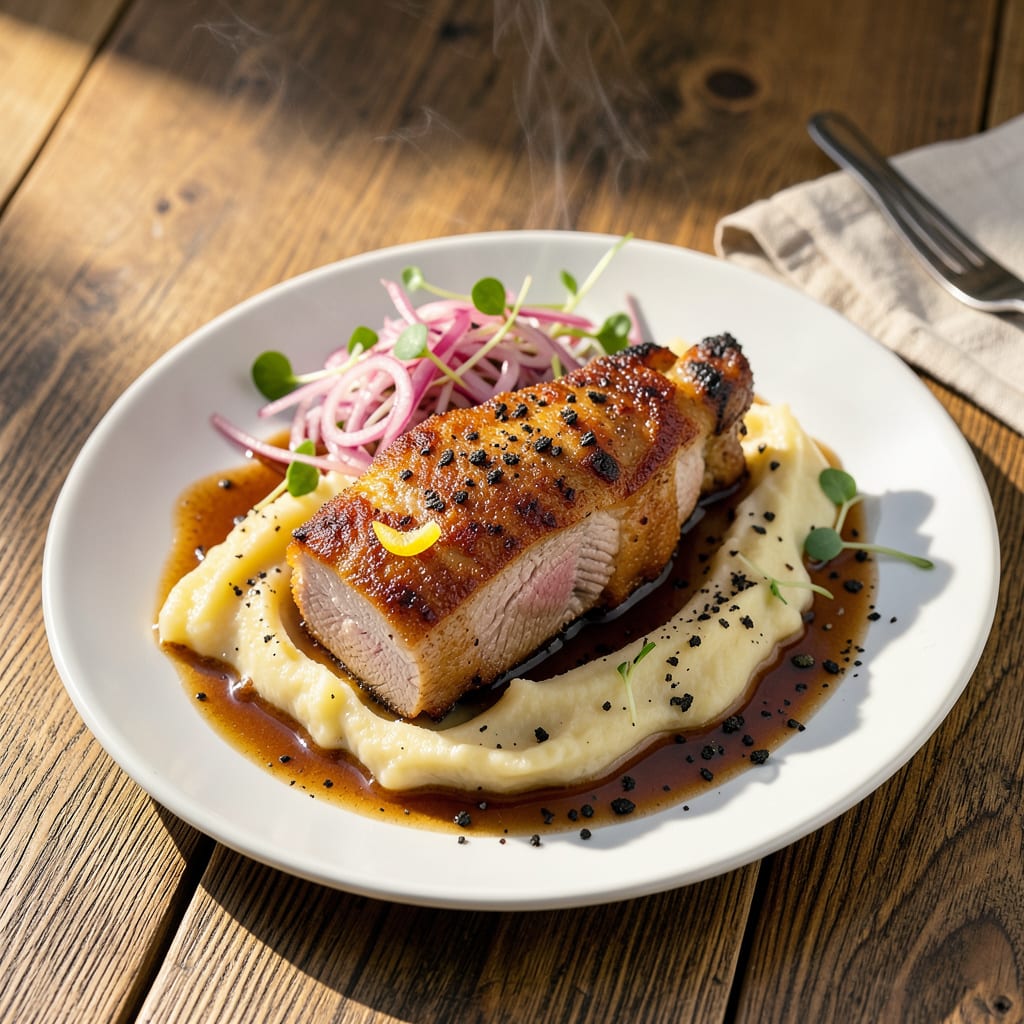
Fry pork chops at 350–375°F for a golden, crispy crust while keeping the inside juicy. Use a meat thermometer to ensure they reach 145°F internally before resting for 3–5 minutes.
This temperature range isn’t arbitrary—it’s the sweet spot where the Maillard reaction transforms surface proteins into that irresistible brown crust, while the inside stays tender. 🔥 I’ve found that anything below 350°F risks soggy breading, and above 375°F you’ll burn the exterior before the center cooks through. The 145°F internal mark is your safety net, ensuring perfect doneness without drying out the meat. What most home cooks miss is how resting redistributes those precious juices—skip this step and you’ll lose all that moisture to your cutting board.
💡 In This Article
- Why Frying Temperature Matters for Pork Chops
- Step-by-Step Guide to Frying Pork Chops at Home
Why Frying Temperature Matters for Pork Chops
That perfect golden crust on your pork chop isn’t just about looks—it’s a complex chemical reaction called the Maillard process. At 350–375°F, amino acids and reducing sugars on the meat’s surface transform into hundreds of new flavor compounds.
This temperature range is hot enough to create that deep brown color and crispy texture, but not so intense that it burns before the inside cooks through. 🔥
Below 350°F, you’re in the danger zone for soggy results. The breading absorbs oil instead of crisping, and the meat steams rather than sears. I’ve seen this firsthand when testing batches—chops fried at 325°F came out pale and greasy, with a texture more like wet cardboard than crispy perfection.
On the flip side, cranking the heat above 375°F risks carbonizing the exterior while leaving the center undercooked, especially with thicker cuts.
The protein structure of pork begins denaturing around 140°F, which is why we aim for that 145°F internal mark. This gentle coagulation keeps the meat tender while ensuring food safety. What’s fascinating is how the temperature gradient works—you want that steep difference between the 375°F surface and 145°F center to create textural contrast.
That’s the secret to juicy meat with a satisfying crunch. ✨
Oil choice plays a crucial role too. Vegetable oil (smoke point 400°F) or peanut oil (450°F) can handle the heat without breaking down. I always use a candy thermometer clipped to the pan—it’s the only way to maintain that precise 350–375°F window.
The oil temperature will drop when you add cold chops, so preheating is non-negotiable.
Here’s what happens at the cellular level: The intense heat causes moisture near the surface to rapidly vaporize, creating microscopic pockets that make the crust crispy.
Meanwhile, collagen in the meat begins converting to gelatin at around 160°F, which is why that 3–5 minute rest is so critical—it allows this transformation to complete while the juices redistribute. 💫
Thickness matters too. A 1-inch chop needs about 4–5 minutes per side, while a ½-inch cut might only require 2–3 minutes. The key is maintaining that oil temperature—if it dips below 325°F, you’re frying in the danger zone where breading turns to a greasy sponge.
That’s why I recommend frying in small batches to avoid overcrowding the pan.
Pro tip: Let your chops sit at room temperature for 15–20 minutes before frying. This prevents the cold center from shocking the hot oil and dropping the temperature too dramatically. I learned this the hard way when my first batch came out unevenly cooked—the center was perfect but the edges were overdone.
Now I treat it like steak: bring it to temp gradually for even results every time. ⚡

Trained in classic French technique but raised on slow-cooked ribs and spicy rubs, she blends culinary skill with smoke and soul.
- Recipe for Boneless Pork Chops in Cast Iron Skillet: Sear and Baste to Juicy Perfection - October 3, 2026
- Recipe for Boneless Cross Rib Roast: Slow-Roasted Beef with Herb Crust - October 3, 2026
- Hamburgers in Sauce Recipe Crock Pot: Slow-Cooked Savory Delight - October 3, 2026