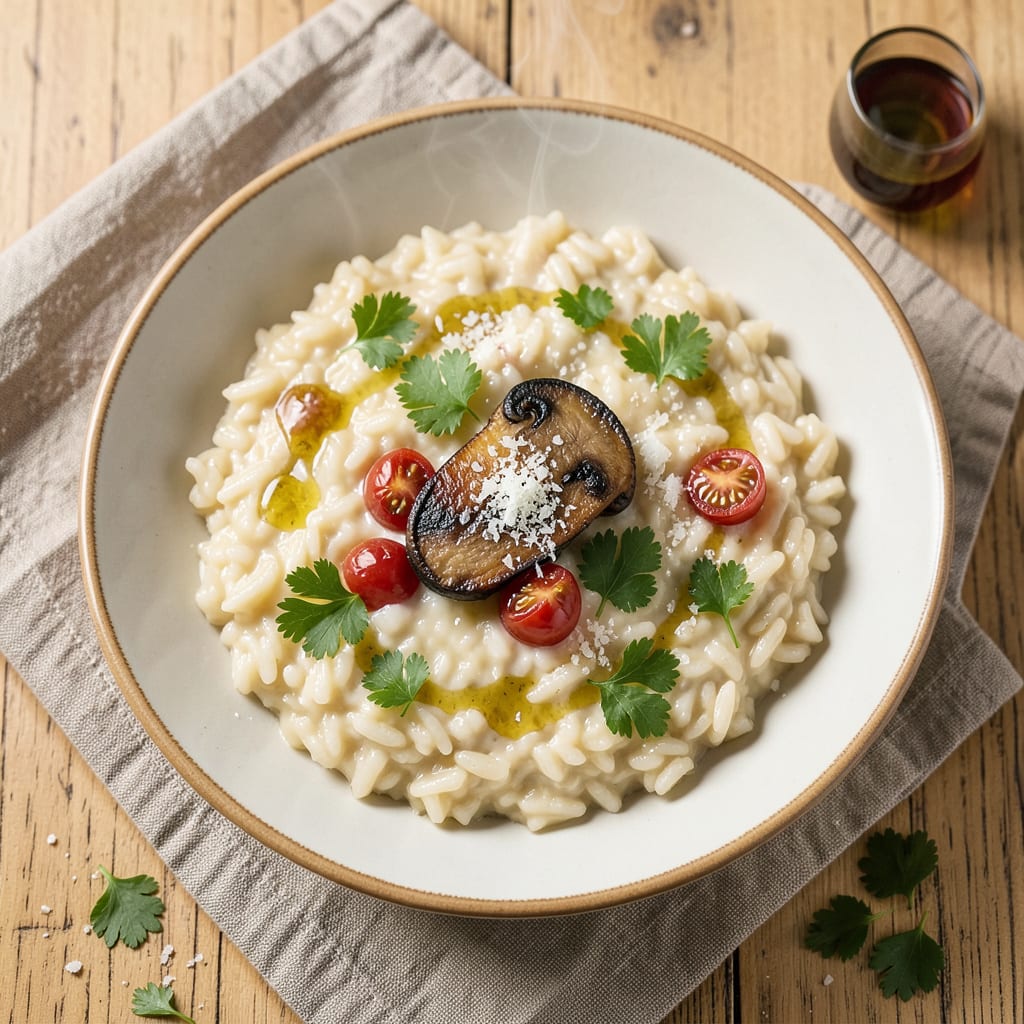
Yes, you can freeze risotto rice both cooked and uncooked. Uncooked Arborio or Carnaroli rice keeps for up to 1 year, while cooked risotto freezes well for 2-3 months if stored airtight. Texture may soften slightly when reheated.
As someone who’s experimented with freezing all kinds of grains, I’ve found risotto rice handles cold storage surprisingly well. The key lies in its high starch content—Arborio and Carnaroli varieties actually retain their structure better than most rices because their starch molecules crystallize differently during freezing. 🔥
For uncooked rice, I always recommend using airtight containers with oxygen absorbers to prevent moisture buildup. With cooked risotto, the trick is freezing it in single-serving portions and adding a splash of broth during reheating to revive that signature creaminess. This method works particularly well for meal prep when you want to preserve that just-made quality.
💡 In This Article
- How Freezing Affects Risotto Rice Texture and Quality
- Step-by-Step Guide to Freezing and Reheating Risotto Perfectly
How Freezing Affects Risotto Rice Texture and Quality
Risotto rice’s unique starch composition makes it freeze differently than regular rice. Arborio and Carnaroli grains contain amylopectin—a highly branched starch that forms a gel-like network when cooked. During freezing, these starch molecules undergo retrogradation, where they realign into more crystalline structures.
This process is reversible with proper reheating, which is why risotto maintains better texture than long-grain rice after freezing.
The cell walls in these short-grain varieties are thicker than in basmati or jasmine rice, providing structural integrity. When frozen at 0°F (-18°C) or below, the moisture inside each grain forms tiny ice crystals. 🔥 The key difference?
Arborio’s starch granules are larger (about 5-7 microns in diameter) compared to regular rice’s 2-3 microns, meaning they rupture less during freeze-thaw cycles.
What you’ll notice when reheating is that frozen risotto may appear slightly less creamy initially. This happens because some starches leach out during thawing. However, the grain’s core remains intact due to its high amylose content (15-20%) compared to other rices. The solution?
Adding 2-3 tablespoons of warm broth per cup during reheating reactivates the starches, restoring that signature velvety texture.
Under magnification, fresh risotto grains show smooth, plump surfaces with visible starch coating. Frozen-and-reheated grains develop micro-fissures on their surfaces—these are the pathways where moisture escapes. The good news is these fissures are shallow in Arborio varieties, unlike the deep cracks you’d see in frozen jasmine rice.
This structural difference explains why risotto reheats so much better.
Temperature fluctuations are the real enemy here. Each degree above 0°F increases ice crystal size by about 10%, which is why commercial blast freezing (at -30°F/-34°C) produces superior results to home freezers.
✨ For home cooks, the workaround is freezing risotto in thin layers (no more than 1-inch thick) to ensure rapid, even freezing that minimizes crystal formation.
The protein matrix in risotto rice also plays a role—these varieties contain about 7-8% protein compared to 6% in most white rices. This extra protein helps maintain grain integrity during freezing.
When you bite into properly frozen-and-reheated risotto, you should still feel that characteristic “al dente” resistance in the center, though the outer layers will be slightly softer than fresh.
One fascinating comparison: Frozen risotto actually develops more complex flavors over time. The Maillard reaction precursors (created during initial cooking) continue to develop slowly even at freezing temperatures, which is why some chefs intentionally age their risotto bases.
💫 The flavor difference becomes noticeable after about 4 weeks in the freezer, with nutty, toasted notes becoming more pronounced.

Trained in classic French technique but raised on slow-cooked ribs and spicy rubs, she blends culinary skill with smoke and soul.
- Recipe for Boneless Pork Chops in Cast Iron Skillet: Sear and Baste to Juicy Perfection - October 3, 2026
- Recipe for Boneless Cross Rib Roast: Slow-Roasted Beef with Herb Crust - October 3, 2026
- Hamburgers in Sauce Recipe Crock Pot: Slow-Cooked Savory Delight - October 3, 2026