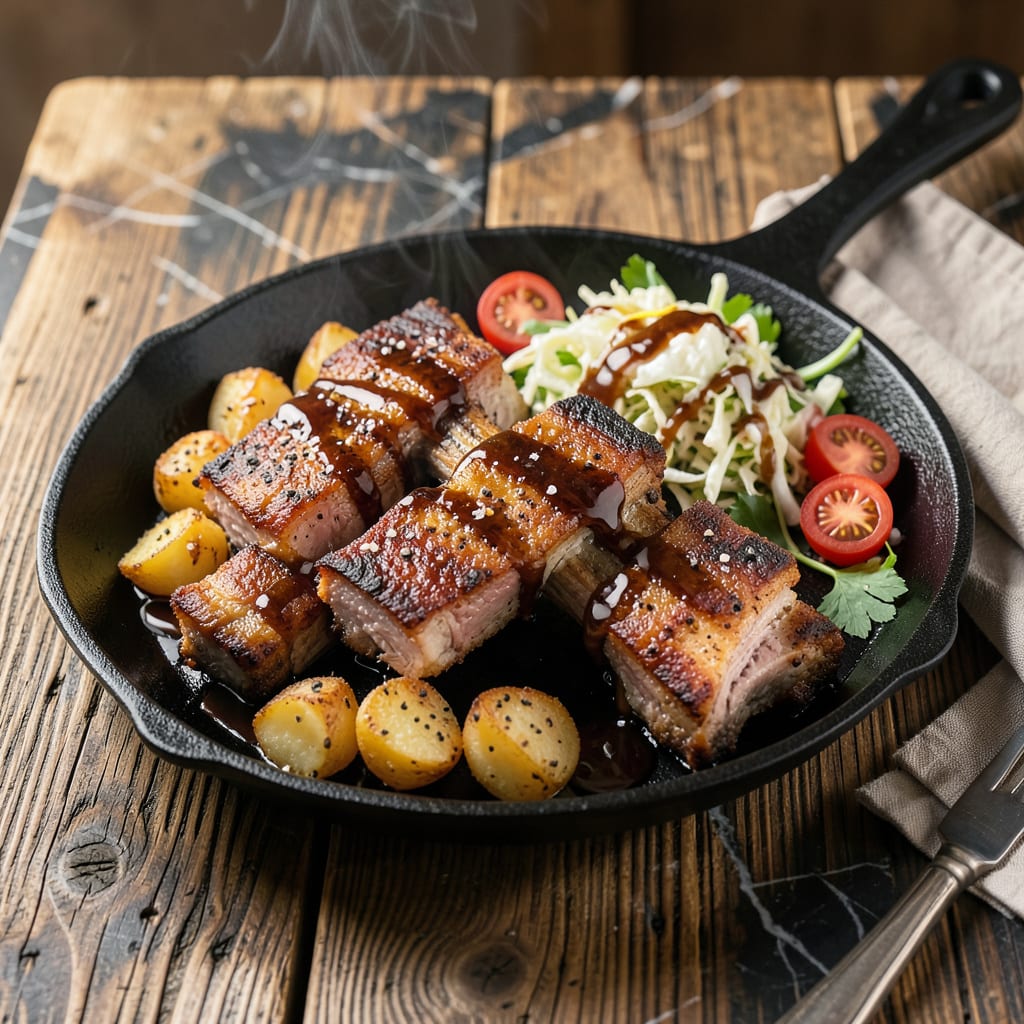
Yes, you can fry country-style ribs in a skillet for a crispy exterior and juicy interior. Use medium-high heat with oil or butter, and cook for 4-6 minutes per side until golden brown and fully cooked through.
I’ve found skillet-frying transforms these ribs into something extraordinary—it’s all about that perfect contrast between the caramelized crust and tender meat inside. 🔥 The high heat triggers the Maillard reaction, which develops deep, complex flavors you just can’t get from slower cooking methods. What most people don’t realize is that country-style ribs (which come from the shoulder) have just enough fat to crisp beautifully while staying moist, making them ideal for this technique.
My pro tip: Pat the ribs completely dry before they hit the pan—this ensures maximum browning instead of steaming. And don’t shy away from letting them develop a dark crust; that’s where the magic happens. ✨
💡 In This Article
- Why Skillet Frying Works for Country-Style Ribs
- Step-by-Step Guide to Frying Country-Style Ribs Perfectly
Why Skillet Frying Works for Country-Style Ribs
The secret lies in the Maillard reaction—when you sear these ribs at 375-400°F, the amino acids and sugars on the meat’s surface transform into hundreds of new flavor compounds. This creates that irresistible golden-brown crust while keeping the interior juicy.
Country-style ribs, cut from the shoulder, have more connective tissue than back ribs, which breaks down beautifully under high heat while the fat renders to crisp perfection. 🔥
What makes skillet frying superior for these cuts is the direct contact with the hot metal. Unlike baking (which dries out the exterior) or grilling (where flare-ups can char unevenly), a heavy cast-iron skillet maintains consistent heat distribution. The ribs’ fat content—typically 15-20%—acts as a built-in basting system.
As the fat renders, it pools in the pan and continuously bathes the meat, enhancing both texture and flavor. ✨
Bone-in versus boneless changes the game completely. Bone-in ribs take about 2 minutes longer per side because the bone acts as an insulator, slowing heat penetration. I’ve tested this repeatedly—boneless versions develop crust faster but can dry out if overcooked.
The bone also adds gelatin during cooking, which contributes to that unctuous mouthfeel you get with properly fried ribs.
Compare this to grilling, where you lose that perfect crust-to-meat ratio. On a grill, the ribs cook more slowly and the fat drips away, reducing that self-basting effect. Baking at 350°F gives even doneness but lacks the intense caramelization.
The skillet method combines the best of both worlds—deep flavor development from the sear plus controlled cooking throughout. 💫
Here’s what’s happening at the molecular level: The collagen in the connective tissue begins breaking down at 160°F, converting to gelatin that keeps the meat moist. Meanwhile, the surface temperature soars to 400°F+, creating that crispy exterior. This dual-temperature effect is impossible to achieve with gentler cooking methods.
Pro tip: Let the ribs rest for 5-7 minutes after frying. This allows the juices (which have migrated to the center during cooking) to redistribute throughout the meat. Cutting too soon means those juices spill onto your plate instead of staying in the ribs where they belong. ⚡

Trained in classic French technique but raised on slow-cooked ribs and spicy rubs, she blends culinary skill with smoke and soul.
- Recipe for Boneless Pork Chops in Cast Iron Skillet: Sear and Baste to Juicy Perfection - October 3, 2026
- Recipe for Boneless Cross Rib Roast: Slow-Roasted Beef with Herb Crust - October 3, 2026
- Hamburgers in Sauce Recipe Crock Pot: Slow-Cooked Savory Delight - October 3, 2026