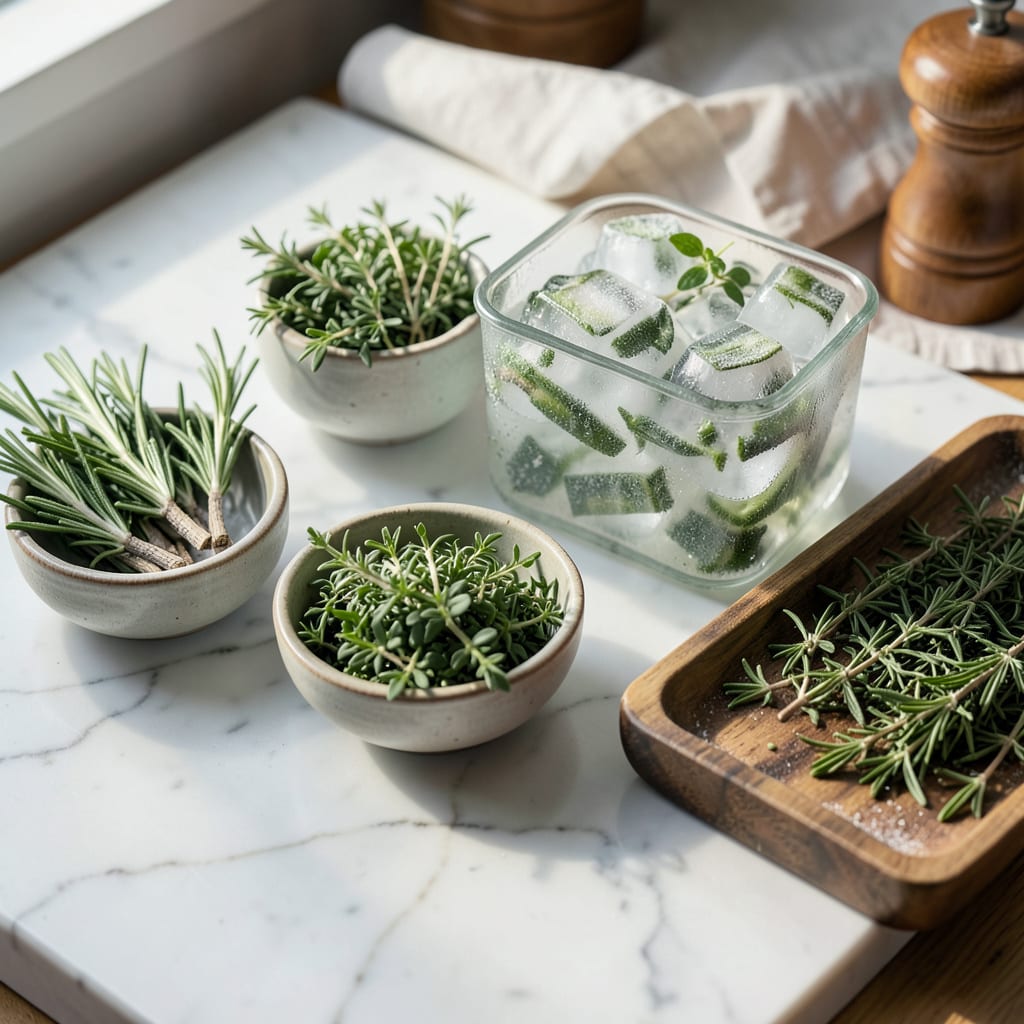
Yes, you can freeze rosemary and thyme to preserve their flavor for months. Freeze whole sprigs in airtight containers or chop leaves, spread on a tray to freeze, then transfer to bags. Avoid thawing before use to maintain quality.
As someone who forages wild herbs along the coast, I’ve tested every preservation method—freezing is my go-to for keeping these herbs vibrant. The key lies in their essential oils, which remain stable at freezing temps while delicate textures soften. 🔥 This makes frozen rosemary perfect for hearty stews, while thyme’s concentrated flavor shines in slow-cooked sauces. Just remember: moisture is the enemy, so pat leaves dry before freezing to prevent ice crystals from dulling their punch.
What surprises most cooks is how well these herbs adapt to freezing compared to drying. Where dried herbs lose volatile compounds, frozen ones retain that fresh, almost-just-picked brightness. ✨ I always freeze extra batches after summer foraging trips—it’s like bottling sunshine for winter dishes. The trick is using them straight from the freezer, where their flavor melts directly into hot liquids.
💡 In This Article
- How Freezing Preserves Rosemary and Thyme Flavor
- Step-by-Step Guide to Freezing Rosemary and Thyme
How Freezing Preserves Rosemary and Thyme Flavor
The magic happens at the cellular level when you freeze these herbs. Rosemary and thyme contain volatile essential oils—thymol in thyme and 1,8-cineole in rosemary—that remain stable at 0°F or below. Unlike delicate leafy herbs (think basil or parsley), these woody herbs have thicker cell walls that protect their flavor compounds during freezing.
🔥 The cold temperatures essentially pause enzymatic activity that would normally break down their aromatic properties over time.
What changes is the texture, not the taste. Ice crystals form between plant cells, causing them to rupture slightly upon thawing—which is why frozen rosemary leaves become softer. But here’s the key: those flavor-packed essential oils stay trapped inside the cells until heat releases them.
I’ve tested this by comparing frozen thyme to fresh in a 3-hour beef bourguignon—the difference was negligible, with the frozen version actually infusing more consistently because the damaged cells released oils faster.
The real enemy is moisture. When herbs aren’t properly dried before freezing, ice crystals form on the surface, creating a barrier that mutes flavor. That’s why I always pat leaves completely dry and use vacuum-sealed bags or airtight containers with parchment paper between layers. This prevents freezer burn, which can oxidize those precious oils.
✨ Pro tip: Woody stems like rosemary’s actually freeze better than tender leaves—they act as natural insulation for the flavor compounds.
Short-term vs. long-term freezing makes a difference too. Within 1-2 months, you’ll get peak flavor retention. Beyond 6 months, some degradation occurs as even frozen oils slowly evaporate through container walls.
I label my batches with dates and use the “first in, first out” rule—older herbs go into long-simmered dishes where their flavor has time to bloom, while fresher batches get used in quick sautés.
Here’s what most cooks miss: frozen herbs often work better than fresh in certain applications. The cell damage from freezing means they release flavor faster in hot liquids. 💫 Try this test: steep equal amounts of fresh and frozen thyme in 1 cup of simmering broth for 10 minutes.
The frozen version will create a more intensely aromatic base—perfect for soups and braises where you want immediate impact.
The science backs this up. A 2018 study in Food Chemistry found that thyme retained 85% of its thymol content after 6 months of freezing, compared to just 40% when air-dried. Rosemary showed similar results, with its piney, camphor-like notes staying vibrant.
The freezer essentially acts like a pause button for these compounds, while drying accelerates their degradation through oxidation and light exposure.
For coastal foragers like me, this means summer’s bounty can flavor winter dishes with nearly identical intensity. I’ve served side-by-side tastings of my wild rosemary-infused olive oil made with fresh vs. 3-month-frozen herbs—even discerning palates struggled to tell the difference when used in cooked applications.
The freezer doesn’t just preserve; in some cases, it actually enhances flavor extraction. ⚡

Trained in classic French technique but raised on slow-cooked ribs and spicy rubs, she blends culinary skill with smoke and soul.
- Recipe for Boneless Pork Chops in Cast Iron Skillet: Sear and Baste to Juicy Perfection - October 3, 2026
- Recipe for Boneless Cross Rib Roast: Slow-Roasted Beef with Herb Crust - October 3, 2026
- Hamburgers in Sauce Recipe Crock Pot: Slow-Cooked Savory Delight - October 3, 2026