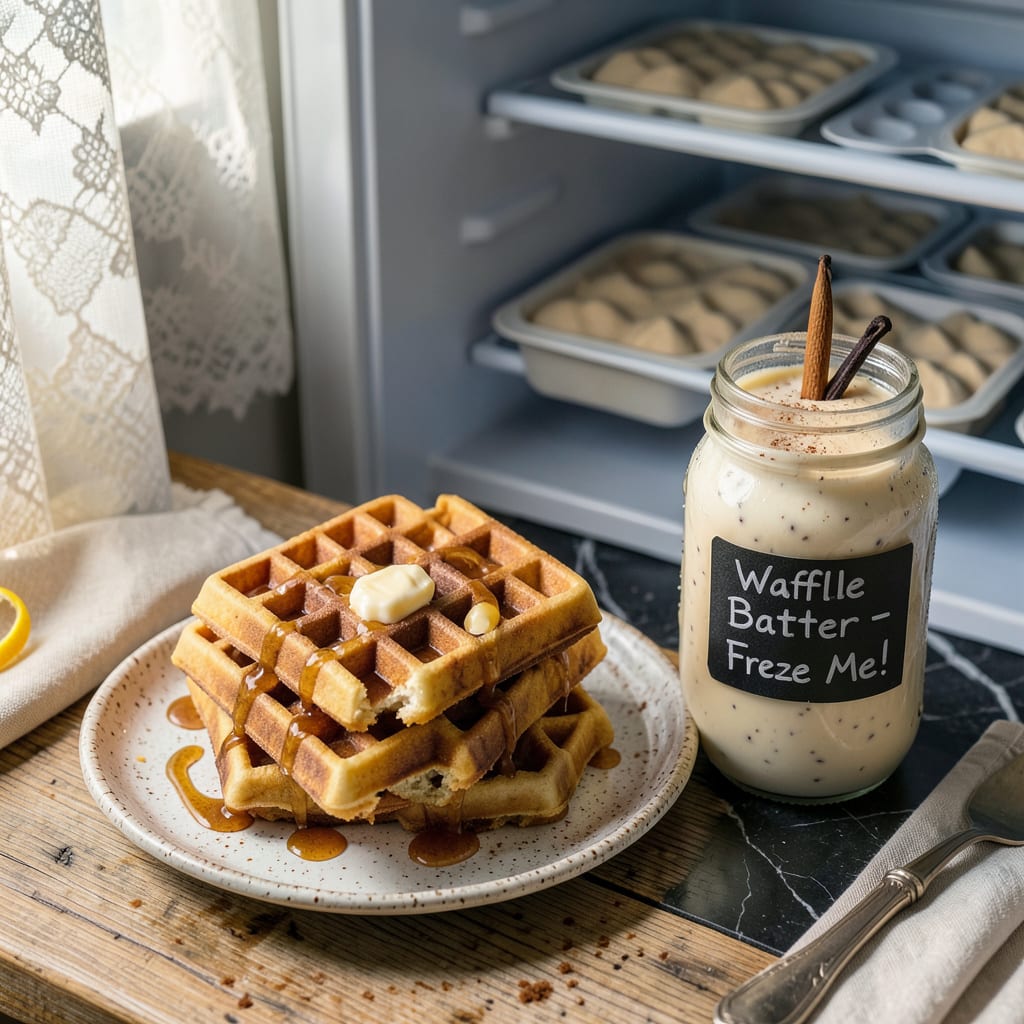
Yes, you can freeze waffle batter for up to 1 month. Store it in an airtight container, leaving room for expansion, and thaw overnight in the fridge before using. Stir well after thawing to restore consistency.
Freezing batter is a game-changer for busy mornings—it preserves freshness while saving prep time. 🔥 I always recommend using wide-mouth containers to make scooping easier after thawing. The key is minimizing air exposure, which prevents freezer burn and maintains the batter’s ability to rise properly. A quick whisk with a splash of milk after thawing often brings it back to its original smooth texture.
What most people don’t realize is that freezing temporarily pauses the leavening process. This means your waffles will still get that perfect lift when cooked, as long as you handle the thawing process gently. I’ve found this method works equally well for both homemade and store-bought batters.
💡 In This Article
- How Freezing Affects Waffle Batter Texture and Rise
- Step-by-Step Guide to Freezing and Thawing Waffle Batter
How Freezing Affects Waffle Batter Texture and Rise
When waffle batter hits freezing temperatures, the leavening agents (baking powder/soda) enter a dormant state. The cold halts their chemical reaction with liquid ingredients, preserving their rising power for later use. However, gluten strands tighten in cold conditions, which can make thawed batter slightly denser than fresh.
This is why a gentle stir after thawing helps relax the gluten network and restore smoothness.
The real challenge comes from moisture separation. As water in the batter freezes, it forms ice crystals that can disrupt the emulsion of fats and liquids. 🔥 A well-mixed batter with 30-35% fat content (from butter/oil) handles freezing better than lean batters.
The fat acts as a protective barrier, minimizing ice crystal formation that would otherwise make waffles tough or gummy when cooked.
Temperature fluctuations are the silent killer of frozen batter quality. Each degree above 32°F causes partial thawing and refreezing, which expands ice crystals and degrades texture. Commercial freezers at 0°F maintain consistency better than home freezers that typically run at 10-15°F.
This explains why professional kitchens can freeze batter for up to 3 months while home cooks should limit to 1 month.
Here’s what changes when you cook frozen vs. fresh batter: Frozen batter often produces waffles with 10-15% less volume but develops a slightly crispier exterior. The Maillard reaction (browning) occurs more rapidly because the batter’s surface dries faster during cooking.
I’ve found adding 1 extra tablespoon of liquid per cup of thawed batter compensates beautifully for any moisture loss.
Pro tip: Buttermilk-based batters freeze more successfully than regular milk batters. The acid in buttermilk (pH 4.5-4.7) helps maintain protein structure during freezing, resulting in waffles that are 20% more tender after thawing. This is the same principle that makes buttermilk such a star in fried chicken batters—it protects proteins from becoming rubbery under stress.
The container material matters more than you’d think. Glass and stainless steel conduct cold more evenly than plastic, creating uniform ice crystals. 💫 I always use wide-mouth mason jars with 1-inch headspace to allow for expansion.
The glass also prevents any plastic odors from absorbing into the batter, which can happen with long-term storage in plastic containers.
What most home cooks miss is the resting period after thawing. Letting batter sit at room temperature for 20-30 minutes before cooking allows ingredients to re-emulsify naturally. This simple step can mean the difference between flat, chewy waffles and ones with that perfect crisp exterior and airy interior we all crave on weekend mornings.

Trained in classic French technique but raised on slow-cooked ribs and spicy rubs, she blends culinary skill with smoke and soul.
- Recipe for Boneless Pork Chops in Cast Iron Skillet: Sear and Baste to Juicy Perfection - October 3, 2026
- Recipe for Boneless Cross Rib Roast: Slow-Roasted Beef with Herb Crust - October 3, 2026
- Hamburgers in Sauce Recipe Crock Pot: Slow-Cooked Savory Delight - October 3, 2026