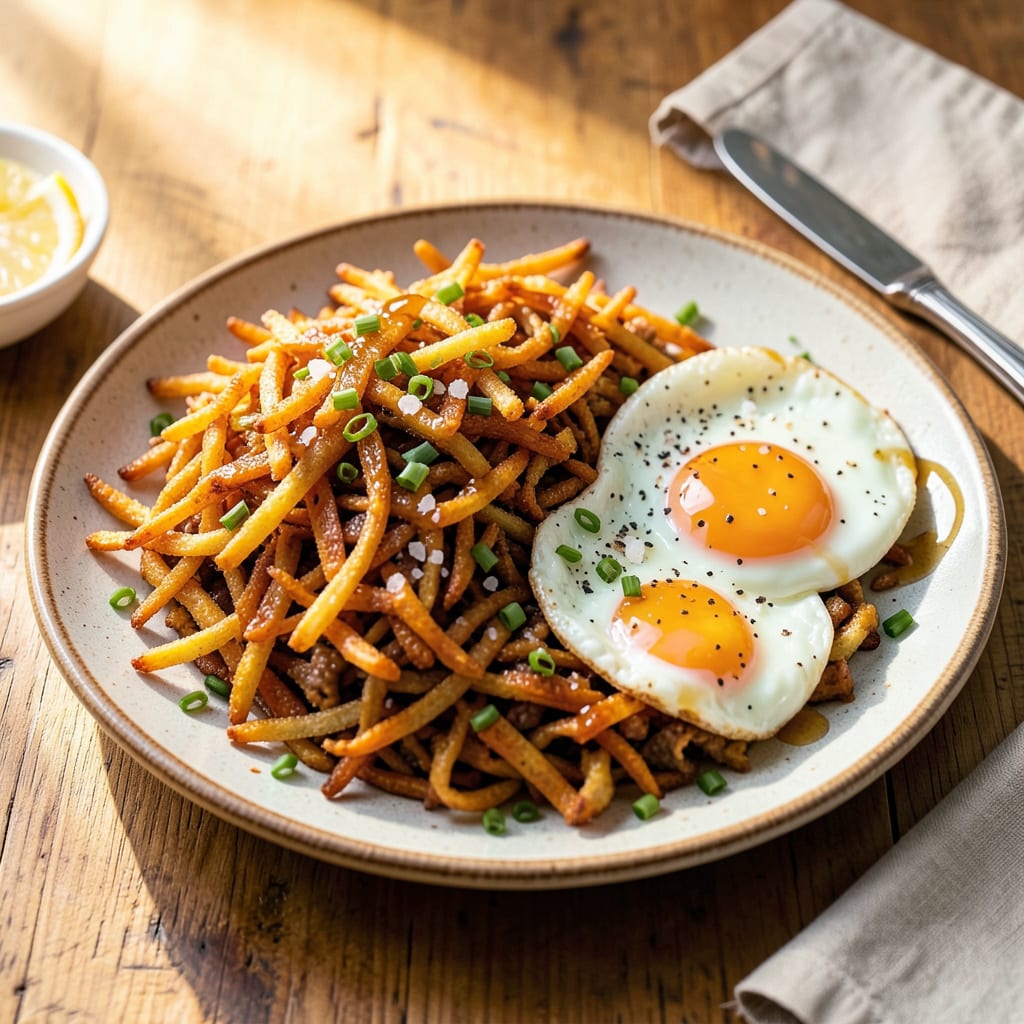
Yes, hash browns can cause food poisoning if contaminated with bacteria like Salmonella or E. coli from improper storage, undercooking, or cross-contamination with raw ingredients. Proper handling and thorough cooking minimize risks.
I’ve seen this happen too often in busy kitchens—what starts as a simple potato dish can turn dangerous when basic safety steps get overlooked. The real trouble begins when raw potatoes sit too long at room temperature, giving bacteria like Bacillus cereus (common in starchy foods) a perfect breeding ground. Even frozen hash browns aren’t risk-free if thawed improperly on the counter instead of in the fridge. 🔥
What most people don’t realize is that the shredding process exposes more surface area, making hash browns particularly vulnerable to contamination. A single unwashed cutting board or utensil that touched raw meat can transfer enough bacteria to spoil an entire batch. I always recommend cooking them to a crisp golden brown at 375°F+—this ensures any lingering pathogens get destroyed. ✨
💡 In This Article
- How Hash Browns Become Contaminated with Bacteria
- Safe Handling and Cooking Tips for Hash Browns
How Hash Browns Become Contaminated with Bacteria
The moment raw potatoes get shredded for hash browns, their surface area explodes—creating thousands of tiny entry points for bacteria. Unlike whole potatoes with protective skins, shredded versions expose starch-rich interiors that bacteria like Bacillus cereus (common in rice and potatoes) adore. This bacterium thrives between 41°F-135°F, doubling every 20 minutes in ideal conditions. 🔥
Cross-contamination often happens through shared kitchen tools. A cutting board used for raw chicken can transfer Salmonella to potatoes if not sanitized properly. Even wooden spoons can harbor bacteria in their pores. I’ve seen cases where the same grater was used for potatoes and then raw meat—creating a direct contamination pathway.
The shredding process itself can spread bacteria throughout the entire batch if any equipment is contaminated.
Improper storage accelerates the problem dramatically. Raw shredded potatoes left at room temperature for over 2 hours enter the danger zone where bacteria multiply rapidly. Refrigeration only slows this process—it doesn’t stop it completely.
Frozen hash browns thawed on the counter (rather than in the fridge) can develop warm, moist pockets perfect for bacterial growth before cooking even begins. ✨
Undercooking compounds these risks. Hash browns cooked below 165°F may not reach temperatures needed to kill pathogens. The exterior can appear crispy while the interior remains undercooked, especially with thick batches. This is why restaurant outbreaks often trace back to breakfast stations where hash browns are cooked in large quantities at inconsistent temperatures. 💫
The moisture content in hash browns creates another vulnerability. Bacteria need water to grow, and shredded potatoes release starches that bind water. This creates a micro-environment where bacteria can flourish even in refrigerated conditions over time.
Commercial kitchens combat this with acidulated water (adding lemon juice or vinegar) to lower the pH and inhibit bacterial growth. 🌟
What surprises most people is how quickly contamination can occur. A single bacteria cell can multiply to over 2 million in just 7 hours at room temperature. This explains why hash browns prepared in advance and left unrefrigerated become high-risk.
The shredding process also releases enzymes that begin converting starches to sugars—providing additional food sources for bacteria. ⚡
Even the type of potato matters. Higher-starch varieties like Russets (common in hash browns) break down faster when shredded, creating more bacterial food sources. Waxy potatoes hold up better but still require proper handling. The key takeaway: every step from shredding to serving presents contamination opportunities if safety protocols aren’t followed religiously. 💛

Trained in classic French technique but raised on slow-cooked ribs and spicy rubs, she blends culinary skill with smoke and soul.
- Recipe for Boneless Pork Chops in Cast Iron Skillet: Sear and Baste to Juicy Perfection - October 3, 2026
- Recipe for Boneless Cross Rib Roast: Slow-Roasted Beef with Herb Crust - October 3, 2026
- Hamburgers in Sauce Recipe Crock Pot: Slow-Cooked Savory Delight - October 3, 2026