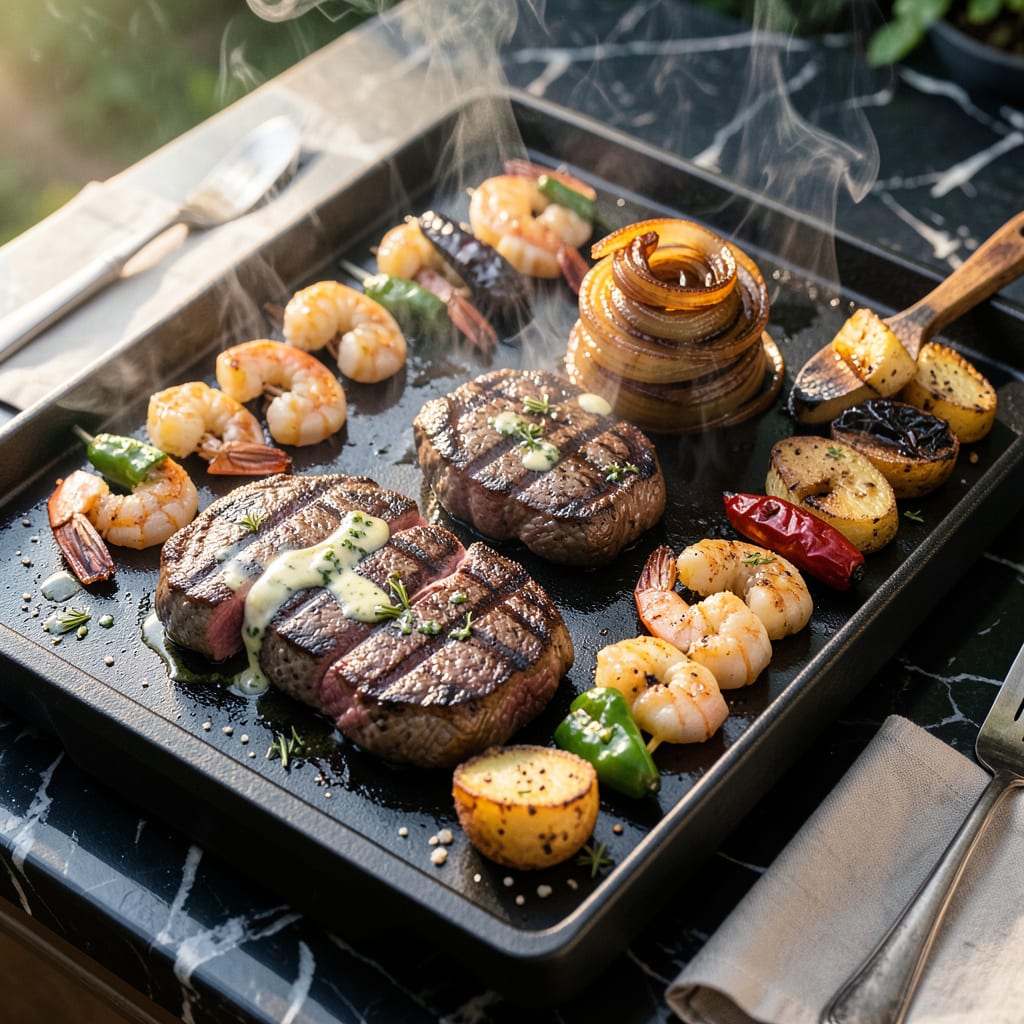
Yes, you can grill on a griddle by using its flat, heated surface to cook foods like burgers, steaks, and vegetables. The key is managing heat zones and using proper techniques to mimic traditional grilling results.
I’ve spent years perfecting griddle techniques that deliver that classic charred flavor without an open flame. The secret lies in preheating the surface to 400°F+ and using a weighted press to create those coveted sear marks. What most people don’t realize is that a griddle actually gives you more control over heat distribution than traditional grates. 🔥
For me, the real magic happens when you combine proper oil management with strategic heat zoning—just like I learned in French culinary school. This method works exceptionally well for delicate items like fish fillets or asparagus that might fall through grill grates. The even heat ensures perfect doneness every time. ✨
💡 In This Article
- How Griddle Grilling Works Compared to Traditional Grills
- Essential Tools and Techniques for Griddle Grilling Success
How Griddle Grilling Works Compared to Traditional Grills
The science behind griddle grilling revolves around direct conductive heat transfer rather than radiant heat from flames. When you place food on a properly preheated griddle (I recommend 400-450°F for most proteins), the entire surface area makes contact simultaneously.
This creates an intense sear that locks in juices while developing that coveted crust through the Maillard reaction—the same chemical process that gives steaks their complex flavors. 🔥
What sets griddle cooking apart is the even heat distribution across the flat surface. Unlike grill grates that create hot spots directly above flames, a griddle maintains consistent temperatures within ±10°F across its entire cooking area when properly heated.
This precision allows for better control when cooking delicate items like scallops or thin-cut vegetables that might burn over open flames. The tradeoff? You’ll need to manually create those beautiful grill marks using a weighted press or strategic oil application.
Temperature management becomes your secret weapon on a griddle. I use the “hand test” method—if you can hold your palm 3 inches above the surface for only 2-3 seconds, you’re in the ideal searing range.
For comparison, most home grills fluctuate between 350-500°F depending on flame position, while a griddle gives you that steady, predictable heat. This consistency is why professional chefs often prefer griddles for items requiring precise doneness, like medium-rare burgers or perfectly caramelized onions. ✨
The flavor development process differs slightly too. On a grill, dripping fats create smoke that infuses food with that classic “grilled” taste. On a griddle, you’ll want to use high-smoke-point oils (I prefer avocado oil at 520°F smoke point) and consider adding wood chips in a small metal container to introduce smoky notes.
The flat surface also allows for better fond development—the caramelized bits that form the base for incredible pan sauces. 💫
Here’s what most home cooks miss: the griddle’s solid surface actually creates 20-30% more contact area with your food compared to grill grates. This means faster cooking times and more efficient energy transfer.
For example, a 1-inch steak that might take 4-5 minutes per side on a grill can achieve the same internal temperature in 3-4 minutes on a properly heated griddle. The key is letting the surface recover to full temperature between batches. ⚡
One unexpected advantage I’ve discovered through years of griddle cooking is the ability to create multiple heat zones simultaneously. By adjusting burner settings, you can have a 450°F searing zone for steaks, a 350°F area for vegetables, and a 200°F warming section—all on one surface.
This versatility is something even high-end grills struggle to match without additional accessories. The even heat also eliminates those frustrating cold spots that plague many backyard grills. 🌟
For those concerned about missing that classic grill flavor, I’ve found that preheating the griddle with a thin layer of oil until it just begins to smoke (you’ll see wisps at about 425°F) creates a flavor foundation remarkably similar to grill marks.
The oil polymerizes on the hot metal, forming a natural non-stick surface that also contributes to that characteristic grilled taste. It’s a technique I picked up from French bistro kitchens that translates beautifully to outdoor griddle cooking. 💛

Trained in classic French technique but raised on slow-cooked ribs and spicy rubs, she blends culinary skill with smoke and soul.
- Recipe for Boneless Pork Chops in Cast Iron Skillet: Sear and Baste to Juicy Perfection - October 3, 2026
- Recipe for Boneless Cross Rib Roast: Slow-Roasted Beef with Herb Crust - October 3, 2026
- Hamburgers in Sauce Recipe Crock Pot: Slow-Cooked Savory Delight - October 3, 2026