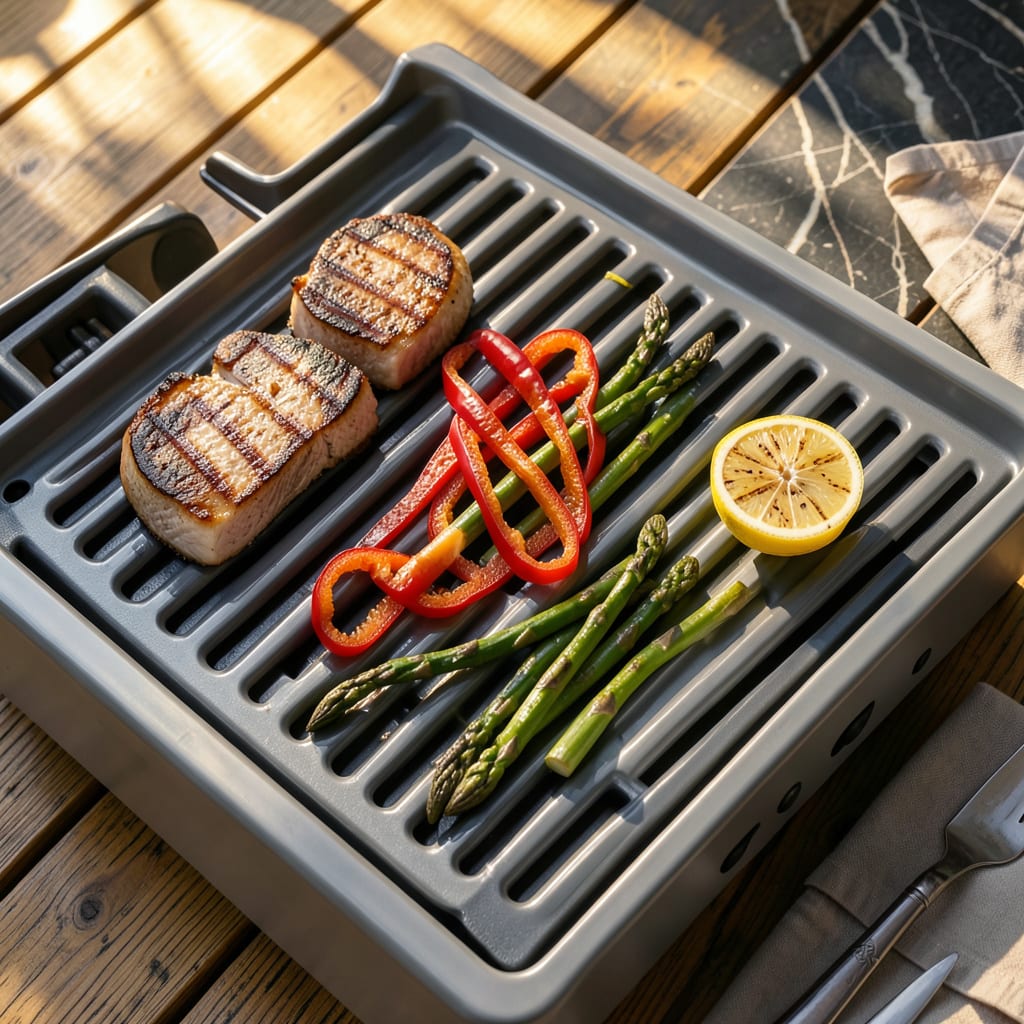
Porcelain grill grates offer easy cleanup, rust resistance, and even heat distribution, but they can chip over time and require gentle handling. Ideal for casual grillers who prioritize convenience over extreme durability.
I’ve spent years testing different grate materials, and porcelain stands out for its ability to handle high heat while keeping maintenance simple. 🔥 The enamel coating creates a non-porous surface that prevents food from sticking, which means less scrubbing and more time enjoying your meal. What many don’t realize is that this coating also acts as a protective barrier against moisture—the primary cause of rust in traditional grates. However, the trade-off comes with durability: dropping heavy tools or using metal brushes can compromise that protective layer faster than you’d expect.
For weekend warriors who grill occasionally, these grates hit the sweet spot between performance and upkeep. ✨ They heat up quickly and distribute warmth evenly, eliminating those frustrating hot spots that burn your burgers. But if you’re someone who grills year-round or loves searing at ultra-high temps, you might find yourself replacing them sooner than stainless steel alternatives. The key is treating them like your favorite cast iron skillet—gentle care preserves their lifespan significantly.
💡 In This Article
- How Porcelain Coating Enhances Grill Grate Performance
- Maintenance Tips to Extend Porcelain Grill Grate Lifespan
How Porcelain Coating Enhances Grill Grate Performance
The secret to porcelain grill grates lies in their fused glass coating, which is baked onto a metal base at temperatures exceeding 1500°F. This creates a non-porous surface that repels moisture and prevents oxidation—the chemical reaction that causes rust in uncoated grates.
The glass-like finish also has a naturally low coefficient of friction, which means proteins like burgers and chicken release more easily than on raw cast iron. 🔥
Heat distribution becomes more uniform because the porcelain layer acts as a thermal conductor, spreading heat across the grate surface about 20% more evenly than bare metal. Unlike stainless steel that can develop hot spots, porcelain maintains consistent temperatures ideal for delicate foods like fish or vegetables.
Gas grills benefit most from this property since they rely on radiant heat rather than direct flame contact.
What surprises many grillers is how the coating thickness impacts longevity. High-quality grates use 0.8-1.2mm of porcelain, while budget versions may apply as little as 0.3mm. Thicker coatings resist chipping better and can handle temperature swings from 200°F smoking sessions to 600°F searing without cracking.
The manufacturing process involves multiple dipping and firing cycles to build these protective layers.
Compared to cast iron, porcelain requires no seasoning and won’t impart metallic flavors to food. Unlike stainless steel, it won’t discolor or develop surface pitting over time. The trade-off is that porcelain can’t be re-seasoned if damaged—once the coating chips, that spot becomes vulnerable to rust.
That’s why you’ll often see these grates paired with gas grills where temperature control is more precise than with charcoal’s intense direct heat. ✨
The science behind the non-stick properties involves the smooth glass surface creating fewer microscopic crevices for food to adhere to. When properly heated to 400-450°F, the porcelain develops a slight thermal charge that actually repels food particles.
This is why you can often wipe these grates clean with just a brush and minimal elbow grease after cooking.
For those who love low-and-slow cooking, porcelain excels at maintaining steady temperatures for hours. The coating’s thermal mass helps stabilize heat fluctuations that would normally occur as the grill lid opens and closes. I’ve found this particularly useful when smoking ribs or brisket, where temperature consistency makes the difference between tough and tender results. 💫
One often overlooked advantage is how the porcelain surface resists flavor transfer between cooks. Unlike uncoated metals that can absorb and release flavors, the glass coating provides a neutral cooking surface. This means you can safely grill fish after burgers without worrying about lingering beef flavors—something that’s nearly impossible with seasoned cast iron grates.

Trained in classic French technique but raised on slow-cooked ribs and spicy rubs, she blends culinary skill with smoke and soul.
- Recipe for Boneless Pork Chops in Cast Iron Skillet: Sear and Baste to Juicy Perfection - October 3, 2026
- Recipe for Boneless Cross Rib Roast: Slow-Roasted Beef with Herb Crust - October 3, 2026
- Hamburgers in Sauce Recipe Crock Pot: Slow-Cooked Savory Delight - October 3, 2026