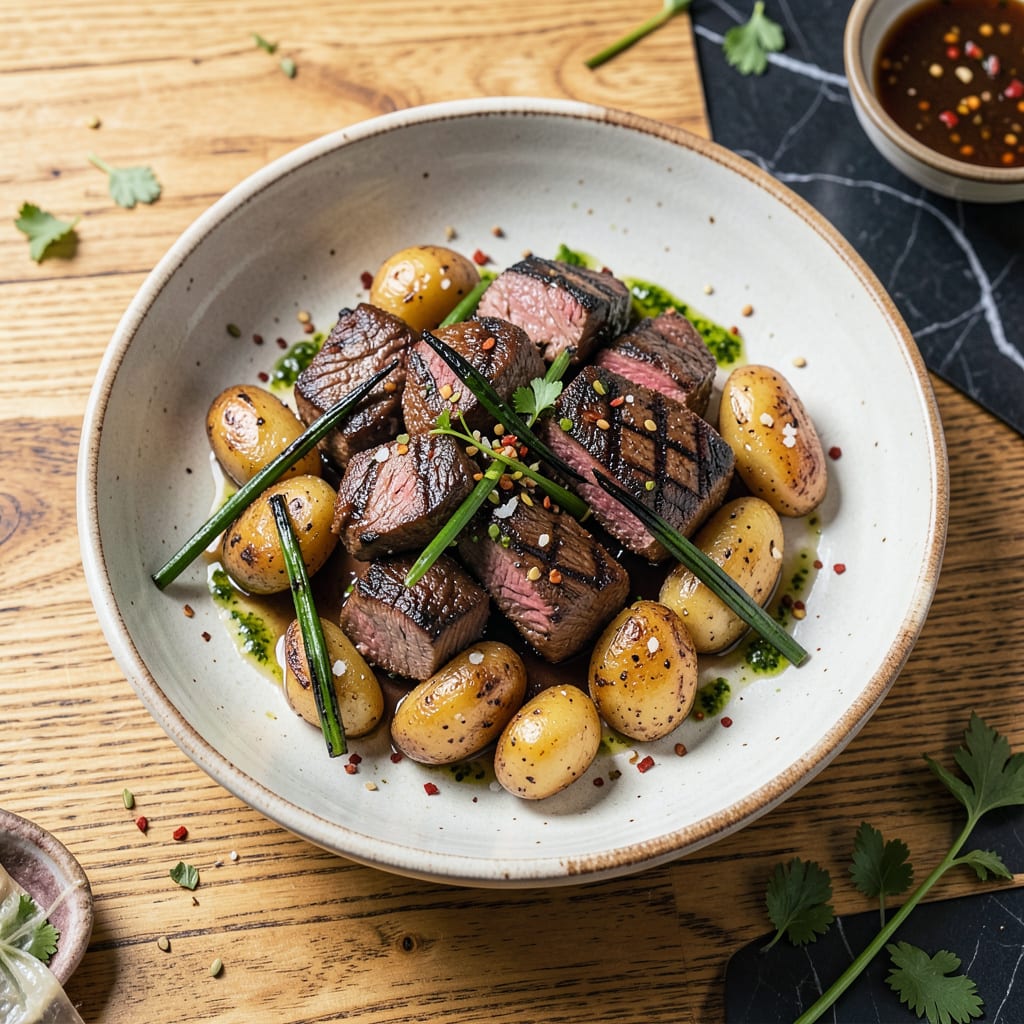
Yes, you can grill stew meat, but it requires special preparation. Since stew meat is tough, marinate it for 4-12 hours and use high heat for quick searing or low-and-slow cooking to break down connective tissue for tenderness.
I’ve spent years perfecting tough cuts on the grill, and stew meat is one of those hidden gems when handled right. The secret lies in its collagen—the same stuff that makes it chewy also transforms into gelatin with proper heat, creating that melt-in-your-mouth texture. 🔥 Think of it like turning a budget cut into a gourmet experience with the right techniques.
What most people miss is the marinade’s role beyond just flavor. Acidic ingredients like vinegar or citrus start breaking down fibers before the meat even hits the grill, while enzymes in pineapple or kiwi work like natural tenderizers. Pair this with controlled heat, and you’ll achieve results that rival pricier cuts.
💡 In This Article
- Why Stew Meat Needs Special Grilling Techniques
- Step-by-Step Guide to Grilling Stew Meat Perfectly
Why Stew Meat Needs Special Grilling Techniques
Stew meat comes from well-worked muscles like the chuck or round, packed with collagen and connective tissue. These tough fibers make it perfect for slow cooking but problematic for standard grilling. When exposed to quick, high heat without preparation, the muscle fibers contract violently, squeezing out moisture and creating that dreaded rubbery texture.
The collagen needs time and specific conditions to break down into gelatin—something a quick grill session can’t achieve on its own.
Here’s what’s actually happening at the molecular level: Collagen begins converting to gelatin at 160°F but doesn’t fully transform until reaching 195-205°F for several hours. Traditional grilling cuts like ribeye or sirloin have minimal collagen, so they cook beautifully at 130-145°F in minutes.
Stew meat requires either a 4-12 hour marinade to jumpstart the breakdown process or low-and-slow heat to give those fibers time to relax and melt. ✨
The muscle grain structure matters too. Stew meat has longer, more densely packed fibers compared to tender cuts. Without proper preparation, these fibers remain tightly bound even after cooking. That’s why marinades with acidic components (vinegar, citrus) or enzymes (pineapple, kiwi) are game-changers—they begin separating these fibers before heat is even applied.
I’ve found that even 30 minutes in a well-balanced marinade makes a noticeable difference in final texture.
Temperature control becomes your best friend with stew meat. High heat (400°F+) works for quick searing if you’ve marinated properly, creating a flavorful crust while keeping the interior moist. But for true tenderness, you’ll want to maintain 225-275°F for 1.5-2 hours—similar to how you’d approach brisket.
This gives the collagen time to render while keeping the meat juicy. The difference between chewy disappointment and fall-apart perfection often comes down to these temperature decisions. 🔥
What most grillers don’t realize is that stew meat actually contains more flavor potential than premium cuts. Those connective tissues and fat marbling that make it “tough” are packed with umami compounds and rich beefy flavor.
When properly broken down through marinating and controlled heat, these elements create a depth of flavor that leaner cuts simply can’t match. It’s like unlocking a hidden flavor profile that’s been there all along.
Consider the cut’s origin too—chuck stew meat has more fat marbling than round, making it slightly more forgiving on the grill. The fat renders during cooking, basting the meat from within. Round requires more precise temperature control as it’s leaner and can dry out faster.
This is why I always recommend asking your butcher for the specific cut when buying “stew meat”—it makes a bigger difference than most recipes acknowledge. 💫
The final texture you achieve comes from balancing three factors: marination time, heat intensity, and internal temperature. Get this trio right, and you’ll transform what many consider a “cheap cut” into grill masterpiece that rivals anything from the premium case.
The science is on your side—you’re just working with different parameters than the standard steak grill session.

Trained in classic French technique but raised on slow-cooked ribs and spicy rubs, she blends culinary skill with smoke and soul.
- Recipe for Boneless Pork Chops in Cast Iron Skillet: Sear and Baste to Juicy Perfection - October 3, 2026
- Recipe for Boneless Cross Rib Roast: Slow-Roasted Beef with Herb Crust - October 3, 2026
- Hamburgers in Sauce Recipe Crock Pot: Slow-Cooked Savory Delight - October 3, 2026