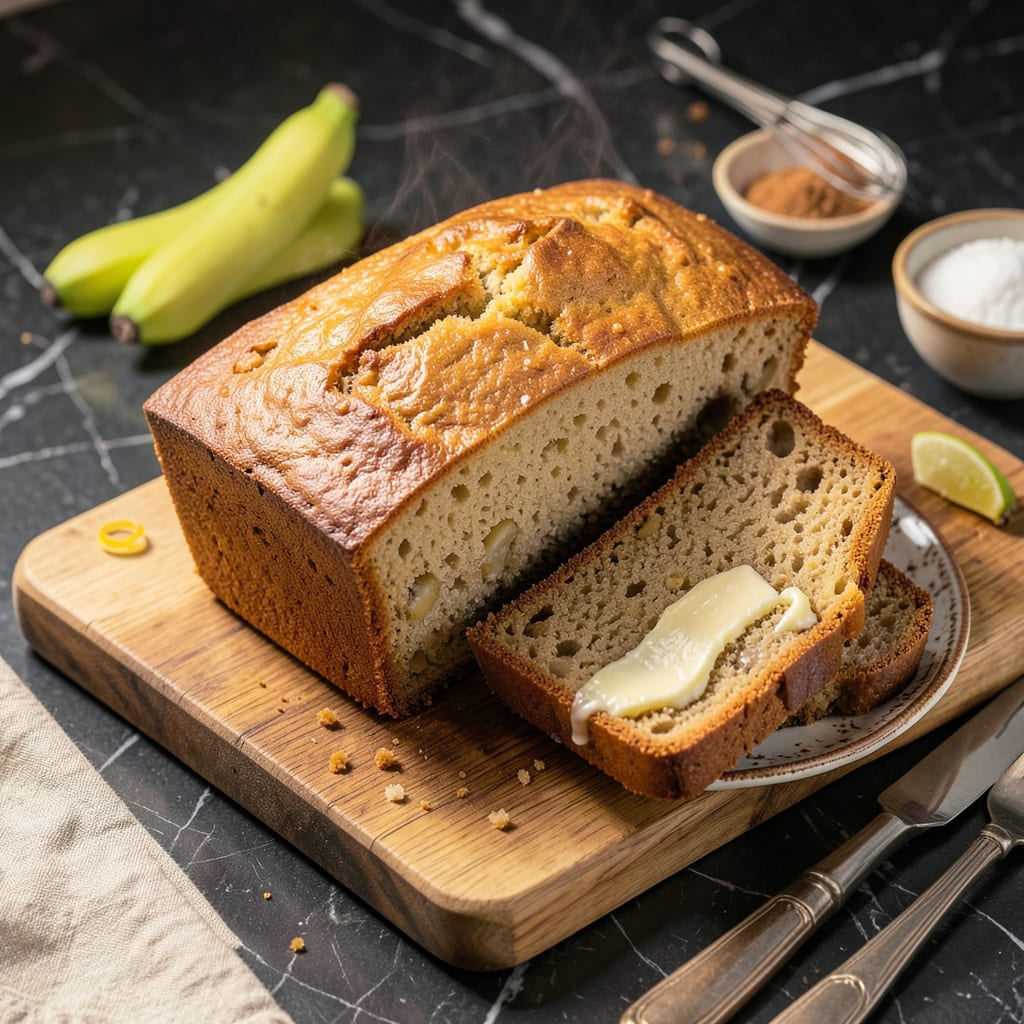
Unripe bananas lack the natural sweetness and moisture needed for classic banana bread, resulting in a denser, less flavorful loaf. However, you can ripen them quickly or adjust the recipe with extra sugar and liquid for better results.
I’ve found that the starch-heavy nature of green bananas creates a completely different baking experience. 🔥 When I’ve worked with underripe fruit, the bread often turns out more like a quick bread than the tender, cake-like texture we love. The key is understanding that bananas continue to develop their sugar content even after picking—so with a little patience or strategic adjustments, you can still achieve great results.
What most people don’t realize is that unripe bananas actually contain more pectin, which can make your loaf gummy if not balanced properly. I always recommend either speed-ripening them in a paper bag with an apple or compensating with extra brown sugar and a splash of buttermilk to restore that signature moisture and richness.
💡 In This Article
- Why Unripe Bananas Change Banana Bread Texture and Flavor
- How to Fix Banana Bread Made With Unripe Bananas
Why Unripe Bananas Change Banana Bread Texture and Flavor
Here’s what’s actually happening inside those green bananas: they’re packed with resistant starch that hasn’t converted to sugar yet. A fully ripe banana contains about 15-20% sugar, while an unripe one has only 1-2%—that’s a massive difference in sweetness potential.
The starch molecules in green bananas are tightly packed, which means they absorb liquid differently during baking, creating that characteristic dense crumb we want to avoid. 🔥
The pectin factor is equally important. Unripe bananas contain 3-4 times more pectin than ripe ones, which acts like a natural thickener. When heated, this extra pectin forms stronger gels that trap moisture unevenly, leading to that gummy texture.
Compare this to ripe bananas where enzymes have broken down the pectin—this creates the tender, cake-like structure we associate with perfect banana bread.
What most bakers don’t realize is that green bananas also have a lower water activity level (about 0.92 vs 0.97 in ripe bananas). This means the moisture isn’t as available to create steam during baking, which is crucial for that light, airy texture.
The difference is similar to comparing all-purpose flour to bread flour—the protein and starch interactions change everything about the final product’s structure. ✨
The flavor impact comes down to volatile compounds. Ripe bananas develop over 300 aromatic compounds as they mature, including esters that give that tropical, sweet aroma. Unripe bananas have mostly green, grassy notes from hexanal compounds.
When baked, these don’t caramelize the same way, leaving your bread tasting more like “banana-flavored bread” than rich, complex banana bread.
Temperature plays a surprising role too. The starch gelatinization point in green bananas is higher—about 165°F compared to 140°F in ripe ones. This means your bread might not set properly at standard baking temperatures, potentially leading to a raw center or overly dry edges.
The solution isn’t just adding sugar—it’s about understanding these fundamental chemical differences. 💫
Consider these key differences when working with unripe bananas:
- Starch content: 20-25% in green vs 1-2% in ripe
- Moisture availability: Bound tightly in unripe, freely available in ripe
- Flavor compounds: Grassiness dominates unripe, sweetness dominates ripe
- Baking behavior: Requires higher temps for starch conversion

Trained in classic French technique but raised on slow-cooked ribs and spicy rubs, she blends culinary skill with smoke and soul.
- Recipe for Boneless Pork Chops in Cast Iron Skillet: Sear and Baste to Juicy Perfection - October 3, 2026
- Recipe for Boneless Cross Rib Roast: Slow-Roasted Beef with Herb Crust - October 3, 2026
- Hamburgers in Sauce Recipe Crock Pot: Slow-Cooked Savory Delight - October 3, 2026