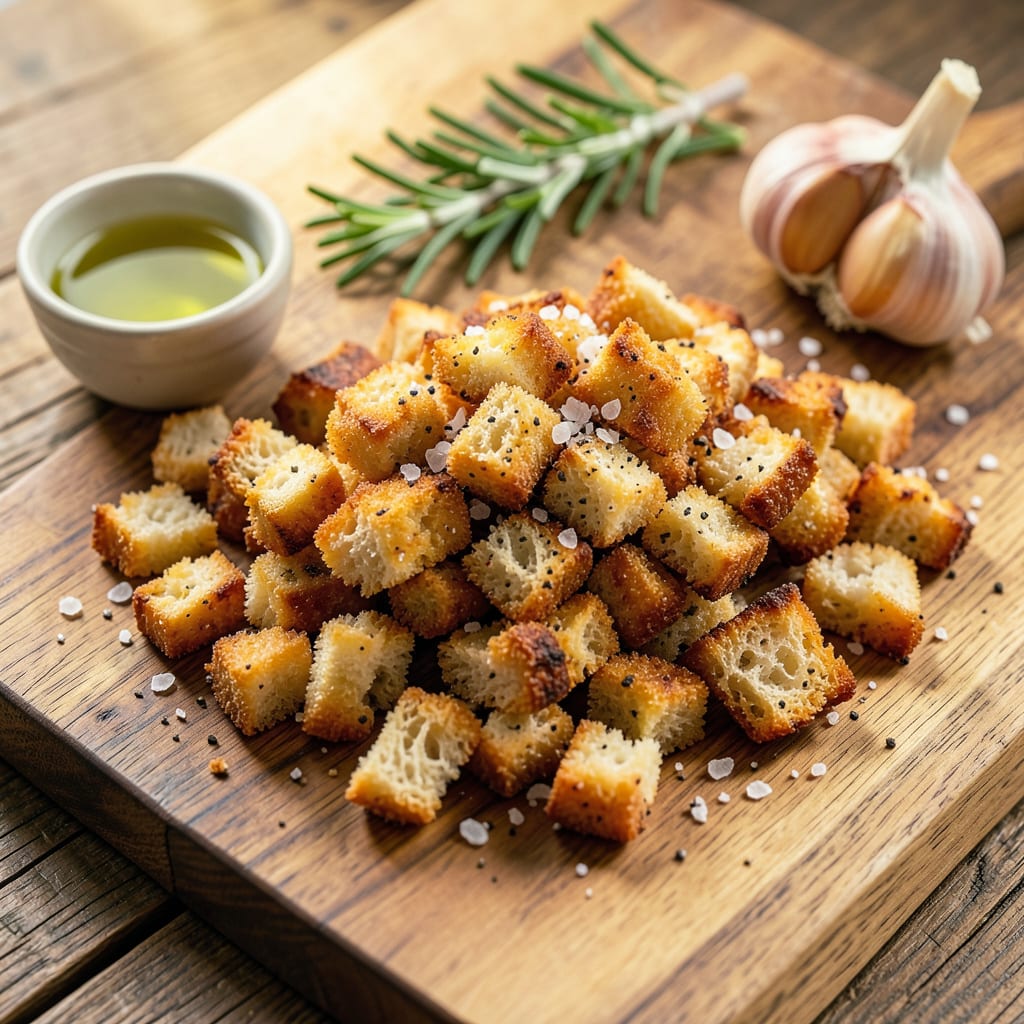
For perfectly crispy croutons, bake at 375°F (190°C) for 10-15 minutes, stirring halfway. Lower temps (300-350°F) work for slower drying, while higher temps (400°F+) risk burning but speed up browning.
I’ve tested this method across dozens of bread types, and 375°F consistently delivers that golden crunch without sacrificing flavor. 🔥 The magic happens when the bread’s moisture evaporates just fast enough to create a crisp exterior while maintaining a light, airy center. What most recipes don’t tell you is that stirring isn’t just about even browning—it actually prevents steam pockets from forming, which can leave you with soggy spots. For garlic or herb-infused croutons, I drop the temp to 350°F to avoid scorching the delicate flavors.
💡 In This Article
- How Oven Temperature Affects Crouton Texture and Flavor
- Pro Tips for Baking Croutons at Any Temperature
How Oven Temperature Affects Crouton Texture and Flavor
The science behind perfect croutons lies in how heat transforms bread’s structure. At 375°F (190°C), you hit the ideal balance where moisture evaporates quickly enough to create crispness, but not so fast that the exterior burns before the center dries.
This temperature triggers the Maillard reaction—the chemical process where amino acids and sugars interact to produce that deep golden color and nutty flavor we love. 🔥
Lower temperatures (300-350°F) work through gentle dehydration, which is perfect for denser breads like sourdough that need more time to crisp without burning. The slower process allows moisture to escape evenly, preventing that dreaded “crunchy outside, chewy inside” texture. However, this method requires patience—expect to add 5-10 extra minutes of baking time.
For herb-infused croutons, I actually prefer this range because it coaxes out aromatic oils without scorching delicate flavors like parsley or chives.
Cranking the heat to 400°F+ accelerates the Maillard reaction dramatically, which is why you’ll get faster browning—but there’s a catch. The exterior can carbonize before the interior fully dries, especially with softer breads like brioche.
I reserve high heat for quick batches when I’m short on time, or for creating “black pepper croutons” where a slightly charred edge adds intentional bitterness. The key is watching like a hawk and pulling them at the first sign of deep golden color—usually around 8-10 minutes.
Bread type dramatically changes the temperature equation. Stale baguettes with their tight crumb structure can handle higher heat (400°F), while open-crumbed ciabatta benefits from moderate temps (350°F) to crisp those nooks and crannies evenly. What most home cooks miss is that oil content matters too—heavily oiled croutons need 25°F lower temperatures to prevent greasy smoking.
✨
The moisture evaporation rate is what separates mediocre from magnificent croutons. At 375°F, bread loses about 1-1.5% moisture per minute, which is the sweet spot for achieving crispness without dessication. Too low, and you’ll steam the bread instead of toasting it; too high, and you’ll create a brittle shell with a raw center.
This is why professional kitchens often use convection ovens—the forced air circulation maintains this ideal evaporation rate even at slightly lower temperatures.
Here’s what’s actually happening at the molecular level: As heat penetrates the bread, starch granules absorb remaining moisture and swell. Between 320-390°F, these starches undergo retrogradation—a process where they recrystallize into a rigid structure that gives croutons their satisfying crunch.
The proteins in the bread (gluten) simultaneously denature and form new bonds, contributing to that characteristic snap when you bite in. 🌟
For garlic or cheese-topped croutons, I always reduce the temperature by 25°F to prevent burning the additions before the bread crisps. The same goes for sweet variations with cinnamon sugar—the sugar caramelizes faster than the bread toasts, so 325°F gives you even browning without bitterness.
Remember that carryover cooking continues for 1-2 minutes after removal from the oven, so pull croutons when they’re just shy of your desired doneness.

Trained in classic French technique but raised on slow-cooked ribs and spicy rubs, she blends culinary skill with smoke and soul.
- Recipe For Diced Pork In Slow Cooker: Melt-In-Your-Mouth Tenderness All Day - October 3, 2026
- Recipe for Crock Pot Lasagna Using Ravioli: No-Boil Cheese Layers - October 3, 2026
- Recipe for Cut Up Chicken: One-Pan Crispy Bites - October 3, 2026