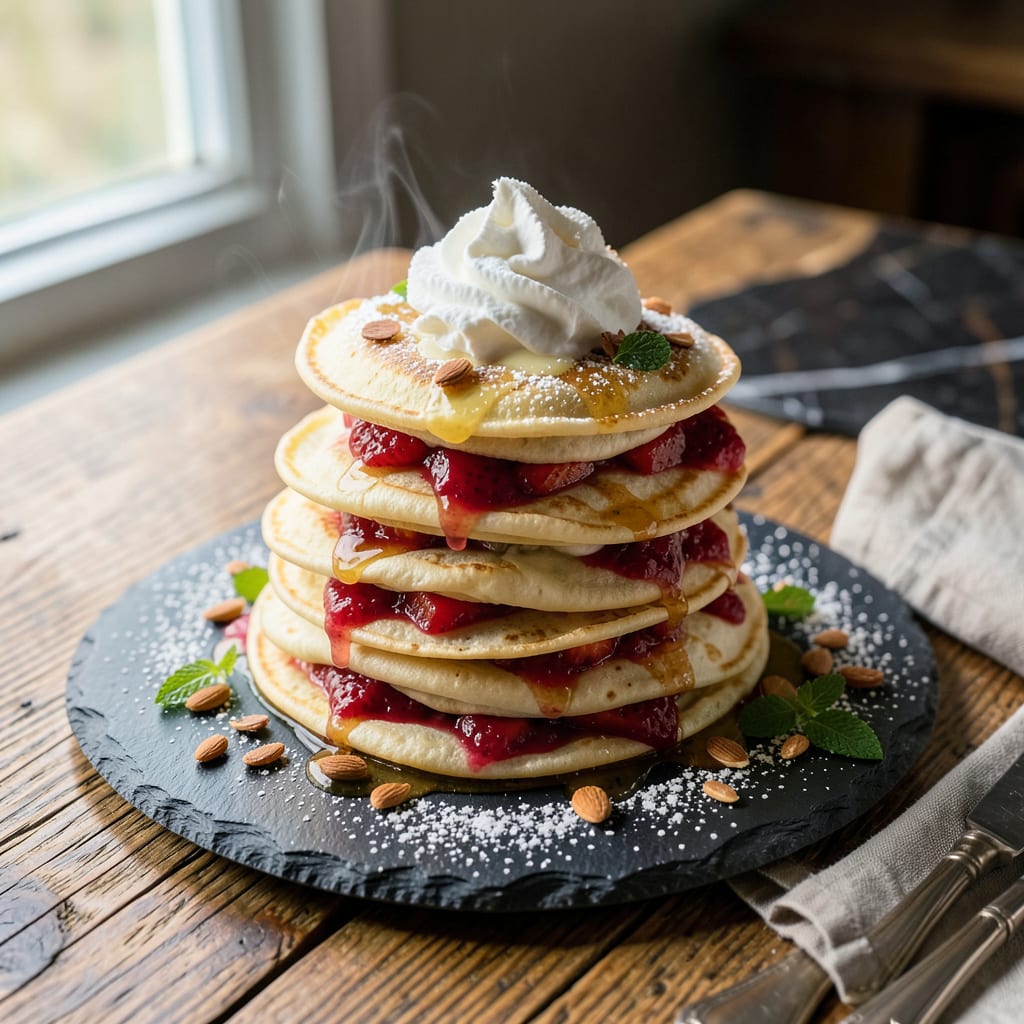
Yes, you can make crepes without eggs by using substitutes like flaxseed meal, mashed banana, applesauce, or aquafaba. These alternatives help bind the batter while keeping the texture light and tender.
I’ve tested these swaps in my own kitchen, and the results might surprise you. 🔥 Flaxseed meal creates a gel-like consistency that mimics eggs’ binding power, while aquafaba (chickpea brine) whips up to add airiness. The key is balancing moisture—banana adds natural sweetness but requires adjusting liquid ratios. What’s fascinating is how each substitute brings its own character, from nutty flaxseed notes to the delicate structure of whipped aquafaba.
Don’t assume egg-free means flavor-free or fragile. ✨ With the right technique, you’ll achieve that signature crepe flexibility and golden lace pattern. My pro tip: let the batter rest 10-15 minutes before cooking—this gives substitutes time to fully hydrate and work their magic.
💡 In This Article
- How Egg Substitutes Work in Eggless Crepe Batter
- Best Egg-Free Crepe Recipes and Flavor Pairings
How Egg Substitutes Work in Eggless Crepe Batter
Eggs play three critical roles in traditional crepes: binding, leavening, and adding richness. When you remove them, you need to replicate these functions through clever substitutions. Flaxseed meal works because its soluble fiber forms a gel-like mucilage when mixed with water—this mimics egg’s viscous properties.
For every egg, combine 1 tablespoon flaxseed meal with 3 tablespoons water and let it sit for 5-10 minutes to develop the right consistency. 🔥
The science behind banana substitutes is equally fascinating. Bananas contain natural pectin (a structural polysaccharide) that helps bind ingredients together. A ripe banana’s starches have also converted to sugars, which caramelize beautifully during cooking. Use ¼ cup mashed banana per egg, but reduce other liquids by 1-2 tablespoons since bananas add moisture.
The result is crepes with a subtle sweetness and golden-brown speckles from the caramelized sugars.
Aquafaba (chickpea brine) might be the most versatile substitute because it contains proteins and starches that replicate egg’s structural properties. When whipped, aquafaba creates stable foam that adds lightness to crepes. Use 3 tablespoons aquafaba per egg, and for best results, whip it briefly before adding to your batter.
This creates microbubbles that expand during cooking, giving your crepes that delicate, lacy texture we all love. ✨
What most people overlook is how these substitutes affect browning. Eggs contain proteins that undergo Maillard reactions during cooking, creating that classic crepe color. Flaxseed crepes develop a nutty, toasted appearance, while banana versions caramelize more quickly. Aquafaba crepes brown similarly to traditional ones because their proteins react with sugars at 325-350°F.
Adjust your heat accordingly—banana crepes need slightly lower temps to prevent over-browning.
The moisture content in your substitute changes how the batter behaves. Flaxseed absorbs liquid as it cooks, so your batter might thicken slightly in the pan. Banana adds moisture that steams during cooking, creating a slightly softer texture.
Aquafaba’s water content evaporates quickly, so these crepes often develop crisp edges while remaining tender in the center. This is why resting your batter for 10-15 minutes is non-negotiable—it gives substitutes time to fully hydrate and distribute evenly. 💫
Here’s what’s actually happening at the microscopic level: Flaxseed’s mucilage forms a network that traps starch granules from the flour, creating structure. Banana’s pectin molecules cross-link during cooking, reinforcing the crepe’s matrix. Aquafaba’s proteins unfold and rebond when heated, similar to how egg proteins coagulate.
Each substitute creates a different but equally effective structural framework that holds your crepes together without eggs.
The flavor differences are worth noting too. Flaxseed adds a subtle nuttiness that pairs wonderfully with savory fillings like spinach and feta. Banana’s natural sweetness complements chocolate or caramel fillings beautifully. Aquafaba is the most neutral, making it ideal when you want the filling to be the star.
I’ve found that adding ½ teaspoon vanilla extract or 1 teaspoon lemon zest helps balance any dominant substitute flavors while enhancing the overall taste profile. ⚡

Trained in classic French technique but raised on slow-cooked ribs and spicy rubs, she blends culinary skill with smoke and soul.
- Recipe for Boneless Pork Chops in Cast Iron Skillet: Sear and Baste to Juicy Perfection - October 3, 2026
- Recipe for Boneless Cross Rib Roast: Slow-Roasted Beef with Herb Crust - October 3, 2026
- Hamburgers in Sauce Recipe Crock Pot: Slow-Cooked Savory Delight - October 3, 2026