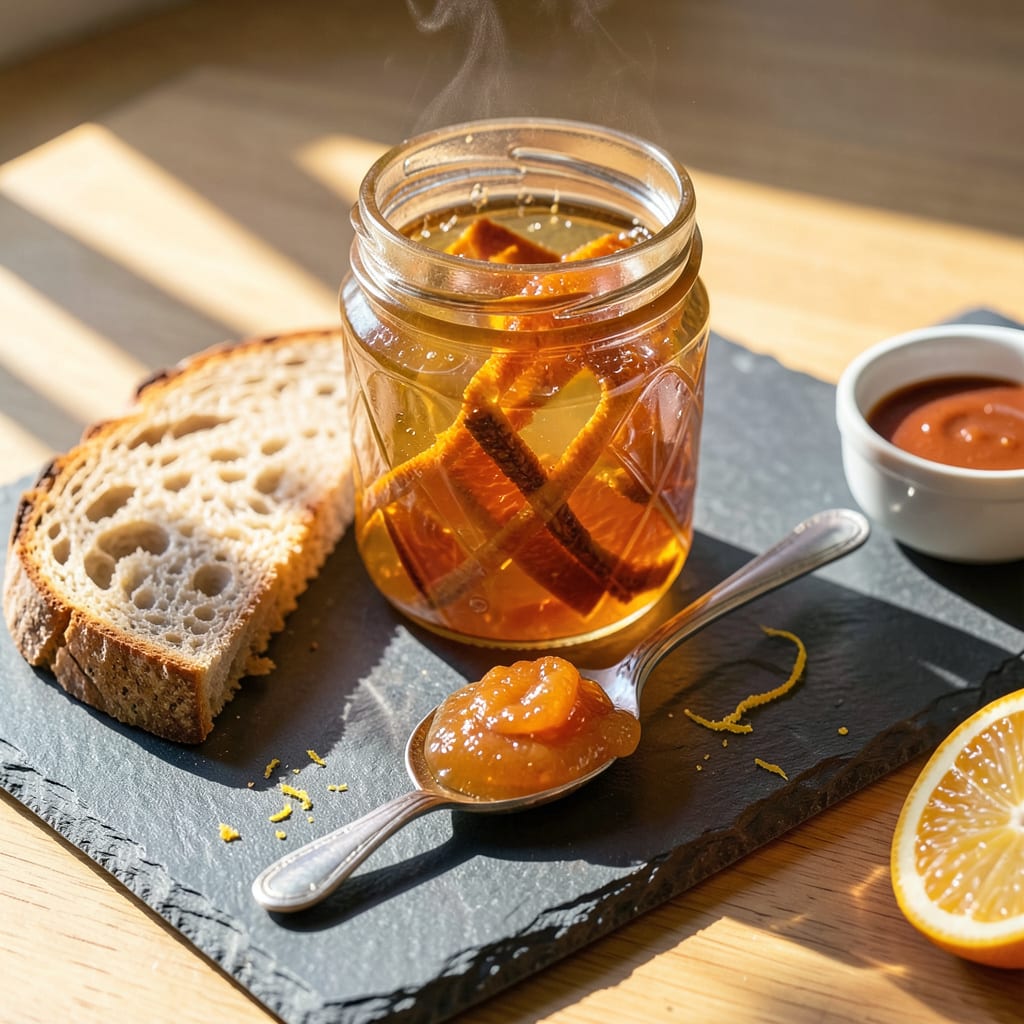
Orange marmalade delivers a bold balance of sweet citrus and slightly bitter peel, with a tangy, zesty brightness that’s both rich and refreshing. The texture combines smooth jelly with soft fruit rind for a distinctive bite.
This isn’t your average sweet spread—it’s a flavor adventure in every spoonful. 🔥 The bitterness from the peel creates a sophisticated contrast that cuts through the sweetness, almost like a citrusy version of dark chocolate. I love how the texture plays with your palate: the silky jelly gives way to tiny bursts of tender rind, adding complexity that sets it apart from smoother preserves like strawberry jam or apricot conserves.
What makes it truly special is its versatility. The bright acidity wakes up rich foods like aged cheddar or smoked meats, while the sweetness balances sharp flavors in cocktails or desserts. It’s the kind of ingredient that makes you rethink breakfast toast—suddenly, it’s not just a topping, but the star of the show. ✨
💡 In This Article
- Breaking Down Orange Marmalade’s Complex Flavor Profile
- Perfect Pairings and Creative Uses for Orange Marmalade
Breaking Down Orange Marmalade’s Complex Flavor Profile
The magic starts with the peel—specifically the flavedo (outer zest) and albedo (white pith). The flavedo contains aromatic oils like limonene and citral, which give that bright, sunny citrus punch. Meanwhile, the albedo holds bitter compounds called limonoids and flavonoids.
When cooked, these transform into complex flavors that linger on your palate, much like the finish of a well-aged whiskey. 🔥
Seville oranges (the classic choice) have 3x more bitterness than Valencia oranges, with a pH around 2.8 compared to 3.5. This acidity level is crucial—it’s what makes your mouth water and balances the sugar. Traditional recipes use a 1:1 sugar-to-fruit ratio, but the cooking time determines how much bitterness remains.
Simmering for 45-60 minutes softens the peel while preserving its character, while longer cooking (up to 90 minutes) mellows the edge.
Compare this to lemon curd’s one-note tartness or grapefruit jam’s overwhelming bitterness. Orange marmalade achieves harmony through its three-layered texture: the glossy, translucent jelly (from pectin-rich peel), the suspended fruit pulp, and the tender peel strips.
The pectin content (about 2-3% in Seville oranges) creates that perfect gel consistency—firm enough to hold shape but soft enough to spread smoothly.
Temperature plays a sneaky role too. Cooking at 220°F (104°C) activates the pectin for setting, while higher temps (above 230°F/110°C) can degrade the delicate citrus oils. That’s why professional marmalade makers use a candy thermometer—the difference between 222°F and 228°F can mean the difference between a runny syrup and that ideal sliceable consistency. ✨
The sugar isn’t just for sweetness—it acts as a preservative and flavor carrier. During cooking, sucrose breaks down into fructose and glucose, which interact with the citrus acids to create new flavor compounds through Maillard reactions.
This is why homemade marmalade tastes deeper than store-bought: the slow reduction concentrates these reactions, adding caramel-like undertones to the bright citrus.
Here’s what most people miss: the peel’s bitterness actually enhances the perceived sweetness through contrast. Studies show our taste buds register bitter-sweet combinations as more intense than either flavor alone. That’s why a well-made marmalade with 15-20% peel content tastes more vibrant than a peel-free version, even with identical sugar levels. 💫
Pro tip: The best marmalades use a mix of orange varieties. I blend 70% Seville (for structure and bitterness) with 30% blood orange (for floral notes and color).
The result is a spread with layers of flavor that evolve from first bite to finish—starting with bright citrus, moving to caramelized sweetness, and ending with that signature bitter kiss that makes you reach for more.

Trained in classic French technique but raised on slow-cooked ribs and spicy rubs, she blends culinary skill with smoke and soul.
- Recipe for Boneless Pork Chops in Cast Iron Skillet: Sear and Baste to Juicy Perfection - October 3, 2026
- Recipe for Boneless Cross Rib Roast: Slow-Roasted Beef with Herb Crust - October 3, 2026
- Hamburgers in Sauce Recipe Crock Pot: Slow-Cooked Savory Delight - October 3, 2026