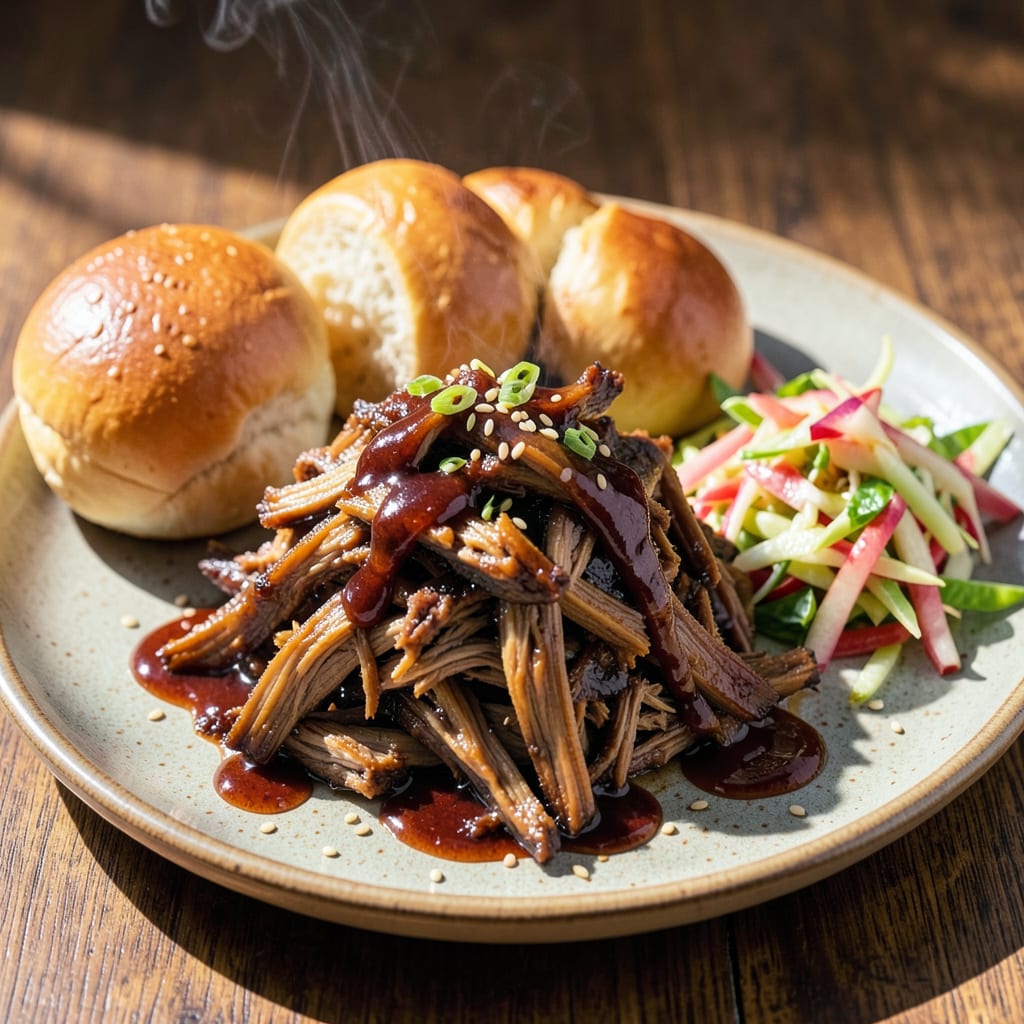
Yes, you can make pulled pork with pork loin, but it requires careful cooking to prevent dryness. The leaner meat benefits from brining, slow cooking at lower temperatures, and frequent basting for best texture and flavor.
As a pitmaster who’s worked with every cut imaginable, I’ll tell you this: pork loin demands extra attention because it lacks the fat marbling that makes traditional pulled pork forgiving. 🔥 The secret lies in treating it like a delicate protein—think low-and-slow at 225°F with a saltwater brine to lock in moisture before it even hits the smoker. What surprises most people is how well it absorbs flavors when you baste it every hour with apple cider vinegar and your favorite rub.
Don’t expect the same melt-in-your-mouth texture as pork shoulder, but with the right technique, you’ll get tender, flavorful results that work beautifully in tacos or sandwiches. ✨ My pro tip? Let it rest wrapped in foil for at least 30 minutes after cooking—this redistributes juices and prevents that dreaded dryness.
💡 In This Article
- Why Pork Loin Requires Different Pulled Pork Techniques
- Step-by-Step Guide to Perfect Pork Loin Pulled Pork
Why Pork Loin Requires Different Pulled Pork Techniques
Pork loin contains about 4-6% fat compared to pork shoulder’s 20-30%, which means it lacks the built-in moisture reservoir that keeps traditional pulled pork juicy. The science is simple: fat renders slowly during cooking, basting the meat from within.
Without this natural lubrication, loin fibers tighten and squeeze out moisture, leaving you with a dry, stringy result if you treat it like shoulder. 🔥
Collagen breakdown—the process that transforms tough connective tissue into gelatin—also works differently. Shoulder has abundant collagen that melts at 160-180°F over hours, creating that signature “pull-apart” texture. Loin has minimal collagen, so you’re relying purely on muscle fiber tenderness.
This means you must cook it to a lower internal temperature (195-203°F max) and monitor closely to avoid overcooking.
The moisture challenge becomes apparent when you consider evaporation rates. In a 225°F smoker, pork loin loses about 1-2% moisture per hour through surface evaporation. Compare that to shoulder, which actually gains moisture from rendered fat during the first half of cooking.
That’s why brining (I use 1/2 cup salt per gallon for 12 hours) becomes non-negotiable—it creates a moisture buffer before cooking even begins. ✨
Temperature control takes on new importance with loin. While shoulder can handle temperature fluctuations in the 225-275°F range, loin demands precision. Even 10°F above your target can mean the difference between tender and tough. I’ve found that wrapping in butcher paper at 165°F (the “stall” point) helps maintain moisture while still allowing smoke penetration.
Here’s what most home cooks miss: the resting phase is twice as critical for loin. While shoulder can rest 1-2 hours without issue, loin needs exactly 30-45 minutes wrapped tightly in foil.
This brief window allows juices to redistribute without the meat cooling too much—longer resting actually makes it drier as the residual heat continues cooking the lean protein. 💫
The flavor absorption difference might surprise you. With less fat to carry flavors, loin benefits from more aggressive seasoning. My go-to ratio is 2 tablespoons rub per pound (versus 1 tablespoon for shoulder), applied after brining when the surface is slightly tacky.
The lack of fat also means smoke flavor penetrates deeper, so I recommend milder woods like apple or cherry rather than strong hickory. ⚡
What you gain in leanness, you trade in forgiving cook times. Where shoulder gives you a 4-hour window to pull it off the smoker, loin has about 30 minutes of optimal doneness. This narrow margin is why I always use a probe thermometer with high/low alarms set at 190°F and 205°F respectively.
The moment it hits 203°F, it’s coming off the heat—no exceptions. 💛

Trained in classic French technique but raised on slow-cooked ribs and spicy rubs, she blends culinary skill with smoke and soul.
- Recipe for Boneless Pork Chops in Cast Iron Skillet: Sear and Baste to Juicy Perfection - October 3, 2026
- Recipe for Boneless Cross Rib Roast: Slow-Roasted Beef with Herb Crust - October 3, 2026
- Hamburgers in Sauce Recipe Crock Pot: Slow-Cooked Savory Delight - October 3, 2026