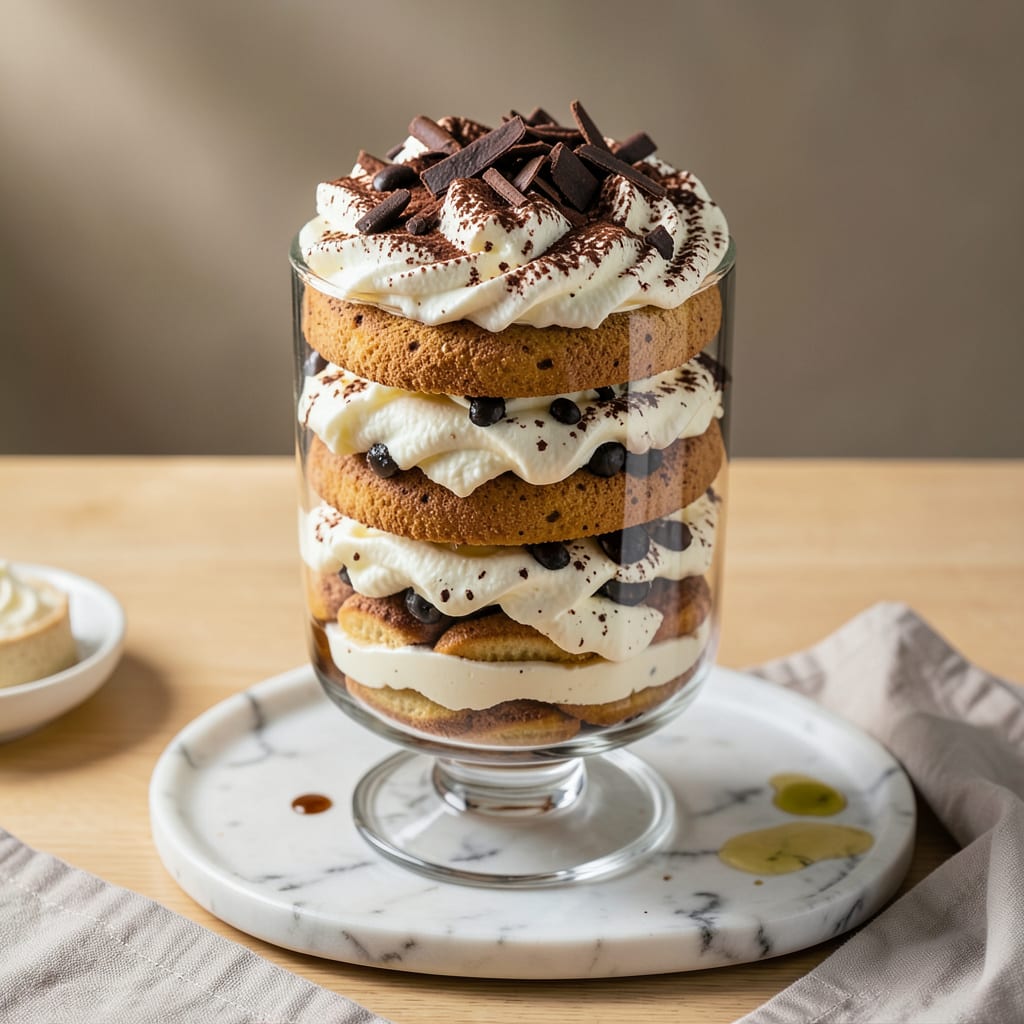
Absolutely! Traditional tiramisu can easily be made alcohol-free by replacing liquor with coffee, fruit juices, or flavored syrups. The key is maintaining moisture and depth of flavor without compromising the classic taste.
I’ve tested countless variations and found the secret lies in balancing liquid ratios. 🔥 Strong brewed espresso or cold brew concentrate delivers that signature bitterness, while a splash of vanilla syrup or almond extract adds complexity. What most home cooks miss is the soaking time—too little and your layers stay dry, too much and you lose structure. The magic happens when you let the coffee-infused ladyfingers sit for exactly 2-3 minutes before assembling, allowing just enough absorption without turning mushy.
For those avoiding caffeine, fruit juices like orange or cherry work surprisingly well when reduced by half to intensify flavor. ✨ The natural sugars caramelize slightly during chilling, creating a depth that mimics the warmth of traditional liqueurs. My pro tip? Add a pinch of cinnamon or cardamom to your mascarpone mixture—it enhances the perceived richness without overpowering the delicate cream layers.
💡 In This Article
- Why Traditional Tiramisu Uses Alcohol and How to Adapt
- Top 5 Non-Alcoholic Tiramisu Substitutes and Recipe Adjustments
Why Traditional Tiramisu Uses Alcohol and How to Adapt
Alcohol in classic tiramisu serves three critical functions that go beyond simple flavor. First, it acts as a flavor enhancer—the ethanol molecules bind with both water and fat-soluble compounds, effectively carrying aromatic notes from the coffee and cocoa throughout the dessert.
Second, it provides moisture control; the alcohol’s volatility helps regulate how much liquid the ladyfingers absorb, preventing sogginess while ensuring even distribution. Finally, it contributes to aroma development during chilling, as the alcohol slowly evaporates and leaves behind concentrated flavor compounds. 🔥
The most common alcohols—Marsala wine, rum, or coffee liqueur—each bring distinct chemical properties. Marsala’s 15-20% ABV and caramelized grape notes create depth, while rum’s 40% ABV and vanilla undertones add warmth. Coffee liqueurs like Kahlúa combine both alcohol (20% ABV) and sugar (25g per ounce), which means they contribute sweetness alongside their aromatic qualities.
When removing alcohol, you’re not just omitting a liquid—you’re eliminating a multi-functional ingredient that affects texture, flavor distribution, and preservation. ✨
To adapt successfully, focus on replicating these three core functions. For flavor enhancement, use concentrated liquids like cold brew reduced by half or vanilla bean-infused simple syrup. For moisture control, adjust soaking times—alcohol-free liquids often require 30-50% less soaking time since they lack ethanol’s drying effect.
I’ve found that brushing ladyfingers with syrup rather than dipping them gives more precise control. The aroma challenge is trickier; try adding 1/8 teaspoon of cinnamon or cardamom to your mascarpone mixture to create complexity that lingers like alcohol’s evaporative notes. 💫
Temperature plays an unexpected role in non-alcoholic adaptations. Alcohol lowers the freezing point of liquids, which is why traditional tiramisu stays creamy when chilled. Without it, your dessert may firm up more in the fridge. The solution?
Increase the fat content slightly—replace 10% of the heavy cream with full-fat Greek yogurt or add an extra egg yolk to the mascarpone mixture. This maintains the signature velvety texture while compensating for the missing alcohol’s anti-freezing properties. 🌟
Here’s what most recipes don’t tell you: the pH balance changes without alcohol. Wine and liqueurs typically have a pH of 3-4, which helps cut through the richness of the mascarpone. To replicate this, add 1 teaspoon of lemon juice or 1/2 teaspoon of cream of tartar to your coffee soaking liquid.
This small adjustment brightens the flavors and prevents the dessert from tasting flat—a common complaint with alcohol-free versions. ⚡
The structural integrity of your tiramisu also depends on alcohol’s role in protein denaturation. In traditional recipes, alcohol helps stabilize the egg proteins in the mascarpone cream. Without it, you might notice slight separation after chilling. The fix?
Whip your egg whites to stiff peaks (not just soft) and fold them gently but thoroughly into the mascarpone base. This creates a more stable foam structure that holds up for 3-4 days in the fridge—just like the classic version. 💛
Remember that alcohol also acts as a preservative, extending tiramisu’s shelf life. Non-alcoholic versions are best consumed within 48 hours for optimal texture and flavor.
If you need to make it ahead, consider adding 1/4 teaspoon of citric acid to your coffee mixture—it mimics alcohol’s preservative qualities while enhancing the fruit notes in your substitute liquids. This is the kind of professional trick that separates good tiramisu from extraordinary, whether it contains alcohol or not. 🌟

Trained in classic French technique but raised on slow-cooked ribs and spicy rubs, she blends culinary skill with smoke and soul.
- Recipe for Boneless Pork Chops in Cast Iron Skillet: Sear and Baste to Juicy Perfection - October 3, 2026
- Recipe for Boneless Cross Rib Roast: Slow-Roasted Beef with Herb Crust - October 3, 2026
- Hamburgers in Sauce Recipe Crock Pot: Slow-Cooked Savory Delight - October 3, 2026