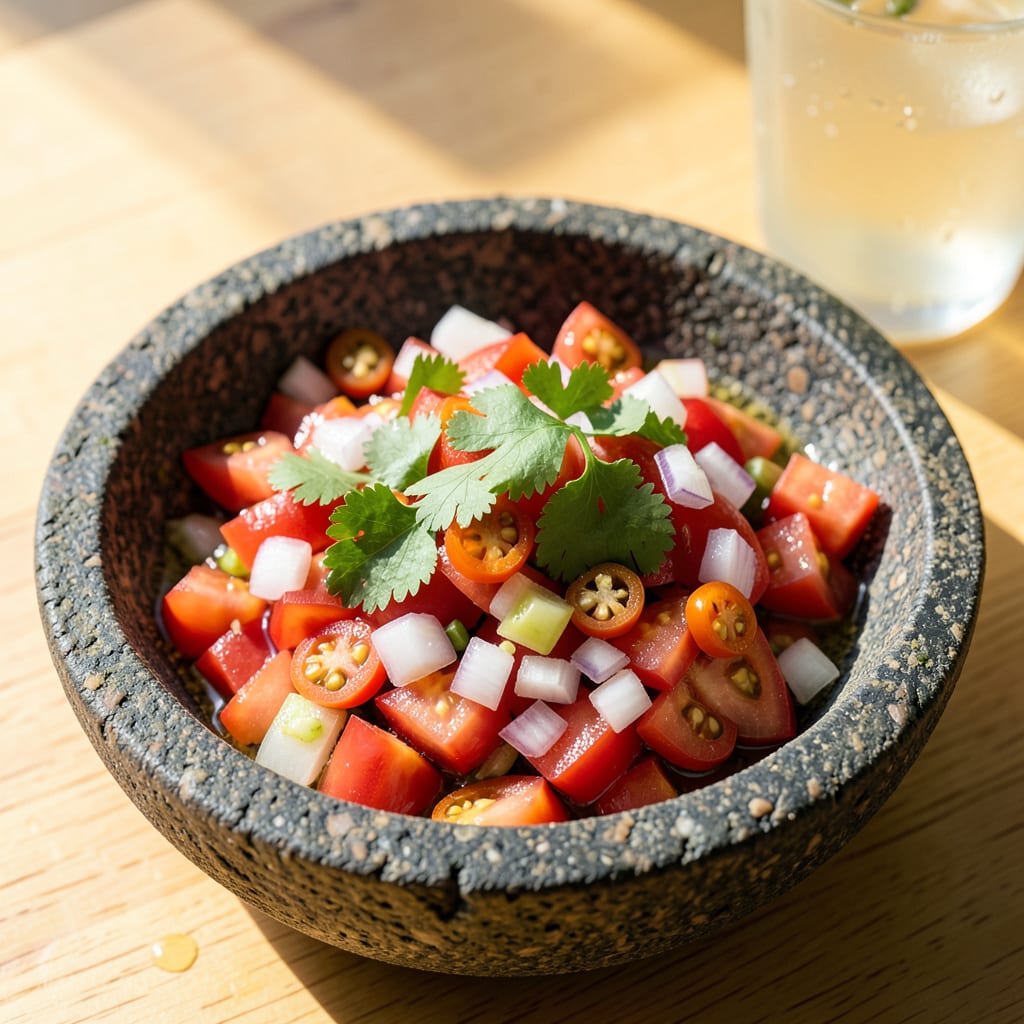
Yes, you can freeze pico de gallo for up to 4 months, but the texture changes significantly—tomatoes become mushy and onions lose crispness. It works best in cooked dishes rather than fresh applications after thawing.
I always tell people that freezing transforms pico from a vibrant fresh topping into a flavor-packed cooking ingredient. The cellular structure of tomatoes and peppers breaks down during freezing, releasing more liquid and softening the texture. 🔥 This isn’t necessarily bad—it actually creates a more concentrated flavor profile that works beautifully in simmered dishes like chili or braised meats. The key is adjusting your expectations: what was once perfect for tacos becomes a secret weapon for adding depth to sauces and stews.
💡 In This Article
- How Freezing Affects Pico de Gallo Texture and Flavor
- Best Ways to Use Frozen Pico de Gallo After Thawing
How Freezing Affects Pico de Gallo Texture and Flavor
When pico hits the freezer, the water inside tomato and onion cells expands as it crystallizes, literally bursting cell walls. This is why thawed pico releases so much liquid—those ruptured cells can’t hold their original structure. Tomatoes, which are about 95% water, become particularly vulnerable.
The ice crystals act like microscopic knives, slicing through pectin (the compound that gives tomatoes their firmness) and turning what was once crisp into something closer to a thick sauce. 🔥
The lime juice in pico actually helps preserve color during freezing by slowing oxidation, but it can’t protect texture. Citric acid lowers the pH, which inhibits browning enzymes, but the physical damage from ice crystals still occurs. Onions lose their signature bite because their sulfur compounds (responsible for that sharp flavor) degrade faster when frozen.
Compare this to fresh pico where you get that satisfying crunch—freezing transforms it into a softer, more uniform mixture.
Here’s what changes sensory-wise: Fresh pico has distinct layers of texture—juicy tomato chunks, crisp onion, and firm jalapeño. Frozen versions blend into a more homogeneous paste where individual ingredients lose their identity.
The flavor actually intensifies because cell damage releases more aromatic compounds, but the mouthfeel becomes closer to a cooked salsa than a fresh relish. This is why I always recommend using thawed pico in dishes where texture isn’t the star. ✨
The freezing process also concentrates flavors differently. Capsaicin (the compound that makes peppers hot) becomes more pronounced because it’s fat-soluble and resists degradation. Meanwhile, volatile aromatic compounds in cilantro diminish by about 30-40% after freezing. That’s why thawed pico might taste spicier but less bright than its fresh counterpart.
The balance shifts from fresh and vibrant to deep and concentrated.
Temperature fluctuations make things worse. Each time pico partially thaws and refreezes (like in a frost-free freezer), more ice crystals form and melt, accelerating cell damage. This is why commercial frozen salsas often add stabilizers like xanthan gum—something we don’t have in homemade pico.
For best results, freeze in single-use portions and avoid repeated temperature changes. 💫
Pro tip: The smaller you chop your ingredients before freezing, the more uniform the thawed texture will be. Large tomato chunks become mealy, while finely diced pieces blend into a more consistent sauce-like base. This actually works to your advantage in cooked applications where you want the flavors to meld seamlessly into the dish.

Trained in classic French technique but raised on slow-cooked ribs and spicy rubs, she blends culinary skill with smoke and soul.
- Recipe for Boneless Pork Chops in Cast Iron Skillet: Sear and Baste to Juicy Perfection - October 3, 2026
- Recipe for Boneless Cross Rib Roast: Slow-Roasted Beef with Herb Crust - October 3, 2026
- Hamburgers in Sauce Recipe Crock Pot: Slow-Cooked Savory Delight - October 3, 2026