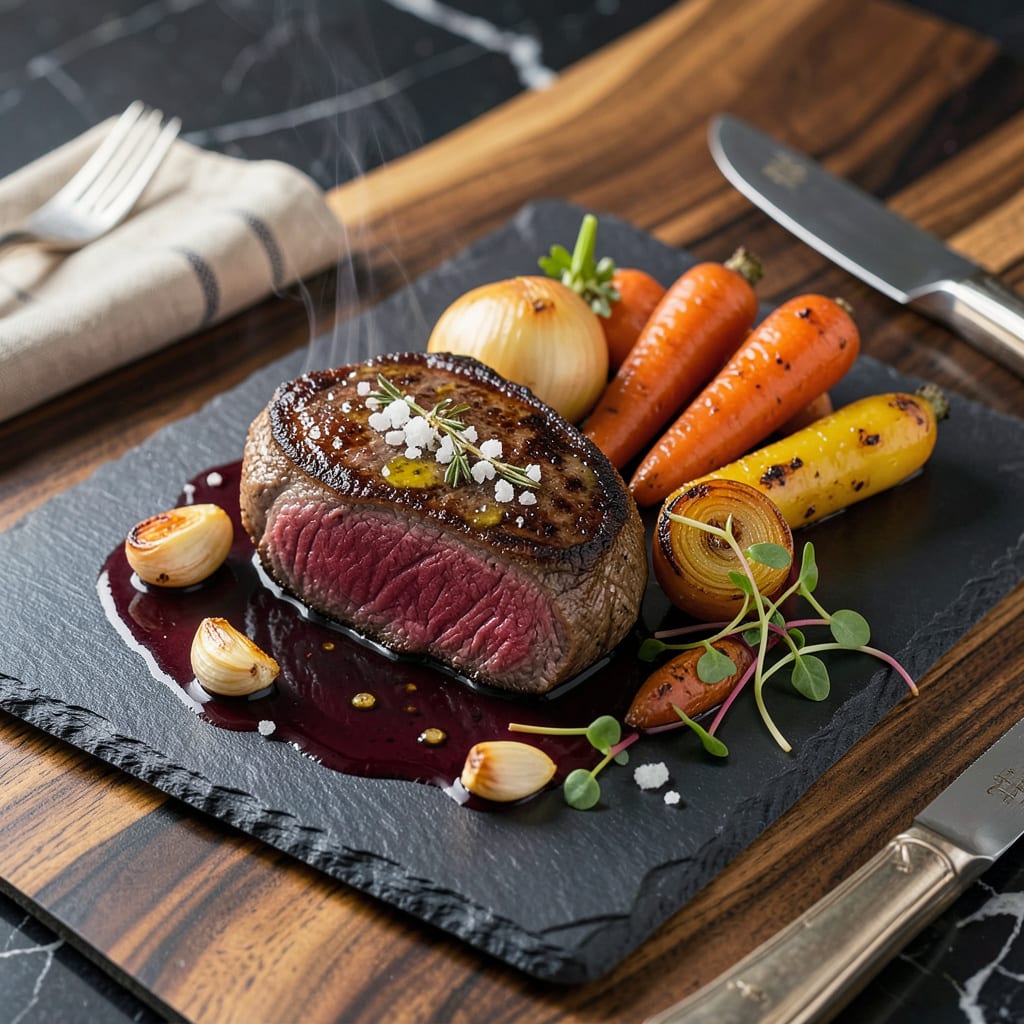
Yes, pan-frying is an excellent way to cook filet mignon. Use high heat with a heavy skillet, sear both sides for 2-3 minutes each, then finish with butter and herbs for a juicy, tender result.
As a chef who’s cooked thousands of steaks, I can tell you pan-frying gives you restaurant-quality results at home. The secret lies in that initial high-heat sear—it creates a caramelized crust that locks in juices while keeping the interior perfectly medium-rare. What most home cooks miss is the butter basting step, which adds rich flavor and helps regulate temperature during those final crucial minutes. 🔥
This method particularly shines for filet mignon because its lean nature benefits from the controlled environment of a skillet. Unlike grilling where flare-ups can char the delicate meat, pan-frying gives you precise heat management. I always recommend using a cast iron skillet—it holds heat like a professional kitchen’s flat-top, ensuring even cooking from edge to center.
💡 In This Article
- Why Pan-Frying Works Perfectly for Filet Mignon
- Step-by-Step Guide to Pan-Frying Filet Mignon at Home
Why Pan-Frying Works Perfectly for Filet Mignon
The magic happens through the Maillard reaction—that beautiful chemical process where amino acids and reducing sugars react at 300-500°F to create complex flavors and that coveted golden-brown crust. Filet mignon’s delicate nature actually benefits from pan-frying because the controlled skillet environment prevents the flare-ups that can ruin this lean cut on a grill.
The even heat distribution from a heavy pan ensures the 1.5-2 inch thick center reaches perfect doneness without overcooking the exterior. ✨
What makes filet mignon special is its low fat content (about 5-8%) compared to ribeye’s 15-20%. This leanness means it cooks faster and benefits from the butter basting technique unique to pan-frying.
As you tilt the skillet and spoon that foaming browned butter over the steak, you’re not just adding flavor—you’re gently cooking the top surface while keeping the internal temperature rising at just the right pace. A 120-125°F internal temp gives you that perfect medium-rare with a warm red center. 🔥
The science of heat transfer works in your favor here. Cast iron’s superior heat retention (about 4x better than stainless steel) means you get a consistent sear without temperature spikes. When that 450°F skillet hits the cold steak, the surface proteins instantly denature and coagulate, forming that flavorful crust while the interior stays tender.
This is why professional chefs always reach for cast iron when precision matters most.
Here’s what most home cooks overlook: the carryover cooking effect. When you remove that beautiful steak from the pan, its internal temperature will rise another 5-10°F during resting. That’s why I always pull filet mignon at 115-120°F—it’ll reach perfect doneness while resting.
The pan-frying method gives you complete control over this final temperature climb, unlike grilling where residual heat can be unpredictable. ⚡
Consider the texture transformation: raw filet mignon has a soft, almost buttery feel that firms up beautifully when cooked properly. The pan’s direct contact creates a textural contrast between the crisp exterior and velvety interior that you just can’t achieve through other methods.
This is why French technique (which I studied extensively) favors pan-searing for delicate cuts—the precision elevates the natural qualities of the meat rather than masking them.
What really seals the deal is the fond development. Those delicious browned bits left in your skillet after cooking? They’re packed with umami compounds that form the base for incredible pan sauces.
A quick deglaze with 1/4 cup red wine or 1/2 cup beef stock lets you capture every bit of flavor—something you’d lose if you grilled instead. This is restaurant-level technique made simple for your home kitchen. 💫
The thickness matters too. A standard 1.5-inch filet needs about 2-3 minutes per side for medium-rare, while a thicker 2-inch cut might require 3-4 minutes plus finishing in a 400°F oven. This adaptability is why pan-frying works for any size steak—you’re not limited by grill space or heat zones.
It’s the most forgiving method for achieving consistent results every time.

Trained in classic French technique but raised on slow-cooked ribs and spicy rubs, she blends culinary skill with smoke and soul.
- Recipe for Boneless Pork Chops in Cast Iron Skillet: Sear and Baste to Juicy Perfection - October 3, 2026
- Recipe for Boneless Cross Rib Roast: Slow-Roasted Beef with Herb Crust - October 3, 2026
- Hamburgers in Sauce Recipe Crock Pot: Slow-Cooked Savory Delight - October 3, 2026