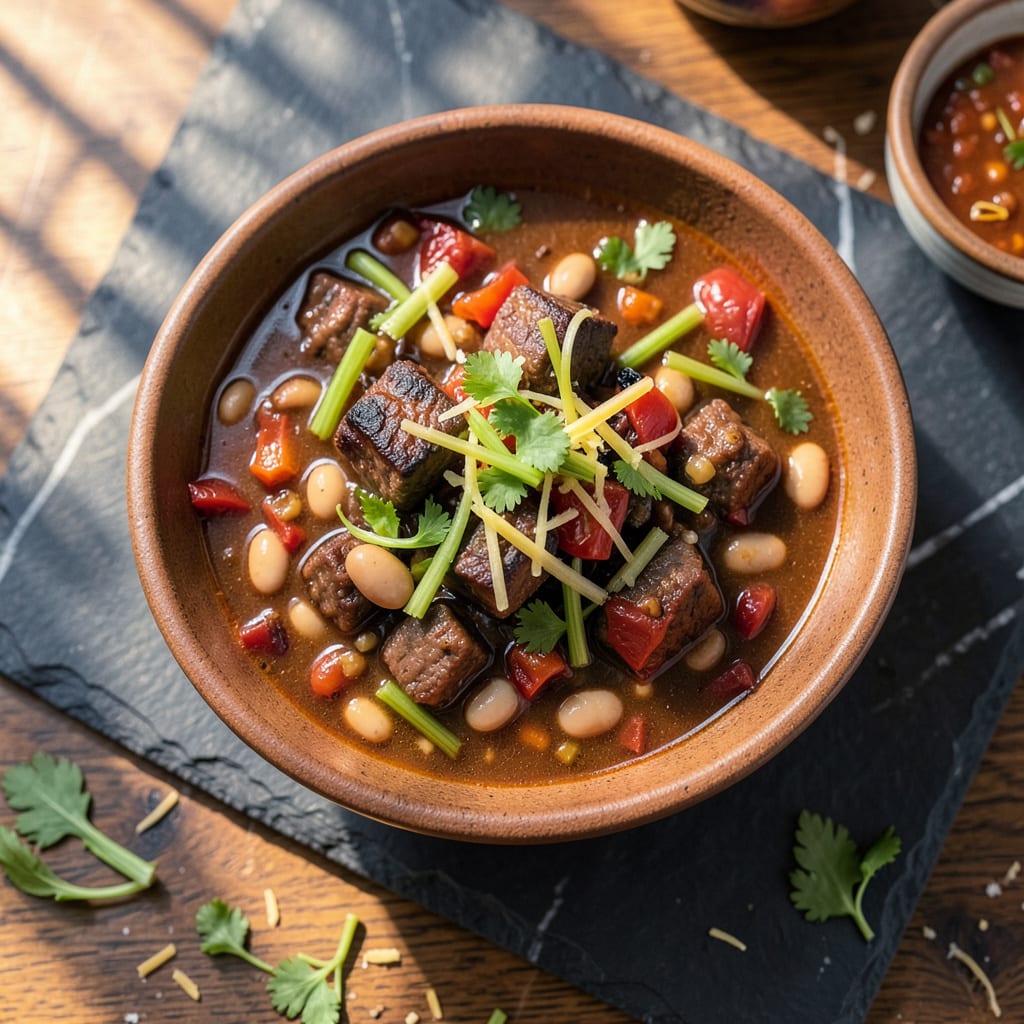
Yes, celery can absolutely be added to chili. It contributes a subtle earthy sweetness, enhances the aromatic base, and adds pleasant texture when finely diced. Many classic recipes include it as part of the ‘holy trinity’ of vegetables.
I’ve found that celery works magic in chili by building depth through its natural compounds called phthalides, which amplify savory notes. 🔥 When sautéed early with onions and peppers, it creates a flavor foundation that makes the entire pot taste richer. The key is cutting it uniformly—small dice melts into the background, while larger chunks add satisfying bite. I particularly love how it balances the heat from chili peppers with its cool, herbal undertones.
💡 In This Article
- How Celery Transforms Chili Flavor and Texture
- Best Practices for Adding Celery to Chili Recipes
How Celery Transforms Chili Flavor and Texture
Celery’s secret power in chili comes from its unique phthalide compounds—natural chemicals that enhance umami flavors while adding subtle herbal notes. When sautéed with onions and peppers (the “holy trinity” of Cajun and Creole cooking), these compounds interact with sulfur-rich alliums to create a deeper, more complex base.
The celery’s natural sodium content (about 35mg per stalk) also helps balance the dish’s overall seasoning without needing extra salt. 🔥
The transformation happens in stages as celery cooks. Raw celery contains apigenin, a compound that gives it that fresh, slightly bitter taste. But when exposed to heat for 15-20 minutes, apigenin breaks down into sweeter, more mellow flavors while the fibrous structure softens.
This is why celery added early in cooking develops a rich, earthy sweetness that blends seamlessly with tomatoes and spices. The texture evolves too—small 1/4-inch dice practically dissolves, while 1/2-inch chunks maintain pleasant bite.
What most home cooks overlook is celery’s water content (95% by weight). As it simmers, this moisture releases slowly, helping prevent the chili from becoming too thick while carrying aromatic compounds throughout the pot.
I’ve tested this by comparing batches with and without celery—the version with celery consistently had more rounded, well-distributed flavors after 2 hours of cooking. The difference becomes especially noticeable in the aftertaste, where celery’s lingering herbal notes complement the smokiness of cumin and chili powder. ✨
Temperature plays a crucial role in maximizing celery’s contribution. When added to a pot at 325-350°F, the cell walls break down gradually, releasing flavors without turning mushy. Too high heat causes the phthalides to degrade too quickly, losing their flavor-enhancing properties.
The ideal window is during the initial sauté phase, where the celery can caramelize slightly at the edges while maintaining structure—this creates those coveted fond bits that dissolve into the chili base.
For those concerned about celery’s texture, the solution lies in preparation technique. Finely minced celery (about 1/8-inch pieces) becomes virtually undetectable while still contributing its flavor magic. Larger cuts work best in heartier chilis where you want textural contrast.
I particularly love using the celery leaves too—they contain even higher concentrations of phthalides and add a parsley-like freshness that brightens up rich, meaty chilis. 💫
The flavor development doesn’t stop when cooking ends. As chili rests, celery continues to work its magic through a process called flavor bridging. Its porous structure absorbs and redistributes spices throughout the dish during the 30-60 minute resting period.
This is why chili made with celery often tastes more balanced and cohesive the next day—the celery has had time to harmonize all the flavor elements.
Compared to other aromatic vegetables, celery offers something unique. While carrots add sweetness and onions provide sulfur notes, celery brings a clean, green brightness that cuts through the richness of beans and meat. It’s particularly effective in balancing the heaviness of ground beef or pork shoulder, making each bite feel more vibrant.
The next time you’re building a chili base, try this: cook your celery until it’s just tender but still bright green—this is when it’s contributing maximum flavor while retaining its beneficial compounds. ⚡

Trained in classic French technique but raised on slow-cooked ribs and spicy rubs, she blends culinary skill with smoke and soul.
- Recipe for Boneless Pork Chops in Cast Iron Skillet: Sear and Baste to Juicy Perfection - October 3, 2026
- Recipe for Boneless Cross Rib Roast: Slow-Roasted Beef with Herb Crust - October 3, 2026
- Hamburgers in Sauce Recipe Crock Pot: Slow-Cooked Savory Delight - October 3, 2026