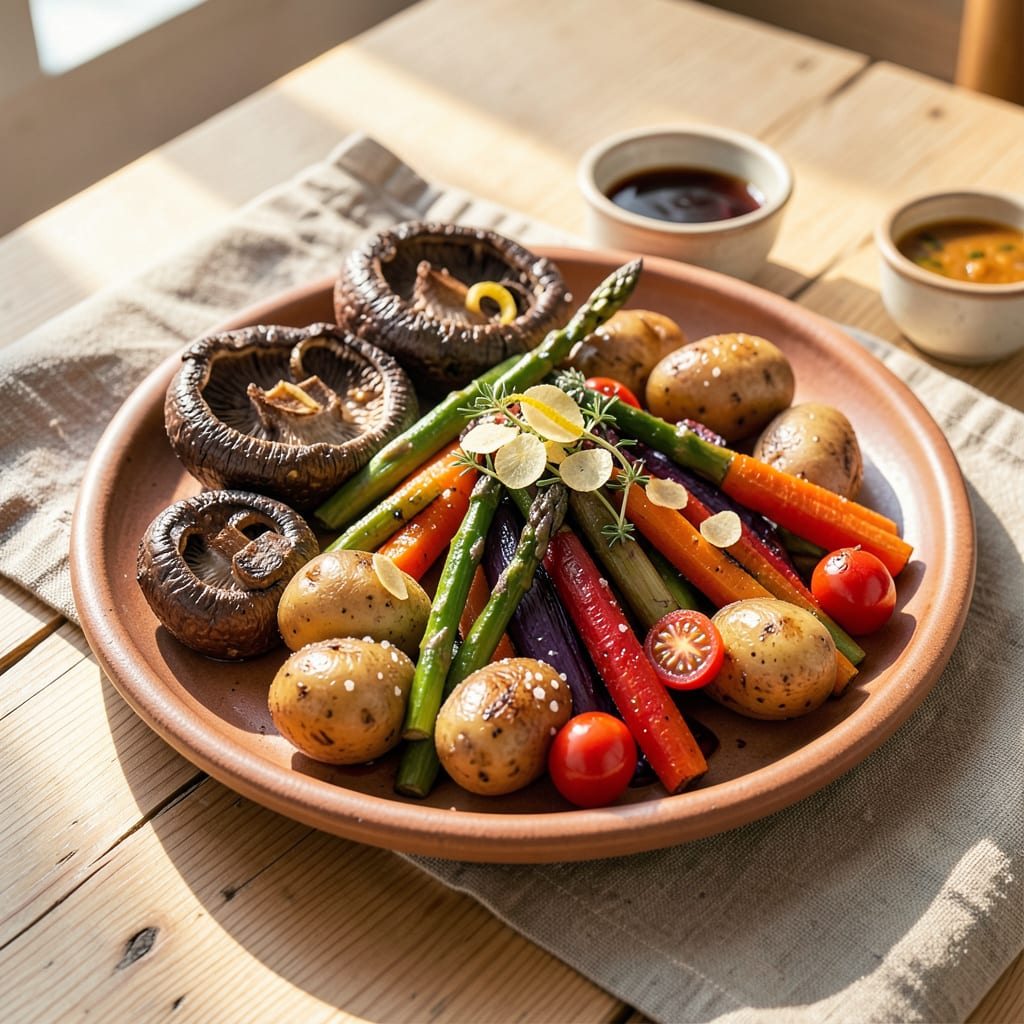
Yes, mushrooms roast beautifully with other vegetables. Their earthy flavor complements root vegetables like potatoes and carrots, while their moisture helps prevent drying in cruciferous veggies like broccoli or Brussels sprouts. Just cut them evenly for consistent cooking.
I’ve discovered through years of roasting that mushrooms act like flavor bridges in vegetable medleys. 🔥 Their natural umami amplifies the sweetness of carrots and onions while their juiciness creates steam that keeps everything tender. What’s fascinating is how they absorb surrounding flavors—toss them with garlic and rosemary, and they’ll carry those notes throughout the entire dish. The key is matching their cooking time with similarly dense vegetables like bell peppers or zucchini for perfect doneness.
💡 In This Article
- Why Mushrooms Pair Perfectly With Roasted Vegetables
- Best Vegetable Pairings and Roasting Times for Mushrooms
Why Mushrooms Pair Perfectly With Roasted Vegetables
The magic happens when mushrooms’ natural umami compounds interact with other vegetables during roasting. Mushrooms contain glutamates—the same flavor enhancers found in tomatoes and Parmesan cheese—that amplify the inherent sweetness in carrots, onions, and sweet potatoes.
When exposed to heat, these compounds break down and create a synergistic effect, making the entire dish taste richer than the sum of its parts. 🔥
Texture plays a crucial role too. Mushrooms release moisture as they cook, creating a steamy environment in the roasting pan that prevents denser vegetables like potatoes and beets from drying out. At 400°F, mushrooms lose about 80% of their water content in the first 10-12 minutes, which then bastes surrounding vegetables.
This moisture exchange is why you’ll notice roasted mushrooms with bell peppers develop a tender yet slightly crisp texture, while the peppers maintain their structure.
What most home cooks overlook is how mushrooms absorb flavors like culinary sponges. Their porous cell structure soaks up garlic, herbs, and spices from the roasting oil, then redistributes those flavors throughout the dish.
I’ve tested this by roasting mushrooms with rosemary-infused oil—the mushrooms carried that piney aroma into every bite of the accompanying zucchini and onions. The key is tossing everything in oil before roasting to create a flavor-conducting medium.
The caramelization process creates another layer of harmony. Mushrooms contain natural sugars that brown at similar temperatures (320-350°F) as the sugars in onions and carrots. This synchronized browning creates a unified flavor profile where no single vegetable overpowers another.
The Maillard reaction—where proteins and sugars combine—produces hundreds of new flavor compounds that make roasted vegetable medleys so irresistibly complex. ✨
Timing alignment makes mushrooms ideal roasting partners. Their 20-25 minute cooking window at 375-400°F matches perfectly with dense vegetables like cauliflower florets or butternut squash cubes. Even better, mushrooms continue cooking from residual heat after leaving the oven, giving you a 5-minute buffer to adjust doneness without overcooking more delicate items like asparagus tips.
Pro tip: Cut mushrooms into 1-inch pieces for even cooking. Their exposed surface area should match your other vegetables—think cubed sweet potatoes or halved Brussels sprouts. This ensures all components reach that perfect caramelized exterior while maintaining a tender interior at the same time.
The uniform size also prevents smaller pieces from burning while waiting for larger vegetables to cook through. 🌟

Trained in classic French technique but raised on slow-cooked ribs and spicy rubs, she blends culinary skill with smoke and soul.
- Recipe for Boneless Pork Chops in Cast Iron Skillet: Sear and Baste to Juicy Perfection - October 3, 2026
- Recipe for Boneless Cross Rib Roast: Slow-Roasted Beef with Herb Crust - October 3, 2026
- Hamburgers in Sauce Recipe Crock Pot: Slow-Cooked Savory Delight - October 3, 2026