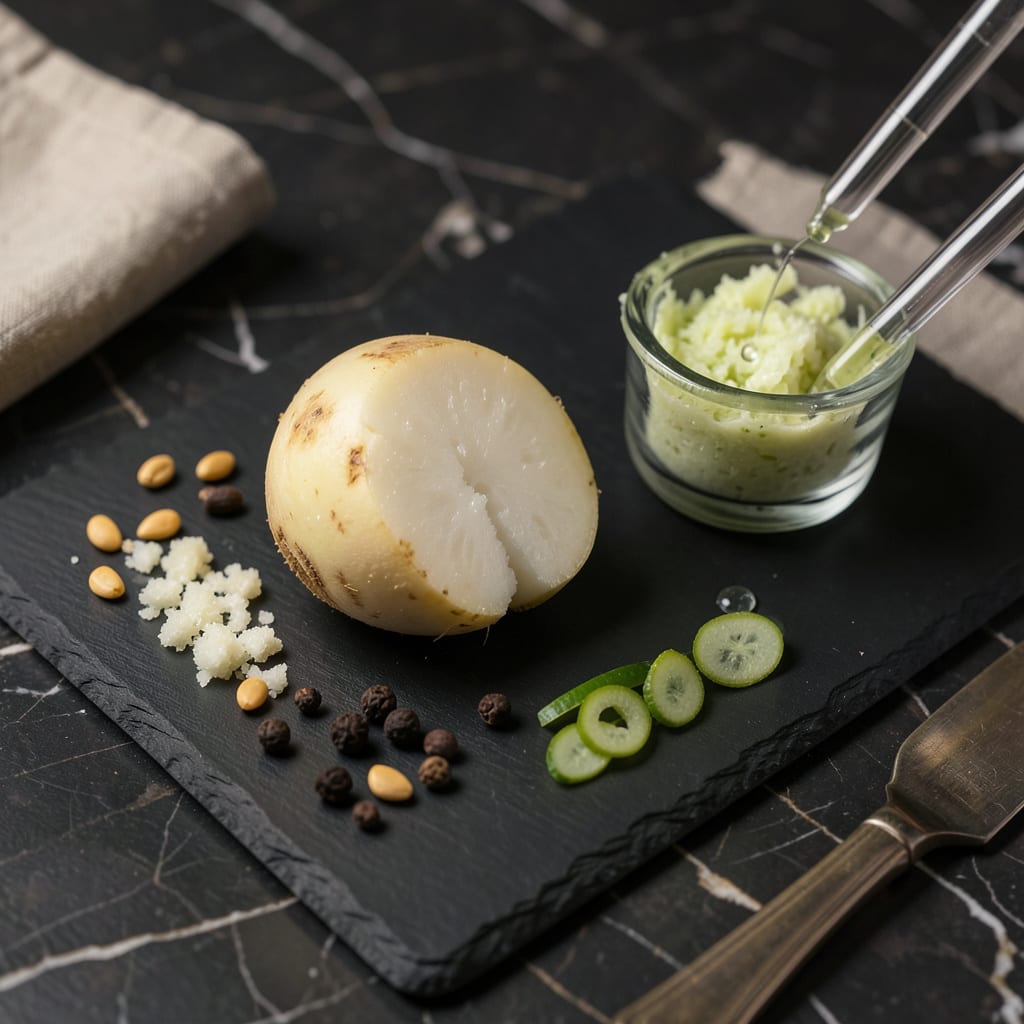
Horseradish gets its intense heat from allyl isothiocyanate, a volatile compound released when its cells are crushed or grated. This chemical irritates nasal passages and sinuses, creating that signature sharp, spicy sensation.
This isn’t just about spiciness—it’s a full sensory experience that hits differently than chili peppers. 🔥 The heat comes from a defense mechanism in the plant, where crushing releases enzymes that transform harmless compounds into that nose-clearing punch. I’ve found that freshly grated horseradish packs the most intense kick because those volatile compounds start breaking down within minutes of exposure to air.
What’s fascinating is how this heat works on your senses. Unlike capsaicin in peppers that burns your tongue, horseradish’s compounds travel upward, creating that signature sinus-clearing effect. This makes it perfect for cutting through rich foods like prime rib or creamy sauces—it’s why I always keep some on hand during my coastal BBQ rides. ✨
💡 In This Article
- The Chemical Reaction Behind Horseradish’s Spicy Heat
- How to Control Horseradish Heat in Recipes
The Chemical Reaction Behind Horseradish’s Spicy Heat
When you grate or crush horseradish root, you’re triggering a biochemical defense system. The plant’s cells contain separate compartments holding sinigrin (a glucosinolate) and the enzyme myrosinase. Crushing ruptures these compartments, allowing the enzyme to convert sinigrin into allyl isothiocyanate—the compound responsible for that intense, sinus-clearing heat.
This reaction happens in seconds, which is why freshly grated horseradish packs the most punch. 🔥
The heat mechanism differs completely from chili peppers. While capsaicin in peppers binds to pain receptors on your tongue, allyl isothiocyanate is volatile and evaporates quickly. When you eat horseradish, these molecules travel upward through your nasal passages, triggering the trigeminal nerve—the same one that detects physical irritation.
That’s why the sensation feels more like a sharp, clean burn rather than lingering mouth heat. The compound’s volatility also explains why the heat fades within minutes of grating—about 70% dissipates in the first 30 minutes. ⚡
Temperature plays a crucial role in this process. Myrosinase works optimally between 68-86°F, which is why room-temperature horseradish develops more heat than refrigerated root. I’ve noticed that adding vinegar immediately after grating (a common preservation method) stabilizes the heat by denaturing the enzyme—this stops further allyl isothiocyanate production, locking in the current spice level.
Without vinegar, the reaction continues until all sinigrin is converted, making the heat progressively stronger for about 5-10 minutes post-grating. ✨
What’s particularly interesting is how this defense mechanism evolved. In nature, the pungent compounds deter insects and animals from eating the plant. The root contains about 10 times more glucosinolates than the leaves, which is why we use the root for culinary purposes.
When I forage wild horseradish along coastal paths, I always look for roots that are firm and unblemished—these contain the highest concentration of the heat-producing compounds. The older or more damaged the root, the more enzymes have already activated, reducing the potential heat. 💫
For comparison, the heat intensity can vary dramatically based on preparation:
- Freshly grated: 100% potency (full enzyme activity)
- After 30 minutes: 30% potency (most volatiles evaporated)
- Prepared with vinegar: Stable heat (enzyme deactivated)
- Cooked horseradish: Mild flavor (heat compounds break down)
The science behind this explains why horseradish pairs so well with rich foods.
The sharp, clean heat cuts through fatty flavors without overwhelming them—the same reason I’ll pack freshly grated horseradish in my saddlebags for BBQ stops during motorcycle rides. The compounds actually help reset your palate between bites of smoky brisket or creamy sauces. 🌟

Trained in classic French technique but raised on slow-cooked ribs and spicy rubs, she blends culinary skill with smoke and soul.
- Recipe for Boneless Pork Chops in Cast Iron Skillet: Sear and Baste to Juicy Perfection - October 3, 2026
- Recipe for Boneless Cross Rib Roast: Slow-Roasted Beef with Herb Crust - October 3, 2026
- Hamburgers in Sauce Recipe Crock Pot: Slow-Cooked Savory Delight - October 3, 2026