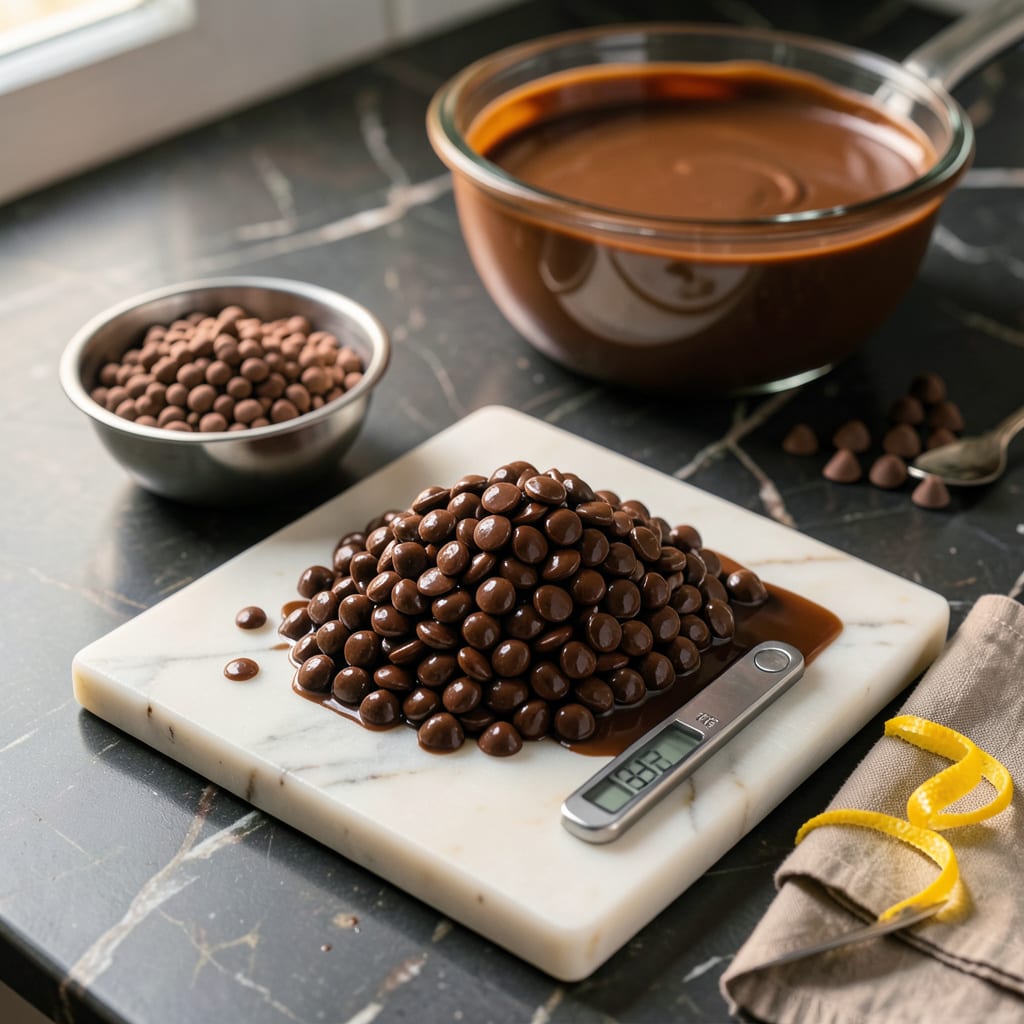
Yes, you can temper chocolate chips, but they must contain cocoa butter and no additives like stabilizers. Real chocolate chips (not compound ones) work best when melted carefully and cooled in controlled stages for that glossy, snappy finish.
I’ve found that success hinges on the chocolate’s purity—cocoa butter is the magic ingredient that allows proper crystallization. 🔥 Many store-bought chips include stabilizers that prevent melting, which makes them tricky to temper. When I work with high-quality chips, I focus on precise temperature control (around 88-91°F for dark chocolate) and gentle agitation to coax out that signature shine and snap.
What’s fascinating is how tempering transforms the texture from dull and soft to sleek and crisp. This process isn’t just about looks—it ensures your chocolate holds its shape at room temperature and delivers that satisfying crunch. I always recommend testing a small batch first to gauge how your specific chips respond to the tempering process. ✨
💡 In This Article
- Why Tempering Chocolate Chips Requires Precision
- Step-by-Step Tempering Methods for Chocolate Chips
Why Tempering Chocolate Chips Requires Precision
The secret lies in cocoa butter’s unique crystal structure. When properly tempered, cocoa butter forms stable Type V crystals that give chocolate its signature gloss and snap. Chocolate chips often contain stabilizers like soy lecithin or hydrogenated oils that disrupt this crystallization process.
The pure cocoa butter in high-quality chips (at least 30% content) allows these crystals to form correctly when heated and cooled through specific temperature zones.
Temperature control is everything. Dark chocolate requires precise heating to 115-120°F to melt all crystals, then cooling to 88-91°F to form stable crystals. Milk chocolate needs slightly lower temps (86-88°F), while white chocolate is even more delicate (80-82°F). A single degree difference can mean the difference between perfectly tempered chocolate and a dull, streaky mess.
🔥 I always use a digital thermometer for accuracy.
Here’s what’s actually happening during tempering: As you cool melted chocolate while agitating, you’re encouraging the formation of those ideal Type V crystals. These act like tiny scaffolding throughout the chocolate, creating that satisfying crunch when you bite into it.
The process also affects how the chocolate contracts as it sets, which is why properly tempered chocolate releases cleanly from molds.
Regular chocolate chips often contain less cocoa butter than bar chocolate (which typically has 35-40%), making them more finicky to temper. The additives in many commercial chips are designed to prevent melting at room temperature—great for baking but terrible for tempering.
That’s why I recommend seeking out chips with simple ingredients: cocoa mass, cocoa butter, sugar, and maybe vanilla.
What most people don’t realize is that improper melting is the #1 cause of tempering failure. Heating chocolate too quickly or too high (above 120°F) burns the cocoa butter and destroys its ability to crystallize properly. This creates that dreaded “bloom”—the grayish streaks that appear on poorly tempered chocolate. The solution?
Always melt chocolate gently using indirect heat, like a double boiler or short microwave bursts at 50% power. ✨
I’ve found that tempering chips takes about 20% longer than tempering bar chocolate because of their smaller surface area. The good news is that once you master the technique with chips, you can create everything from elegant chocolate decorations to perfectly enrobed truffles—all with the convenience of pre-measured chips.
The key is patience and precise temperature monitoring at each stage.

Trained in classic French technique but raised on slow-cooked ribs and spicy rubs, she blends culinary skill with smoke and soul.
- Recipe for Boneless Pork Chops in Cast Iron Skillet: Sear and Baste to Juicy Perfection - October 3, 2026
- Recipe for Boneless Cross Rib Roast: Slow-Roasted Beef with Herb Crust - October 3, 2026
- Hamburgers in Sauce Recipe Crock Pot: Slow-Cooked Savory Delight - October 3, 2026