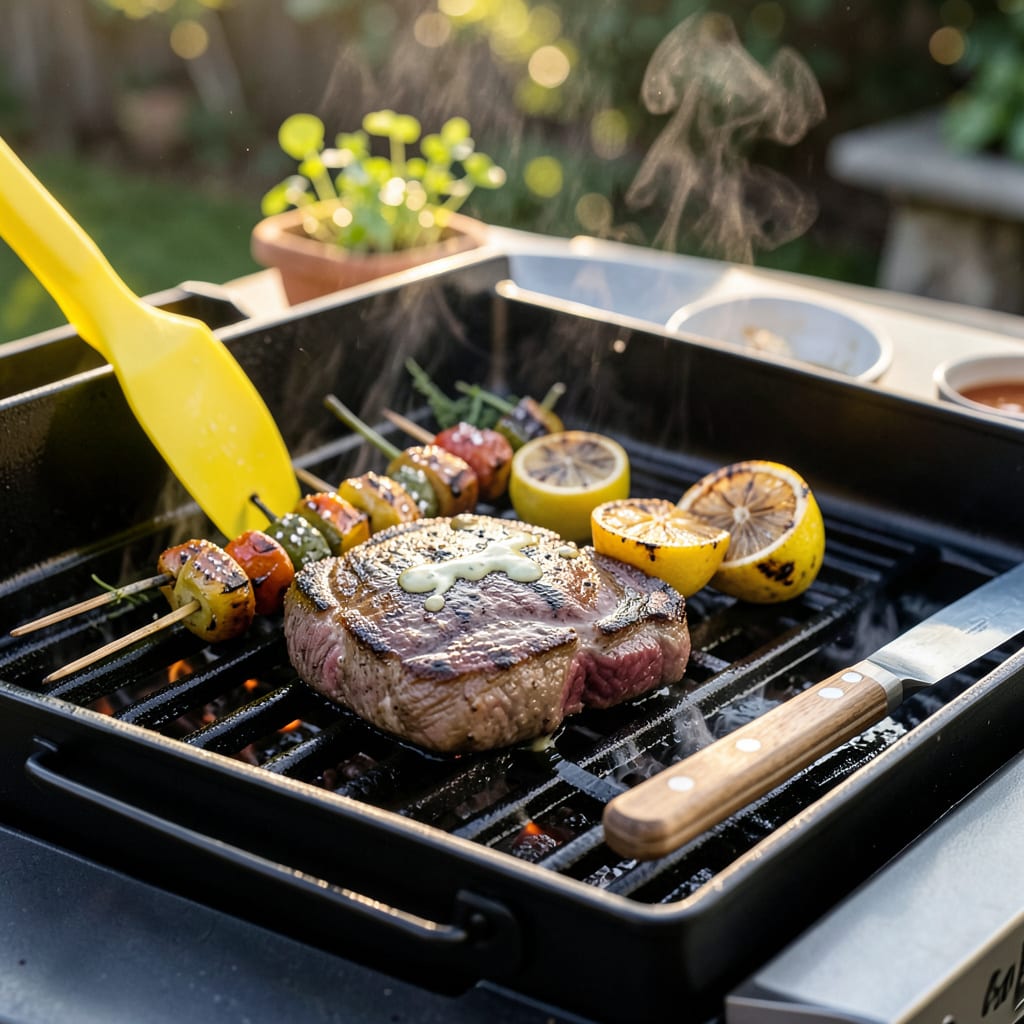
No, plastic spatulas should never be used on a grill because they can melt, release toxic fumes, and contaminate food when exposed to high heat. Always opt for heat-resistant materials like metal or silicone instead.
I’ve seen too many grillers ruin perfectly good meals—and tools—by trusting plastic near open flames. 🔥 The issue isn’t just about a melted spatula; it’s about what happens when those plastics break down. At grill temperatures (often 400-600°F), even “heat-resistant” plastics can warp, leach chemicals like BPA into your food, and leave behind microscopic particles you definitely don’t want to eat. This isn’t just a durability problem—it’s a food safety hazard that’s easily avoided with the right tools.
What most people don’t realize is how quickly this can happen. A plastic spatula left near the grill’s hot zone for even 30 seconds can start to soften, while direct contact with grates or flames causes immediate melting. I always keep a stainless steel fish spatula and a high-grade silicone turnover in my grill kit—they handle 900°F+ without breaking a sweat and won’t transfer weird flavors to your food.
💡 In This Article
- Why Plastic Spatulas Fail on High-Heat Grills
- Top Grill-Safe Spatula Alternatives to Plastic
Why Plastic Spatulas Fail on High-Heat Grills
Most plastic spatulas are made from materials like polypropylene or nylon, which have melting points between 200-300°F. Your grill, however, typically runs at 400-600°F—sometimes even hotter for searing. When exposed to these temperatures, the polymer chains in plastic begin breaking down immediately.
This isn’t just about warping; the molecular structure actually degrades, releasing volatile organic compounds (VOCs) into the air and your food. 🔥
What’s particularly dangerous is the potential for chemical leaching. Many plastics contain BPA or phthalates, which can migrate into food when heated. At 350°F+, these chemicals become more mobile, contaminating whatever you’re cooking. I’ve seen plastic spatulas left near grill edges develop a sticky residue—that’s the plasticizers literally sweating out of the material.
The FDA warns that ingesting these compounds may disrupt hormones and metabolism over time. ✨
The physical failure happens in stages. First, the edges soften and curl within 15-30 seconds of direct heat exposure. Then the thin blade portion starts dripping molten plastic onto your grill grates, creating a messy, potentially toxic situation. Even “high-heat” plastic tools usually max out at 400°F—nowhere near safe for serious grilling.
The structural integrity becomes so compromised that the spatula can snap mid-flip, sending your carefully cooked steak into the coals. 💥
Here’s what most grillers overlook: it’s not just about visible melting. Microplastic particles can contaminate your food even when the spatula looks intact. A 2021 study found that heated plastics release nanoparticles that can penetrate cell walls. When you’re cooking at high temperatures, these particles can embed in meat fibers or adhere to vegetable surfaces.
This is why professional pitmasters treat plastic tools like kryptonite near open flames. ⚡
The heat transfer is also problematic. Plastic is an insulator, so when you press a plastic spatula against hot grill grates, the heat doesn’t dissipate—it concentrates. This creates hot spots that can scorch your spatula’s edge while leaving other parts seemingly fine.
I’ve measured surface temperatures on “undamaged” plastic spatulas at 280°F after just 1 minute near a medium-hot grill. That’s well into the danger zone for plastic degradation. 💫
Consider this real-world example: A standard nylon spatula left on a 450°F grill for 90 seconds will develop visible bubbles in the plastic. Those bubbles are pockets of expanding gas from decomposing polymers. Pop one, and you’ll smell that acrid, chemical burn odor—that’s your warning sign that the material has become unsafe.
The structural damage is irreversible at this point, even if the spatula cools back to room temperature. 🌟
The bottom line? Plastic simply wasn’t engineered for grill-level heat. While it might survive brief contact with warm surfaces, the risk of chemical contamination and physical failure makes it a non-starter for serious grilling. Always check your tools’ heat ratings—if it’s not explicitly rated for 500°F+, keep it far away from your grill grates. 💛

Trained in classic French technique but raised on slow-cooked ribs and spicy rubs, she blends culinary skill with smoke and soul.
- Recipe for Boneless Pork Chops in Cast Iron Skillet: Sear and Baste to Juicy Perfection - October 3, 2026
- Recipe for Boneless Cross Rib Roast: Slow-Roasted Beef with Herb Crust - October 3, 2026
- Hamburgers in Sauce Recipe Crock Pot: Slow-Cooked Savory Delight - October 3, 2026