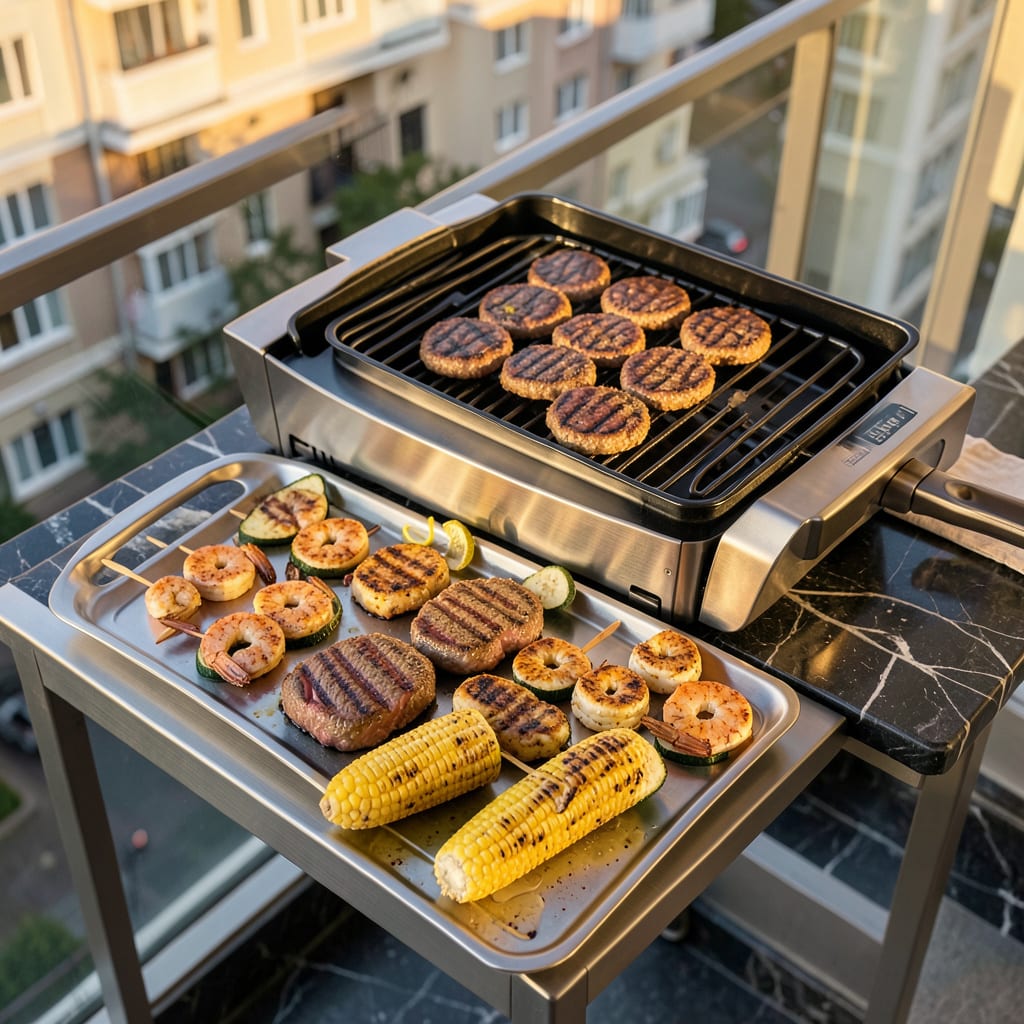
Grilling on an apartment balcony depends on local laws and lease agreements. Most complexes ban charcoal or propane grills due to fire hazards, but electric grills are often allowed. Always check with your landlord and fire department first.
I’ve seen too many grill enthusiasts get burned by overlooking balcony restrictions—literally and figuratively. 🔥 The fire risk isn’t just about open flames; it’s about how quickly grease fires can spread on small balconies with limited airflow. Many cities enforce strict NFPA 1 fire codes that classify balconies as “combustible surfaces,” automatically prohibiting gas grills. Even if your lease permits it, your building’s insurance policy might override that permission—something most tenants never think to check.
What surprises people is how much variation exists between complexes. One high-rise might allow small electric grills with proper ventilation, while the identical building next door bans all cooking devices. I always recommend documenting your landlord’s approval in writing—verbal permission won’t help when you’re facing a $500 fine for violating fire codes. The smartest approach? Treat balcony grilling like a privilege, not a right, and prepare for indoor alternatives. ✨
💡 In This Article
- Legal and Safety Restrictions for Balcony Grilling
- Safe Grilling Alternatives for Apartment Balconies
Legal and Safety Restrictions for Balcony Grilling
The fire hazards go far beyond just the grill itself. Most apartment balconies are constructed with combustible materials like wood decking or vinyl railings that can ignite from stray embers or radiant heat. NFPA studies show that 57% of balcony fires start from cooking equipment, with grease drippings being the #1 cause.
When you’re grilling in a confined space, heat builds up faster—temperatures can spike 200°F higher than ground-level grilling due to limited airflow. 🔥
City ordinances often classify balconies as “limited egress areas,” meaning they’re primary escape routes during emergencies. A propane tank explosion (which can occur at just 120°F internal temperature) could block these exits.
Many municipalities follow the International Fire Code Section 308.1.4, which prohibits open-flame cooking within 10 feet of combustible construction—something most balconies violate by design. Even charcoal briquettes can reach 700°F and maintain heat for hours after cooking.
What most renters don’t realize is that insurance policies often contain “grill exclusion clauses” for balconies. If a fire starts, you could be liable for $10,000+ in damages—even if the grill was “approved” by your landlord. I’ve seen cases where entire buildings were evacuated because someone’s grill ignited their neighbor’s patio furniture.
The legal consequences aren’t just fines; some cities impose 30-day jail sentences for reckless fire hazards. ✨
The proximity risks are staggering. In a typical apartment complex, balconies are often stacked vertically with just 6-8 feet between them. A grease flare-up can send flames shooting upward 15+ feet, easily jumping to the unit above. Wind tunnel effects between buildings can carry embers 50+ feet, creating fire risks for multiple units.
This is why many HOAs require 20-foot clearance zones around any cooking device—something impossible on most balconies.
Even electric grills face restrictions in some areas. Cities like Chicago and Boston require UL 1604 certification for any balcony cooking device, while others mandate automatic shutoff features if the grill exceeds 450°F.
The electrical load matters too—most balcony outlets can’t handle more than 1500 watts continuously, which rules out many “apartment-approved” grills when you check the specs. Always verify the amperage rating against your building’s electrical capacity. ⚡
Here’s what fire inspectors look for during complaints:
- Propane tanks: Any tank over 1 pound is typically banned (standard 20lb tanks hold 4.7 gallons of propane)
- Grease management: Drip trays must extend 2 inches beyond all sides of the cooking surface
- Ventilation: Minimum 3 feet of clear airspace required above the grill
- Fire extinguishers: Must be 5-B:C rated and mounted within 10 feet of the grill
The penalties escalate quickly.
First offenses often start at $250 fines, but repeat violations can lead to eviction proceedings under most lease agreements. In fire-prone states like California, you might face misdemeanor charges if your grill causes property damage. The smartest approach?
Document everything—get your landlord’s approval in writing, take photos of your setup, and keep your grill’s UL certification tag visible at all times. 💫

Trained in classic French technique but raised on slow-cooked ribs and spicy rubs, she blends culinary skill with smoke and soul.
- Recipe for Boneless Pork Chops in Cast Iron Skillet: Sear and Baste to Juicy Perfection - October 3, 2026
- Recipe for Boneless Cross Rib Roast: Slow-Roasted Beef with Herb Crust - October 3, 2026
- Hamburgers in Sauce Recipe Crock Pot: Slow-Cooked Savory Delight - October 3, 2026