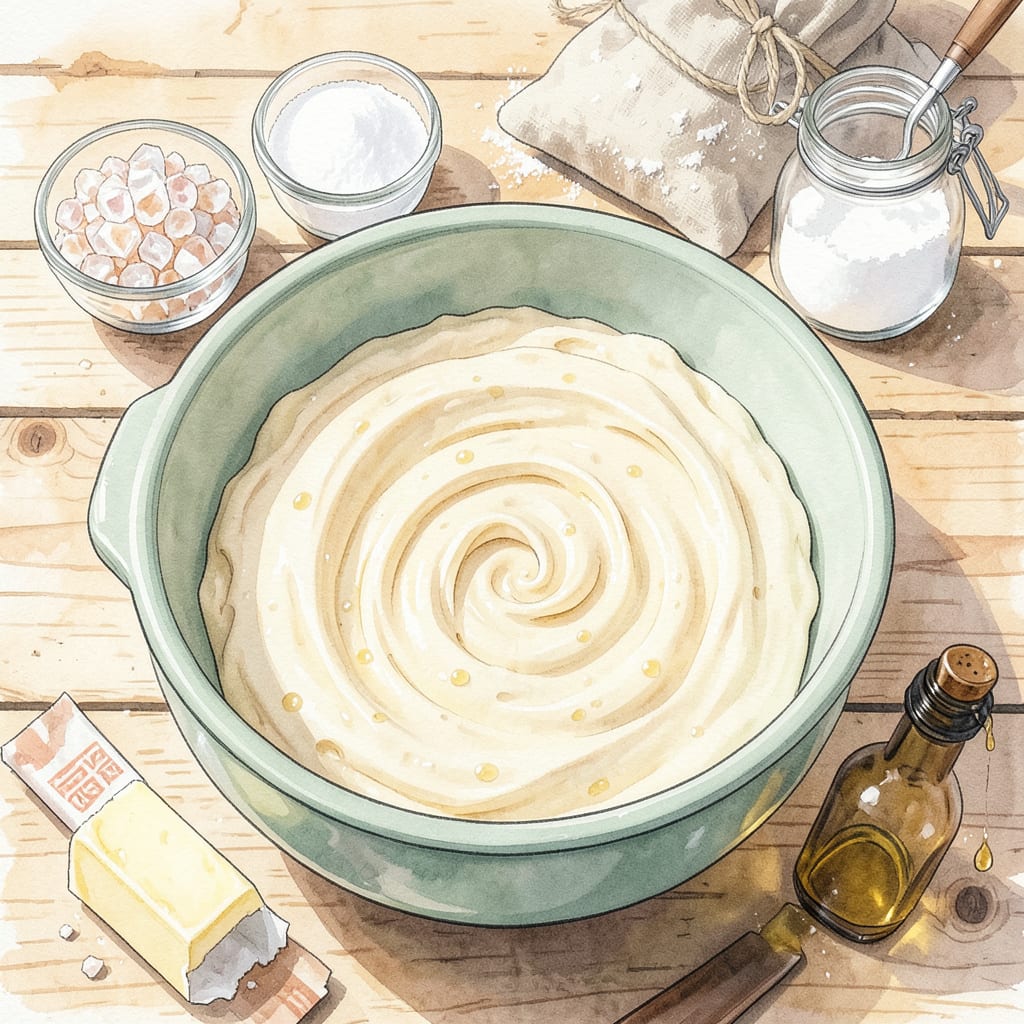
I’ll be honest—my first attempt at shortbread ended with something closer to a hockey puck than a cookie. But after discovering the Canadian secret of adding cornstarch, everything changed. This recipe creates those melt-in-your-mouth buttery bites that practically dissolve on your tongue, with a delicate crumb that’s impossible to resist.
What makes this version special is the cornstarch, which gives the cookies that signature tender texture Canadians love. No fancy equipment needed—just simple ingredients and about 20 minutes of baking time. The result is pure buttery perfection that pairs perfectly with tea or coffee. Let’s get those cookies in the oven!
Ingredients for Canada Cornstarch Shortbread
Simple, quality ingredients transform into buttery, melt-in-your-mouth shortbread with that signature Canadian tenderness.
| Ingredient | Amount | Notes |
|---|---|---|
| Unsalted Butter 🧈 | 1 cup | Cold, cubed for flaky texture |
| Cornstarch 🌾 | ½ cup | Key for tender crumb texture |
| All-Purpose Flour 🌾 | 1 ½ cups | Spoon and level for accuracy |
| Granulated Sugar 🍚 | ½ cup | Fine grain for even distribution |
| Powdered Sugar 🍚 | ¼ cup | For delicate sweetness |
| Vanilla Extract 💧 | 1 tsp | Pure extract for best flavor |
| Salt 🧂 | ¼ tsp | Fine sea salt preferred |
| Large Egg Yolk 🥚 | 1 whole | Room temperature for binding |
[recipe_ingredient_scaler]
The butter is everything here—European-style unsalted gives you that rich, creamy flavor. I always grab Kerrygold or Plugrá (the good stuff with higher fat content). Cornstarch is the magic ingredient—Argo or Clabber Girl work perfectly. Make sure your flour is fresh (no weird smells) and spoon it into the measuring cup instead of scooping. The egg yolk adds richness, but room temperature is key so it blends smoothly (just set it in warm water for 5 minutes if you forgot).
No cornstarch? Arrowroot powder at 1:1 ratio works in a pinch, though the texture might be slightly different. Out of powdered sugar? Blend granulated sugar in a food processor until fine. Vanilla extract can be swapped for vanilla bean paste (use half the amount) or even almond extract for a twist. If you’re avoiding eggs, 1 tbsp heavy cream keeps the dough together, though it won’t be quite as rich.
Store the dough wrapped tightly in plastic for up to 3 days in the fridge, or freeze for 3 months. Baked cookies stay fresh in an airtight container for 1 week—if they last that long! For extra crispness, pop them back in the oven at 300°F for 5 minutes before serving.
Step-by-Step Instructions for Canada Cornstarch Shortbread
Here’s how to create these delicate, buttery cookies with that signature melt-in-your-mouth texture.
Step 1: Cream the Butter and Sugars
In a large mixing bowl, beat the 1 cup unsalted butter with the 0.5 cup granulated sugar and 0.25 cup powdered sugar on medium speed until light and fluffy. This should take about 3-4 minutes—you’re looking for a pale, creamy mixture that’s noticeably increased in volume.
The butter should be cold but slightly softened (about 65°F). I like to cube it first to help it incorporate evenly. Stop occasionally to scrape down the sides of the bowl with a silicone spatula to ensure everything blends uniformly. This creaming process is crucial for creating that tender, crumbly texture we want.
Step 2: Incorporate the Wet Ingredients
Add the 1 tsp vanilla extract and 1 large egg yolk to the butter mixture. Beat on low speed just until fully combined—about 20-30 seconds. You want the yolk completely incorporated without overmixing.
The egg yolk adds richness and helps bind the dough, while the vanilla provides that warm, aromatic background note. I always use pure vanilla extract rather than imitation for the best flavor. The mixture should look smooth and slightly glossy at this stage, but still maintain its light, aerated texture.
Step 3: Combine the Dry Ingredients
In a separate bowl, whisk together the 1.5 cups all-purpose flour, 0.5 cup cornstarch, and 0.25 tsp salt. The cornstarch is the secret to that tender, melt-in-your-mouth quality that makes this shortbread special.
Gradually add the dry ingredients to the wet mixture, beating on low speed just until the dough comes together. This should take about 45-60 seconds. Be careful not to overmix—the dough should be soft but not sticky, and should hold together when pressed. The moment it forms a cohesive mass, stop mixing to avoid developing gluten.
Step 4: Shape and Chill the Dough
Turn the dough out onto a lightly floured surface and gently press it into a 1-inch thick rectangle. Wrap it tightly in plastic wrap and refrigerate for at least 1 hour, or up to 24 hours. Chilling is essential for two reasons: it makes the dough easier to handle and prevents spreading during baking.
For perfectly uniform cookies, I like to roll the dough into a log about 2 inches in diameter before chilling. This allows me to slice consistent ¼-inch thick rounds later. The dough will firm up considerably as it chills, which is exactly what we want for clean cutting and minimal spreading.
Step 5: Bake to Golden Perfection
Preheat your oven to 325°F and line two baking sheets with parchment paper. Slice the chilled dough into ¼-inch thick rounds and place them 1 inch apart on the prepared sheets. They won’t spread much, so you can fit quite a few on each tray.
Bake for 12-15 minutes, rotating the pans halfway through, until the edges are just beginning to turn light golden brown. The centers should still look pale—they’ll firm up as they cool. Let the cookies cool on the baking sheets for 5 minutes before transferring to a wire rack to cool completely. They’ll be fragile when hot but will crisp up beautifully as they cool.
Regional Styles of This canada cornstarch shortbread
Atlantic Canadian Style
In Nova Scotia and New Brunswick, they often add a touch of maple syrup to the dough—about 2 tbsp—for that signature East Coast sweetness. The syrup gives the cookies a subtle caramel note and slightly chewier texture. I love using dark amber maple syrup from local sugar shacks for maximum flavor. 🍁
They also tend to cut these into traditional fingers or rectangles rather than rounds, about 1×3 inches. The dough gets pressed into a rectangular pan, chilled, then sliced before baking. This method creates that classic tea-time shortbread shape we all remember from childhood visits to Maritime kitchens.
Prairie Tradition
Out in Alberta and Saskatchewan, where wheat is king, bakers often use whole wheat pastry flour for half the all-purpose flour. This gives the shortbread a nuttier flavor and slightly heartier texture while keeping that tender crumb. The ratio is typically ¾ cup all-purpose to ¾ cup whole wheat pastry flour.
They also have a clever trick for extra crispness—after baking, they turn off the oven and let the cookies sit inside as it cools for 10 minutes. This drying time creates that perfect snap when you bite into them, which pairs wonderfully with strong black tea.
Quebecois Twist
In Quebec, you’ll often find citrus zest added to the dough—usually 1 tsp orange or lemon zest. The bright citrus cuts through the richness beautifully. Some bakeries even dust the baked cookies with icing sugar mixed with a pinch of cinnamon for that classic French-Canadian touch.
They also prefer a slightly thicker cookie, about ½-inch, baked at a lower 300°F for 18 minutes. This creates a more cake-like texture that’s perfect with café au lait. I learned this trick from a little patisserie in Old Montreal that’s been making shortbread since the 1920s.
West Coast Innovation
British Columbia bakers love incorporating local ingredients like lavender or wild berries. Try adding 1 tsp dried culinary lavender to the dry ingredients, or press freeze-dried raspberries into the tops before baking. The floral and fruity notes complement the buttery richness perfectly.
They also tend to bake at a slightly higher 350°F for 10-12 minutes to achieve a golden color that matches the West Coast aesthetic. The cookies come out with crisp edges and soft centers—ideal for pairing with Vancouver’s famous coffee culture.
Northern Adaptation
Up in the Yukon and Northwest Territories, where ingredients can be scarce, they’ve perfected a 3-ingredient version using just butter, cornstarch, and flour. The ratio is 1 cup butter, 1 cup cornstarch, and 2 cups flour. It’s less sweet but incredibly tender—perfect with jam or honey.
They also bake these in cast iron pans over wood stoves, which gives them a unique rustic quality. The cookies come out thicker and more rustic-looking, with a hearty texture that stands up well to shipping in cold climates. I tried this method during a winter trip to Whitehorse and was amazed at how well it worked. ❄️

Trained in classic French technique but raised on slow-cooked ribs and spicy rubs, she blends culinary skill with smoke and soul.
- Recipe for Boneless Pork Chops in Cast Iron Skillet: Sear and Baste to Juicy Perfection - October 3, 2026
- Recipe for Boneless Cross Rib Roast: Slow-Roasted Beef with Herb Crust - October 3, 2026
- Hamburgers in Sauce Recipe Crock Pot: Slow-Cooked Savory Delight - October 3, 2026