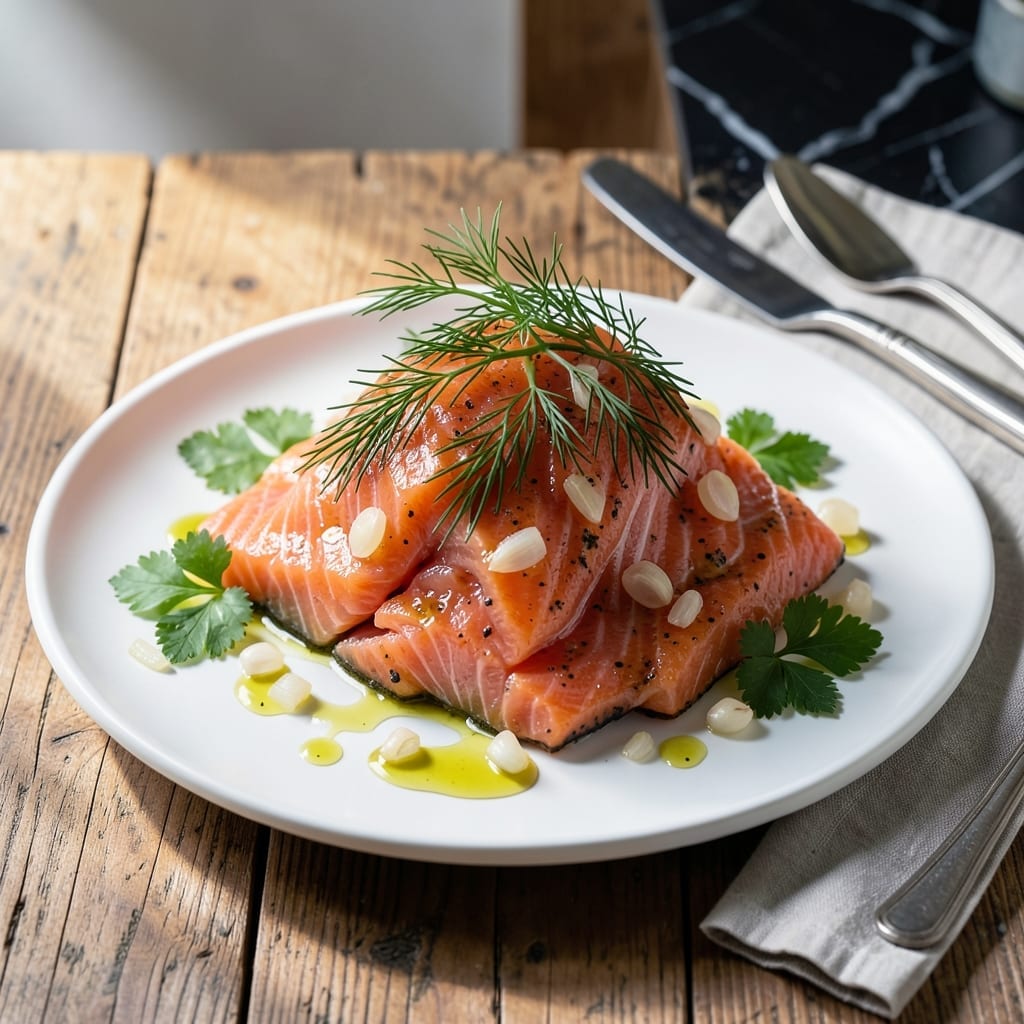
Canned sockeye salmon transforms into a restaurant-quality meal with minimal effort. This protein-packed fish needs only simple ingredients to shine.
I rely on this method when time is tight but I refuse to compromise on flavor. The key is treating the salmon gently to preserve its natural richness.
The result is a flaky, flavorful dish that’s ready in 15 minutes. It works for weeknight dinners or elegant lunches.
Pair with fresh herbs and a squeeze of lemon for brightness. This approach proves that great meals don’t require fresh catches.
Ingredients for Canned Sockeye Salmon
Restaurant-quality results start with simple, high-quality ingredients from your pantry and fridge.
| Ingredient | Amount | Notes |
|---|---|---|
| Canned Sockeye Salmon 🐟 | 2 cans | Drained, skin and bones removed |
| Extra-Virgin Olive Oil 🫒 | 3 tbsp | Divided for cooking and finishing |
| Shallot 🧅 | 1 whole | Finely diced for mild onion flavor |
| Garlic Cloves 🧄 | 3 cloves | Minced for aromatic base |
| Fresh Dill 🌿 | ¼ cup | Chopped, for bright herbal note |
| Fresh Parsley 🌿 | ¼ cup | Chopped, for fresh finish |
| Lemon 🍋 | 1 whole | Zested and juiced for acidity |
| Dijon Mustard 🟡 | 1 tbsp | For tangy depth of flavor |
| Capers 🫒 | 2 tbsp | Drained, for briny kick |
| Kosher Salt 🧂 | ½ tsp | Diamond Crystal preferred for even seasoning |
| Freshly Ground Black Pepper 🌶️ | ½ tsp | Coarse grind for texture |
| Unsalted Butter 🧈 | 2 tbsp | Optional for richer finish |
| Baby Arugula 🥬 | 4 cups | For serving, peppery bite |
| French Baguette 🥖 | 1 whole | Sliced, toasted for serving |
[recipe_ingredient_scaler]
The canned sockeye salmon must be wild-caught Alaskan for optimal flavor and texture. Trader Joe’s or Vital Choice offer excellent options with no added fillers. Look for cans packed with skin and bones—these provide additional calcium and richness. The olive oil should be high-quality extra-virgin; California Olive Ranch or Colavita are reliable brands. Fresh herbs are non-negotiable; Whole Foods typically has the best selection (the good stuff, not the pre-packaged kind).
No fresh dill? Dried dill at one-third the amount works in a pinch, though the flavor is less vibrant. Substitute tarragon or chives for a different but complementary herbal note. Capers can be replaced with chopped green olives. If avoiding butter, use an additional tablespoon of extra-virgin olive oil for richness. The lemon zest is key—don’t skip this part (worth the extra minute).
Store unopened salmon cans in a cool, dark pantry for up to 2 years. Once opened, transfer to an airtight container and refrigerate for up to 3 days. Fresh herbs last about 1 week wrapped in damp paper towels in the fridge. This dish is best served immediately but holds well for 24 hours chilled.
Why You’ll Love This Recipe
- Minimal Effort: I just dump the salmon, sauté the shallots and garlic in olive oil, and finish with fresh dill—no fancy techniques here.
- Rich & Bright: The sockeye’s deep flavor pairs with the zing of garlic and the fresh pop of dill for a taste that’s anything but boring.
- Meals in Minutes: I throw this together for lunch or a quick dinner, and it’s just as good cold the next day in a wrap.
- Budget Hero: Honestly, canned sockeye gives me high-quality protein for a fraction of fresh salmon’s price.
Step-by-Step Instructions for Canned Sockeye Salmon
This method transforms simple ingredients into a restaurant-worthy dish with minimal effort.
Step 1: Prepare the Aromatic Base
Heat 1 tablespoon Extra-Virgin Olive Oil in a skillet over medium heat. Add the finely diced Shallot and sauté for 2-3 minutes until translucent and fragrant. The shallot should soften without browning—this develops a sweet, mild foundation for the dish.
Add the minced 3 cloves Garlic Cloves and cook for an additional 30 seconds, stirring constantly. Garlic burns quickly, so keep it moving to prevent bitterness. The moment it becomes fragrant and just begins to turn golden at the edges, it’s ready for the next step.
Step 2: Incorporate the Salmon and Seasonings
Drain the 2 cans Canned Sockeye Salmon, ensuring all skin and bones are removed, then add it to the skillet. Use a fork to gently break the salmon into large flakes—avoid overmixing to maintain texture. Stir in the 1 tbsp Dijon Mustard, 2 tbsp Capers, 0.5 tsp Kosher Salt, and 0.5 tsp Freshly Ground Black Pepper.
The mustard will bind the ingredients while the capers add a briny contrast. Cook for 2-3 minutes until the salmon is heated through and the flavors meld. The mixture should be cohesive but still retain distinct flakes of salmon.
Step 3: Finish with Fresh Herbs and Citrus
Remove the skillet from heat and stir in the 0.25 cup Fresh Dill and 0.25 cup Fresh Parsley. Add the zest and juice of the 1 whole Lemon, then drizzle with the remaining 2 tbsp Extra-Virgin Olive Oil. For a richer finish, fold in the 2 tbsp Unsalted Butter until melted.
The lemon juice brightens the dish, while the herbs add a fresh, vibrant note. The butter, if used, creates a silky texture that coats the salmon beautifully. Taste and adjust seasoning if needed—though the capers and mustard provide ample saltiness.
Step 4: Serve Over Arugula with Toasted Baguette
Divide the 4 cups Baby Arugula among plates and spoon the warm salmon mixture over the top. The heat from the salmon will gently wilt the arugula, softening its peppery bite without losing its crispness.
Serve immediately with slices of toasted 1 whole French Baguette on the side. The toasted bread provides a satisfying crunch that complements the tender salmon and fresh greens, completing the dish with balance and texture.
Pro Tips For Making Canned Sockeye Salmon
- Drain and Pat Dry: Drain the canned sockeye salmon well and pat it dry with a paper towel—this keeps the dish from getting watery and helps the olive oil sear it properly.
- Sauté Shallots First: Cook the shallots in olive oil for 2-3 minutes before adding garlic, or they’ll burn and turn bitter while the garlic cooks.
- Use Fresh Dill Only: Dried dill just doesn’t cut it here; fresh dill added at the end gives that bright, clean flavor that makes the dish sing.
- Break Up Gently: Flake the salmon with a fork instead of chopping it—this keeps the texture tender and prevents it from turning mushy in the pan.
Pro Cooking Tips for This Dish
Heat Control Matters
Keep your skillet at medium heat throughout cooking. Too high and the shallots burn; too low and the garlic won’t develop proper aroma. I use a cast iron skillet for even heat distribution and that perfect sear on the salmon flakes. 🌡️
Gentle Salmon Handling
When adding the drained salmon, use a fork to break it into large flakes—not small pieces. Overmixing turns it mushy. The salmon only needs 2-3 minutes to heat through since it’s already cooked in the can.
Caper and Mustard Balance
The Dijon mustard binds the ingredients while capers add briny contrast. Stir them in with the salmon so every bite gets that tangy-salty pop. If using green olives instead, chop them finely for similar texture.
Herb Timing
Add fresh herbs off the heat to preserve their bright flavors. The lemon zest and juice go in at the same time—the acidity cuts through the richness and makes all the flavors sing. 🍋
Butter Finish
For extra luxury, fold in 2 tbsp unsalted butter at the end. It melts into the mixture, creating a silky sauce that coats the salmon and arugula beautifully. Skip it if you prefer a lighter dish.
Serving Temperature
Serve the salmon warm over baby arugula so the heat gently wilts the greens. The contrast of warm salmon and cool, crisp arugula is the perfect finish. Toast the baguette slices just before serving for maximum crunch.
Nutrition Facts
Frequently Asked Questions
Can I use a different type of canned salmon?
Yes, but sockeye’s rich flavor and firm texture are ideal. Pink salmon works but may be milder. Avoid chum salmon as it can be mushy. Always drain well before using.
How do I remove the skin and bones easily?
Drain the can, then use a fork to lift out large chunks. The skin and bones will separate naturally. For stubborn bits, a quick rinse under cold water helps.
Can this be made ahead of time?
Best served fresh, but you can prep ingredients in advance. Store cooked salmon separately and reheat gently over low heat for 1-2 minutes. Add herbs last.
What if I don’t have fresh herbs?
Use 1 teaspoon dried dill and 1 teaspoon dried parsley instead. Add them with the salmon to rehydrate. The flavor won’t be as bright but still tasty.

Trained in classic French technique but raised on slow-cooked ribs and spicy rubs, she blends culinary skill with smoke and soul.
- Recipe for Boneless Pork Chops in Cast Iron Skillet: Sear and Baste to Juicy Perfection - October 3, 2026
- Recipe for Boneless Cross Rib Roast: Slow-Roasted Beef with Herb Crust - October 3, 2026
- Hamburgers in Sauce Recipe Crock Pot: Slow-Cooked Savory Delight - October 3, 2026