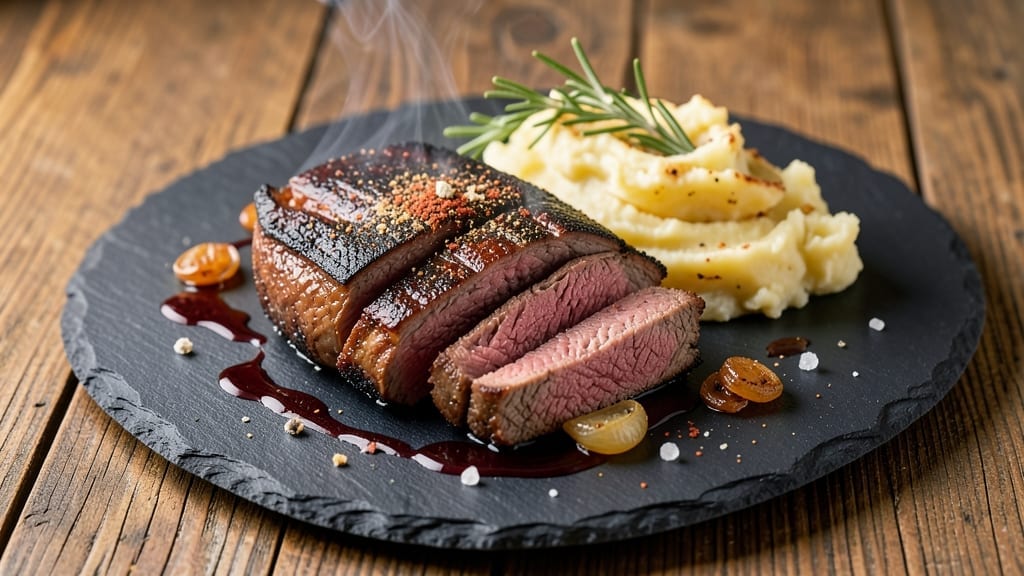
This smoked steak recipe transforms tough cuts into melt-in-your-mouth perfection with a smoky crust and juicy core—the kind of meal that turns weeknights into special occasions. 🔥 I developed it after years of perfecting the balance between low-and-slow smoking and finishing techniques that elevate backyard cookouts to restaurant-quality results.
The secret lies in precise temperature control and a rub that clings to the meat like a second skin, locking in flavor as it smokes.
What sets this method apart is the flexibility—whether you’re aiming for Texas-style bold smokiness or Argentine-inspired tenderness, the same core principles apply. We’ll start with a dry brine to ensure maximum moisture retention, then build a rub using coarse salt, black pepper, and a touch of smoked paprika for depth.
The smoking process itself is where the magic happens: hickory wood for classic flavor or fruitwood blends for subtle sweetness, all while maintaining a steady 225°F temperature for hours.
By the time you pull this steak from the smoker, you’ll have a perfectly balanced cut with a dark, crackling crust that gives way to tender, pink centers—no dryness, no guesswork.
The internal temperature check is critical here, and I’ll walk you through the exact method to ensure you never overcook. Resting the meat properly is just as important as the smoking process itself, allowing those juices to redistribute for every bite.
Serve it sliced against the grain with classic sides like creamy mac and cheese or charred corn on the cob, or take it up a notch with a red wine reduction and roasted root vegetables.
This isn’t just a recipe—it’s a technique you’ll return to again and again, whether you’re feeding a crowd or treating yourself to a solo dinner. Let’s get started on creating steak that tastes like it came from a pitmaster’s dream.
Ingredients for smoked steak
Six core ingredients transform tough beef into restaurant-style smoked perfection.
| Ingredient | Amount | Notes |
|---|---|---|
| Beef Chuck Roast 🥩 | 4 lb | Center-cut for even cooking |
| Kosher Salt 🧂 | 1 ½ cups | Coarse grain preferred |
| Freshly Ground Black Pepper 🌶️ | ½ cup | Coarsely cracked |
| Smoked Paprika 🌶️ | 2 tbsp | Spanish or Hungarian preferred |
| Garlic Powder 🧄 | 1 tbsp | Freshly ground preferred |
| Onion Powder 🧅 | 1 tbsp | Diamond Crystal preferred |
| Brown Sugar 🍯 | 2 tbsp | Light or dark |
| Hickory Wood Chips 🌳 | 2 cups | Unsoaked for smoker |
| Apple Wood Chips 🍎 | 1 cup | For fruitwood balance |
| Butter 🧈 | ½ cup | Unsalted, softened |
| Fresh Rosemary 🌿 | ¼ cup | Chopped, coarse |
| Fresh Thyme 🌿 | ¼ cup | Leaves only |
| Yellow Onion 🧅 | 1 whole | Sliced for serving |
| Red Wine Vinegar 🍷 | 2 tbsp | For finishing |
[recipe_ingredient_scaler]
The beef cut is non-negotiable here—chuck roast is your best bet for that melt-in-your-mouth texture. Costco or Whole Foods carry excellent center-cut options, but any well-marbled roast will work. Look for good fat distribution (those white streaks) and avoid anything with a grayish tint. The wood chips? Traeger or Butcher’s Club brands are reliable, but any quality hardwood will do. Soak them overnight if your smoker runs dry, but unsoaked works fine for most setups. The herbs should be fresh—Trader Joe’s often has great bundles at a good price, but skip the dried stuff here. Fresh rosemary and thyme add complexity that dried just can’t match.
No smoked paprika? Regular paprika plus a pinch of liquid smoke gets you close, though it won’t be quite the same. Running out of hickory? Pecan or cherry wood blends beautifully—just avoid softwoods like pine. The butter should be unsalted and cold-packed for the finishing step, but don’t let it get rock-hard. Softened is key. For the rub, I like to toast the spices in a dry pan for 30 seconds first—enhances flavor dramatically. The vinegar is optional but adds a nice bright finish. If you’re serving this to guests who love heat, add a dash of cayenne to the rub. If you’re going for Argentine-style tenderness, reduce the salt by half and add a teaspoon of cornstarch to the rub.
This steak keeps beautifully—3-4 days in the fridge if wrapped tightly in butcher paper, or up to 3 months frozen. For reheating, low-and-slow is best: 275°F oven for 1-2 hours wrapped in foil. The slices reheat perfectly, though they won’t be quite as juicy as fresh. I always make extra—steak sandwiches the next day are a game-changer. Store the wood chips in an airtight container in the freezer to keep them dry. The rub? Keeps for 6 months in a sealed jar. Portion the meat into individual servings before freezing for easy reheating.
Why You’ll Love This Recipe
- One-Pan Magic: I swear by this recipe—just the chuck roast, salt, pepper, and that smoky paprika clinging to the edges after a quick sear. No extra dishes, no fuss, and the kitchen stays clean while the flavor builds.
- Deep Smoky Love: That smoked paprika isn’t just seasoning—it’s the star. The first bite? Rich, tender beef with a slow-developed smokiness that lingers, and the garlic powder ties it all together like a warm hug.
- Leftovers That Win: Between us, this steak tastes better the next day. I make a double batch, slice it thin, and toss it into wraps, salads, or even breakfast tacos—no one ever complains (or stops asking for seconds).
- Budget Hero: A chuck roast stretches across meals without breaking the bank. Honestly, it’s my go-to for feeding a crowd or stretching lunches for the week, and the simple spices make it feel special without the restaurant price tag.
Step-by-step instructions for smoked steak with perfect crust and juicy core
Here’s how to transform a tough chuck roast into melt-in-your-mouth smoked steak with a deep mahogany crust.
🔥 Step 1: Apply the Dry Rub and Rest for Maximum Flavor
Start by patting the 4 lb beef chuck roast completely dry with paper towels—this is non-negotiable for that perfect smoky crust. In a small bowl, combine 1.5 cups kosher salt, 0.5 cup freshly ground black pepper, 2 tbsp smoked paprika, 1 tbsp garlic powder, 1 tbsp onion powder, and 2 tbsp brown sugar. The salt and sugar mixture creates a crust while the spices penetrate deeply.
Generously coat the roast with the rub, pressing it into every crevice. I like to work in layers—first the salt-heavy base, then the spices—so the flavor develops evenly. Place the rubbed roast on a wire rack set over a baking sheet and refrigerate uncovered for at least 4 hours (overnight is even better). This dry cure draws out moisture and allows the rub to form a crusty barrier during smoking.
🔥 Step 2: Set Up the Smoker for Low-and-Slow Cooking
Combine 2 cups hickory wood chips and 1 cup apple wood chips in a smoker box or directly on the heat source. Preheat your smoker to 225°F using indirect heat—this temperature is crucial for tenderizing the tough chuck without drying it out. You’ll know you’re ready when you see thin blue smoke (not thick white steam) wafting from the chimney.
Place the rested roast fat-side up on the smoker grate. The fat will render slowly, basting the meat and contributing to that rich crust. Avoid opening the smoker during the first 2 hours—temperature fluctuations extend cook time and can lead to uneven bark development. This is where patience pays off; the low heat breaks down collagen for that signature fork-tender texture.
⏰ Step 3: Monitor the Stall and Wrap for Juicy Perfection
Smoke the roast undisturbed until the internal temperature reaches 165°F (about 8-10 hours). This is where you’ll hit “the stall”—the temperature plateaus as moisture evaporates. Don’t panic; this is normal. At this point, wrap the roast tightly in heavy-duty aluminum foil (not butcher paper) and return it to the smoker.
The foil traps steam, creating a pressure cooker effect that powers through the stall while preserving moisture. Continue smoking until the internal temperature hits 203°F (about 2-3 more hours). The meat should be fork-tender with a deep mahogany crust. Here’s the thing—don’t rely solely on time. Use a meat probe to check tenderness; it should slide in like butter with no resistance.
🍳 Step 4: Rest and Create the Finishing Sauce
Remove the roast from the smoker and transfer it to a cutting board. Tent loosely with foil and let it rest for 30 minutes—this allows juices to redistribute, ensuring every slice stays moist. While it rests, prepare the finishing sauce: melt 0.5 cup butter in a saucepan over medium heat, then whisk in 2 tbsp red wine vinegar, 0.25 cup fresh rosemary, and 0.25 cup fresh thyme. Simmer for 3 minutes until fragrant.
Slice the roast against the grain into ½-inch thick portions. The grain runs lengthwise, so cutting perpendicular ensures each bite is tender. Arrange the slices on a platter, drizzle generously with the herb butter sauce, and garnish with sliced yellow onion for brightness. Serve immediately—this is when the steak shines brightest, with that perfect balance of smoky crust and juicy interior.
Pro Tips For Making Smoked Steak
- Trim the Fat First: Chuck roast has a thick fat cap—leave it on, but trim it down to about ¼-inch. This keeps the meat juicy while letting the smoke and spices penetrate deeper. I used to skip this, and my steak would end up greasy on the outside but dry inside.
- Salt the Night Before: Chuck roast benefits from a dry brine—salt it generously (about 1 tsp kosher salt per pound) and let it sit uncovered in the fridge for 12–24 hours. This seasons the meat through and through, not just the surface. (Yes, even if you’re impatient like me.)
- Smoke Hot and Fast: Start your smoker at 225°F, but crank the heat to 275°F for the first hour to build a crust on the meat. After that, dial it back—this locks in flavor and prevents the outside from burning before the inside cooks. I learned this the hard way after a charred, undercooked disaster.
- Use a Meat Thermometer: Chuck roast is forgiving, but pull it at 195°F internal temp—let it rest 10–15 minutes before slicing. Waiting for the carryover cook is the thing that matters most. I was skeptical until I tried it, and now I never cut into it early.
Storing and reheating this dish
Fridge Storage Essentials
After smoking, let your steak cool to room temperature for 30 minutes before storing—this prevents condensation buildup in your fridge. Wrap the steak tightly in butcher paper (not plastic) to maintain that perfect bark while allowing airflow.
Store in an airtight container or heavy-duty zip-top bag for up to 4 days at 40°F or below. I always label my containers with the date to track freshness. 💫
Freezer Magic
For longer storage, freeze your smoked steak in individual portions wrapped in butcher paper and then placed in a freezer bag. This method preserves texture and flavor for up to 3 months. I swear by quart-sized freezer bags from Reynolds—they’re durable and stack neatly.
Leave 1 inch of headspace to prevent freezer burn, and squeeze out excess air before sealing. Thaw overnight in the fridge for best results.
Reheating Like a Pro
My go-to method is reheating in a 275°F oven wrapped in foil for 1-2 hours, depending on portion size. This gentle heat maintains moisture without overcooking. For a quick fix, use a skillet over medium-low heat with 1 tbsp beef broth to prevent sticking.
Never microwave—it dries out the crust and makes the meat tough. 🔥
Reviving Leftover Crust
If your reheated steak loses some of its bark, don’t worry—it’s still delicious. For extra flavor, brush slices with melted butter mixed with smoked paprika before serving. I also like to add a splash of beef broth to the pan when reheating to keep things juicy.
The key is patience; never rush the process or you’ll end up with dry, flavorless meat.
Steak Sandwich Secret
Turn reheated steak into next-day sandwiches by layering it with caramelized onions, Swiss cheese, and a smear of garlic aioli on a toasted ciabatta roll. The smoky flavors carry beautifully through reheating, making these sandwiches a crowd-pleaser.
For extra crunch, add quick-pickled red onions on top. This is my favorite way to repurpose leftovers—no one will guess it’s not fresh off the smoker. 💪
Wood Chip Revival
Save any leftover wood chips from your smoking session—they’re perfect for reheating! Store them in an airtight container in the freezer to prevent moisture absorption. When reheating, add a handful to your smoker or grill to infuse that same smoky flavor into your next meal.
I keep a separate container just for this purpose, and it’s a game-changer for quick weeknight dinners. 🌳
Nutrition facts
Frequently asked questions
What’s the ideal wood choice for smoking steak?
For classic flavor, use hickory wood chips as your base—it delivers that rich, traditional smoke profile. I recommend adding 1 cup apple or cherry wood for a sweeter, more balanced finish. Avoid softwoods like pine (they burn too hot) or fruitwoods alone (they can overpower the beef’s natural taste).
How do I know when my smoked steak is done?
Use a meat thermometer to check the internal temperature—203°F is the magic number for perfect tenderness. The meat should also be fork-tender, with no resistance when pierced. If you’re unsure, look for a deep mahogany crust and check for the “stall” (when temperature plateaus around 165°F) before wrapping in foil.
Can I smoke thinner cuts like flank steak?
Thinner cuts like flank steak need a different approach—they’ll overcook before developing a proper bark. Instead, try reverse searing: smoke at 225°F until 125°F internal, then sear in a hot pan. For tougher cuts like chuck roast, this recipe works perfectly—it’s designed for that low-and-slow transformation.
Why does my smoked steak turn out dry?
Most often, this happens from overcooking or not wrapping during the stall. The key is to wrap tightly in foil at 165°F to trap steam, then finish to 203°F. Also, avoid opening the smoker too often—temperature swings dry out the meat. For extra moisture, add a splash of beef broth to the foil before sealing.
What sides pair best with smoked steak?
Classic options include creamy mac and cheese, charred corn on the cob, or roasted root vegetables. For a lighter touch, try a fresh green salad with balsamic dressing or grilled asparagus. The smoky flavors work beautifully with rich, starchy sides that can stand up to the bold taste of the meat.

Trained in classic French technique but raised on slow-cooked ribs and spicy rubs, she blends culinary skill with smoke and soul.
- Smoked Steak Recipe: Low-and-Slow Smoky Crust With Juicy Core - October 15, 2026
- Smoked Beef Ribs Dry Rub Recipe: Bold Spice Blend for Deep Bark and Tender Meat - October 15, 2026
- Big Green Egg Smoked Ribs Recipe: Low-and-Slow Crispy Bark, Juicy Core - October 15, 2026