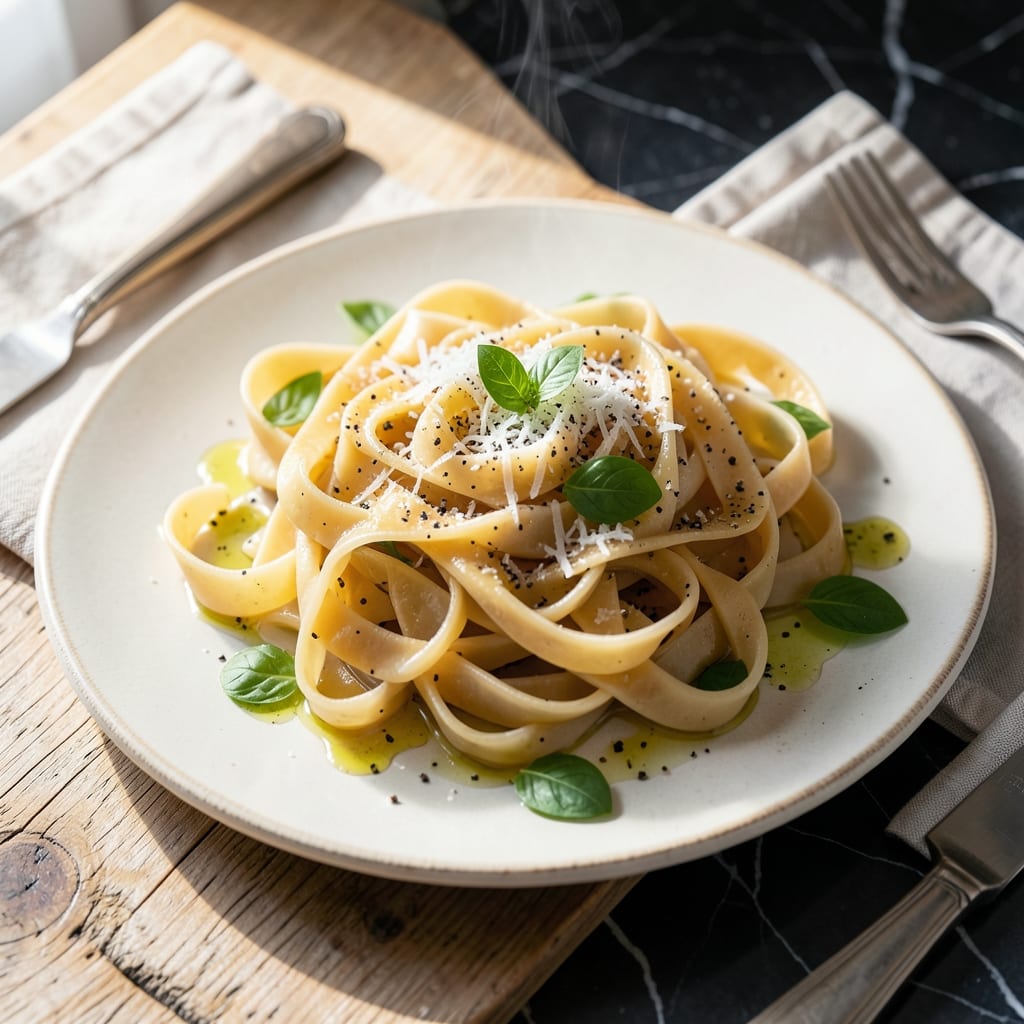
Achieving perfect al dente pasta without gluten is possible with Caputo’s specialized flour blend. This recipe transforms traditional pasta-making techniques for gluten-free success.
The dough comes together smoothly with the right hydration and resting time. Caputo’s gluten-free flour mimics the texture and elasticity of traditional pasta dough.
Rolling and cutting requires patience, but the results are worth it. You’ll create strands that hold their shape and cook up beautifully.
Cooking time is shorter than wheat pasta, so watch closely. The finished dish offers the same satisfying bite as classic Italian pasta.
Ingredients for Caputo Gluten Free Flour Pasta
Caputo’s gluten-free flour blend plus a few pantry staples creates perfect pasta from scratch.
| Ingredient | Amount | Notes |
|---|---|---|
| Caputo Gluten-Free Flour Blend 🌾 | 2 cups | Plus extra for dusting |
| Large Eggs 🥚 | 3 whole | Room temperature preferred |
| Extra-Virgin Olive Oil 🫒 | 1 tbsp | High-quality for richness |
| Fine Sea Salt 🧂 | ½ tsp | Adjust to taste |
| Xanthan Gum 🧪 | ½ tsp | Optional for elasticity |
| Water 💧 | ¼ cup | Room temperature |
| Semolina Flour 🌾 | ¼ cup | For dusting surfaces |
| All-Purpose Flour 🌾 | ½ cup | For blending if needed |
| Garlic Cloves 🧄 | 2 cloves | Minced for serving |
| Fresh Parsley 🌿 | ¼ cup | Chopped for garnish |
| Parmesan Cheese 🧀 | ½ cup | Freshly grated for serving |
| Black Pepper 🌶️ | ¼ tsp | Freshly ground preferred |
[recipe_ingredient_scaler]
Caputo’s gluten-free flour blend is non-negotiable here—Fioreglut is the gold standard, available at specialty stores or online. The xanthan gum adds elasticity, but skip it if your blend already includes it. Eggs at room temperature emulsify better with the flour (don’t skip this step). King Arthur’s all-purpose can be blended in if you need to stretch the dough further.
No eggs? Water-only dough works but lacks richness. Replace olive oil with melted vegan butter if needed, though traditional is best. For dusting, rice flour can substitute for semolina if avoiding wheat entirely. The Parmesan is optional but adds depth—Pecorino Romano offers a sharper alternative.
Fresh pasta cooks in minutes—watch it closely. Dough rests best at room temp, covered, for 30 minutes. Store uncooked pasta in the fridge for 24 hours or freeze for 1 month. Dust with extra flour before freezing to prevent sticking.
Why You’ll Love This Recipe
- One Bowl Wonder: I mix the Caputo flour, eggs, and olive oil right in a single bowl—no fancy equipment, just my hands and 10 minutes of kneading.
- Rich, Nutty Bite: The Caputo blend gives this pasta a warm, toasty depth that plain gluten-free flours just can’t match.
- Freezer Friendly: I double the batch, roll it thin, and freeze sheets for those nights I crave fresh pasta but have zero time.
- No Waste: Between us, the dough comes together so cleanly I use every last bit—no scraps, no mess, just perfect strands every time.
Step-by-Step Instructions for Gluten Free Pasta
Master the technique for creating restaurant-quality pasta that holds its shape and texture beautifully.
Step 1: Mix the Dough to Optimal Consistency
On a clean work surface, create a mound with the 2 cups Caputo Gluten-Free Flour Blend. Make a well in the center and add the 3 whole Large Eggs, 1 tbsp Extra-Virgin Olive Oil, 0.5 tsp Fine Sea Salt, and 0.5 tsp Xanthan Gum.
Using a fork, gradually incorporate the flour into the wet ingredients until a shaggy dough forms. I prefer this method over a stand mixer as it gives me better control over the texture. The dough should feel slightly tacky but not sticky—this indicates proper hydration.
If the mixture feels too dry, add the 0.25 cup Water 1 tablespoon at a time until it reaches the right consistency. The xanthan gum provides elasticity, so resist the urge to add too much water.
Step 2: Knead and Rest the Dough
Transfer the dough to a surface lightly dusted with 0.25 cup Semolina Flour. Knead for 8-10 minutes until smooth and elastic. Unlike wheat flour dough, gluten-free versions require more kneading time to develop proper structure.
You’ll notice the dough becomes more cohesive and less crumbly as you work it. If it sticks, dust with more semolina flour, but use a light hand—too much will make the pasta dry. The finished dough should spring back slightly when pressed with a finger.
Wrap the dough in plastic and let it rest at room temperature for 30 minutes. This relaxation period allows the flours to fully hydrate and makes the dough easier to roll out.
Step 3: Roll and Cut the Pasta
Divide the rested dough into 4 equal portions. Working with one portion at a time (keep the others covered), flatten it slightly with your hands. Set your pasta machine to the widest setting and pass the dough through.
Fold the sheet in thirds like a letter and repeat the process 2-3 times at this width. This laminating technique builds strength in gluten-free pasta. Gradually decrease the thickness setting, passing the dough through once at each level, until you reach the desired thinness for your shape.
For fettuccine or tagliatelle, I recommend stopping at setting 5 or 6 on most machines. Cut the sheets to your preferred length, then run them through the cutting attachment. Dust the cut pasta generously with semolina flour to prevent sticking.
Step 4: Cook to Al Dente Perfection
Bring a large pot of salted water to a rolling boil. Add the fresh pasta and cook for 2-3 minutes total—gluten-free pasta cooks faster than traditional. Begin testing for doneness at 1 minute 30 seconds by fishing out a strand and tasting it.
You’re aiming for tender but with a slight bite in the center. Unlike wheat pasta, gluten-free versions can turn mushy quickly, so stay attentive. The pasta is done when it floats to the surface and has a uniform, slightly translucent appearance.
Reserve ½ cup of pasta water before draining. This starchy liquid helps create a silky sauce that clings properly to the gluten-free strands.
Toss immediately with your preferred sauce, adding a splash of pasta water as needed to achieve the perfect consistency. Serve at once with 0.5 cup Parmesan Cheese, minced 2 cloves Garlic Cloves, chopped 0.25 cup Fresh Parsley, and 0.25 tsp Black Pepper for garnish.
Pro Tips For Making Caputo Gluten Free Flour Pasta
- Rest the Dough: After mixing, let the dough sit wrapped in plastic for 20-30 minutes—I learned this the hard way when my first few batches kept cracking during rolling.
- Use Room-Temp Eggs: Sounds weird, but it works: cold eggs make the dough seize up, so take them out of the fridge an hour before you start mixing.
- Skip the Over-Kneading: Gluten-free pasta dough turns gummy fast if overworked, so mix just until it comes together, even if it looks a little shaggy.
- Roll It Thin: Caputo’s blend needs to be rolled paper-thin, about 1-2mm, or your pasta will turn out dense instead of light and tender.
Make-Ahead Tips for This Dish
Prep Ahead Strategy
You can make the dough up to 24 hours in advance. After kneading, wrap it tightly in plastic and refrigerate. Let it sit at room temperature for 30 minutes before rolling to soften. This makes weeknight pasta possible. 💡
Fresh Pasta Storage
Once cut, dust the strands generously with Caputo Gluten-Free Flour Blend and arrange in single layers on a baking sheet. Freeze for 1 hour, then transfer to airtight containers for up to 1 month. No thawing needed—just drop frozen pasta directly into boiling water.
Dough Freezing
For longer storage, freeze the dough balls for up to 3 months. Wrap each portion in plastic, then place in a freezer bag. Thaw overnight in the fridge before rolling. I always label with the date to track freshness.
Same-Day Prep
The dough rests best at room temperature, but you can refrigerate it for 2-4 hours if needed. Just ensure it’s well-covered to prevent drying. This flexibility helps when timing dinner prep.
If the dough feels stiff after chilling, let it warm slightly before rolling—about 15-20 minutes on the counter usually does the trick.
Sauce Pairing Prep
While the pasta cooks, have your sauce ready to go. Gluten-free pasta absorbs sauces quickly, so work fast. I like to prep sauces in advance and reheat gently while the pasta boils. ❄️
Nutrition Facts
Frequently Asked Questions
Why does the dough need to rest for 30 minutes?
Resting allows the gluten-free flours to fully hydrate and relax. This makes the dough easier to roll out and prevents cracking during shaping. Skipping this step often results in brittle pasta.
Can I use a stand mixer instead of hand mixing?
Yes, but use the paddle attachment on low speed. Hand mixing gives better control over hydration, which is crucial for gluten-free dough. Avoid overmixing, as this can make the pasta tough.
How do I prevent the pasta from sticking together?
Dust cut strands generously with Caputo Gluten-Free Flour Blend or semolina. Spread them in a single layer on a baking sheet until ready to cook. This prevents clumping during storage or freezing.
Why does gluten-free pasta cook faster?
Without gluten, the structure is more delicate and absorbs water quickly. Test for doneness at 1 minute 30 seconds to avoid overcooking. It’s done when it floats and has a slight bite.

Trained in classic French technique but raised on slow-cooked ribs and spicy rubs, she blends culinary skill with smoke and soul.
- Recipe for Boneless Pork Chops in Cast Iron Skillet: Sear and Baste to Juicy Perfection - October 3, 2026
- Recipe for Boneless Cross Rib Roast: Slow-Roasted Beef with Herb Crust - October 3, 2026
- Hamburgers in Sauce Recipe Crock Pot: Slow-Cooked Savory Delight - October 3, 2026