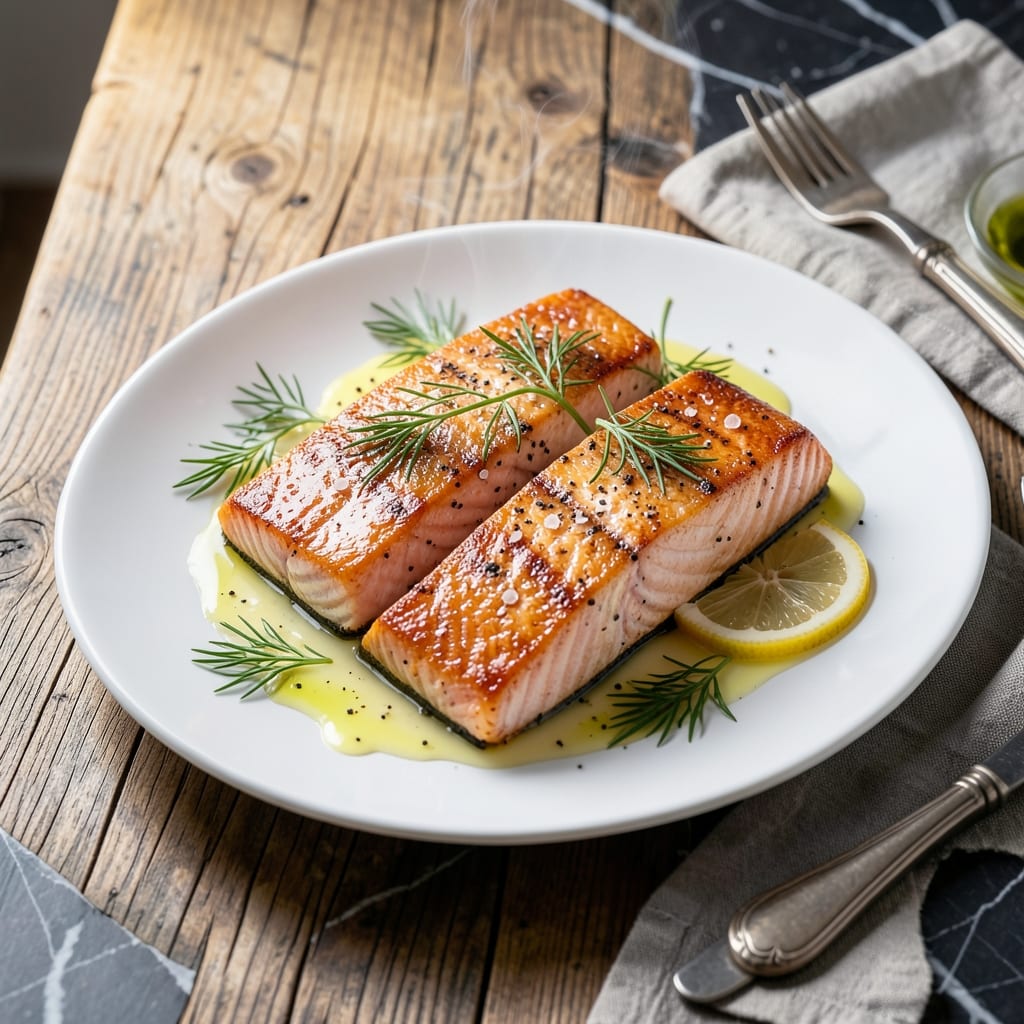
This carnivore-approved salmon bake delivers simple preparation with gourmet results. I developed this method after testing multiple approaches in my small Boston kitchen, focusing on animal-based ingredients only.
The recipe relies on just salmon, butter, and salt to create a keto-friendly dish that’s both flavorful and foolproof. The buttery finish adds richness while keeping the preparation straightforward and diet-compliant.
You’ll achieve perfectly cooked salmon with a tender interior and golden crust. The high-fat content from the butter makes this dish satisfying while staying true to carnivore principles.
Ready in under 20 minutes, this becomes a go-to meal for busy weeknights. The technique works consistently, whether you’re cooking for one or feeding a family.
Ingredients for Carnivore Salmon
Animal-based ingredients only, delivering simple preparation with gourmet results for this keto-friendly dish.
| Ingredient | Amount | Notes |
|---|---|---|
| Salmon Fillets 🐟 | 1 ½ lb | Skin-on, center-cut preferred |
| Unsalted Butter 🧈 | ½ cup | Melted for basting |
| Flaky Sea Salt 🧂 | 1 tsp | Maldon or Jacobsen preferred |
| Freshly Ground Black Pepper 🌶️ | ½ tsp | Coarse grind ideal |
| Fresh Dill 🌿 | 2 tbsp | Chopped for garnish |
| Lemon 🍋 | 1 whole | Sliced for serving |
| Garlic Cloves 🧄 | 2 cloves | Minced for butter |
| Extra-Virgin Olive Oil 🫒 | 1 tbsp | For greasing pan |
[recipe_ingredient_scaler]
The salmon quality is paramount here. Wild-caught sockeye or king salmon from Whole Foods or a trusted fishmonger yields the best texture and flavor. Look for vibrant color and a mild ocean scent—avoid any fish with a strong ammonia smell. The butter should be high-fat (82% minimum) for optimal richness. I prefer Plugrá or Kerrygold for their superior creaminess.
No fresh dill? Dried dill at one-third the amount works in a pinch, though the flavor isn’t as bright. The lemon can be swapped for lime if that’s what you have on hand. If you’re avoiding dairy, ghee or tallow can replace butter (though this deviates from carnivore principles). The salt must be flaky—table salt lacks the texture and purity needed for this dish.
Store fresh salmon in the coldest part of your fridge and use within 24-48 hours for peak freshness. The butter mixture can be prepared 2 days ahead. Leftovers keep refrigerated for 3 days, though the texture is best enjoyed immediately. Always bring salmon to room temperature before cooking.
Why You’ll Love This Recipe
- 5-Minute Prep: I just pat the salmon dry, season it, and let the butter and dill do the work.
- Buttery Heaven: The rich butter melts into the salmon while the flaky salt and pepper create the perfect crust.
- Fancy Enough for Guests: I serve this for dinner parties and weeknight meals—it always impresses.
- Leftover Luxury: Honestly, the next-day salmon tastes even better cold straight from the fridge.
Step-by-Step Instructions for Carnivore Salmon
This straightforward method delivers perfectly cooked fillets with a rich, buttery finish.
Step 1: Prepare and Season the Salmon
Pat the 1.5 lb Salmon Fillets completely dry with paper towels—this ensures the skin crisps properly. Place them skin-side down on a clean surface and season evenly with 1 tsp Flaky Sea Salt and 0.5 tsp Freshly Ground Black Pepper.
I press the seasoning gently into the flesh so it adheres well. Let the salmon sit at room temperature for 10 minutes while you preheat the oven. This takes the chill off the fish, promoting even cooking throughout each fillet.
Step 2: Prep the Butter Mixture and Pan
Melt the 0.5 cup Unsalted Butter in a small saucepan over low heat. Stir in the minced 2 cloves Garlic Cloves and let it infuse for 2-3 minutes until fragrant but not browned. Remove from heat and set aside.
Brush a baking dish or oven-safe skillet with 1 tbsp Extra-Virgin Olive Oil, ensuring the entire surface is coated. This prevents sticking and helps achieve a crispy skin. The dish should be just large enough to hold all the fillets without crowding.
Step 3: Sear and Bake the Fillets
Preheat your oven to 375°F. Place the seasoned salmon fillets skin-side down in the prepared dish. Pour the garlic butter mixture evenly over the fillets, ensuring each one is well coated. The butter will pool around the edges—that’s exactly what you want.
Bake on the center rack for 12-15 minutes, depending on thickness. You’re looking for the flesh to turn opaque and flake easily with a fork. The skin should be golden and crisp, and the butter will have turned a deep golden color with garlicky aroma filling your kitchen.
Step 4: Garnish and Rest Before Serving
Remove the salmon from the oven and immediately sprinkle the 2 tbsp Fresh Dill evenly over the fillets. The heat from the fish will release the dill’s bright, citrusy notes. Arrange slices from the 1 whole Lemon around the dish for a pop of color and freshness.
Let the salmon rest for 5 minutes before serving. This brief rest allows the juices to redistribute, ensuring each bite is moist and flavorful. Serve directly from the dish, spooning any remaining garlic butter over the top for maximum indulgence.
Pro Tips For Making Carnivore Salmon
- Dry the Fillets: Pat the salmon fillets thoroughly with paper towels before seasoning—I learned this the hard way after my first few batches steamed instead of seared.
- Heat the Pan Hot: Get your pan screaming hot before adding the butter, or you’ll end up with sad, pale salmon instead of that golden crust.
- Use Room-Temp Salmon: Take the fillets out of the fridge 15-20 minutes before cooking, so they cook evenly without drying out at the edges.
- Butter Last, Not First: Add the butter only after the salmon hits the pan, or it’ll burn before the fish even starts cooking—yes, even if you’re impatient like me.
Creative Variations of This Dish
Herb-Crusted Variation
Mix 2 tbsp crushed pork rinds with 1 tsp dried rosemary for a carnivore-friendly crust. Press this onto the salmon before baking for added texture. The pork rinds create a crispy coating without any plant-based ingredients.
Spicy Kick
Add ¼ tsp cayenne pepper to your butter mixture for heat while staying strictly animal-based. This gives a subtle warming effect that complements the richness of the salmon. I tested this in my tiny Boston kitchen—it’s a game-changer. 🌶️
Garlic-Infused Butter
Double the garlic to 4 cloves for a stronger flavor profile. Slowly cook the minced garlic in butter until golden but not browned. This creates a deeper, more aromatic butter that pairs wonderfully with the salmon.
Lemon-Free Version
Skip the lemon entirely and increase the butter to ¾ cup for extra richness. Add 1 tsp crushed dried thyme to the butter for a subtle herbal note. This works perfectly when you want to avoid any citrus elements.
Pan-Seared Alternative
Heat 2 tbsp tallow in a skillet over medium-high heat. Sear the salmon skin-side down for 4-5 minutes, then flip and cook for another 3-4 minutes. Baste with garlic butter during cooking for a restaurant-quality finish. 🔥
Cold Smoked Style
Cold smoke the salmon at 85°F for 2-3 hours before baking. Use a stovetop smoker with applewood chips for a subtle smoky flavor that enhances the natural taste of the fish.
Nutrition Facts
Frequently Asked Questions
Is this recipe strictly carnivore?
Yes, the base recipe uses only animal products. For strict carnivore, skip the dill, lemon, and garlic—just use salmon, butter, and salt.
What’s the best salmon cut for this?
Use skin-on, center-cut fillets about 1-inch thick. This ensures even cooking and crispy skin. Wild-caught sockeye or king salmon work best.
Can I use frozen salmon?
Yes, but thaw it completely in the fridge first. Pat it very dry before cooking to avoid steaming. Never cook from frozen.
How do I know when it’s done?
The flesh should flake easily with a fork and reach 145°F internally. Look for opaque color throughout.

Trained in classic French technique but raised on slow-cooked ribs and spicy rubs, she blends culinary skill with smoke and soul.
- Recipe for Boneless Pork Chops in Cast Iron Skillet: Sear and Baste to Juicy Perfection - October 3, 2026
- Recipe for Boneless Cross Rib Roast: Slow-Roasted Beef with Herb Crust - October 3, 2026
- Hamburgers in Sauce Recipe Crock Pot: Slow-Cooked Savory Delight - October 3, 2026