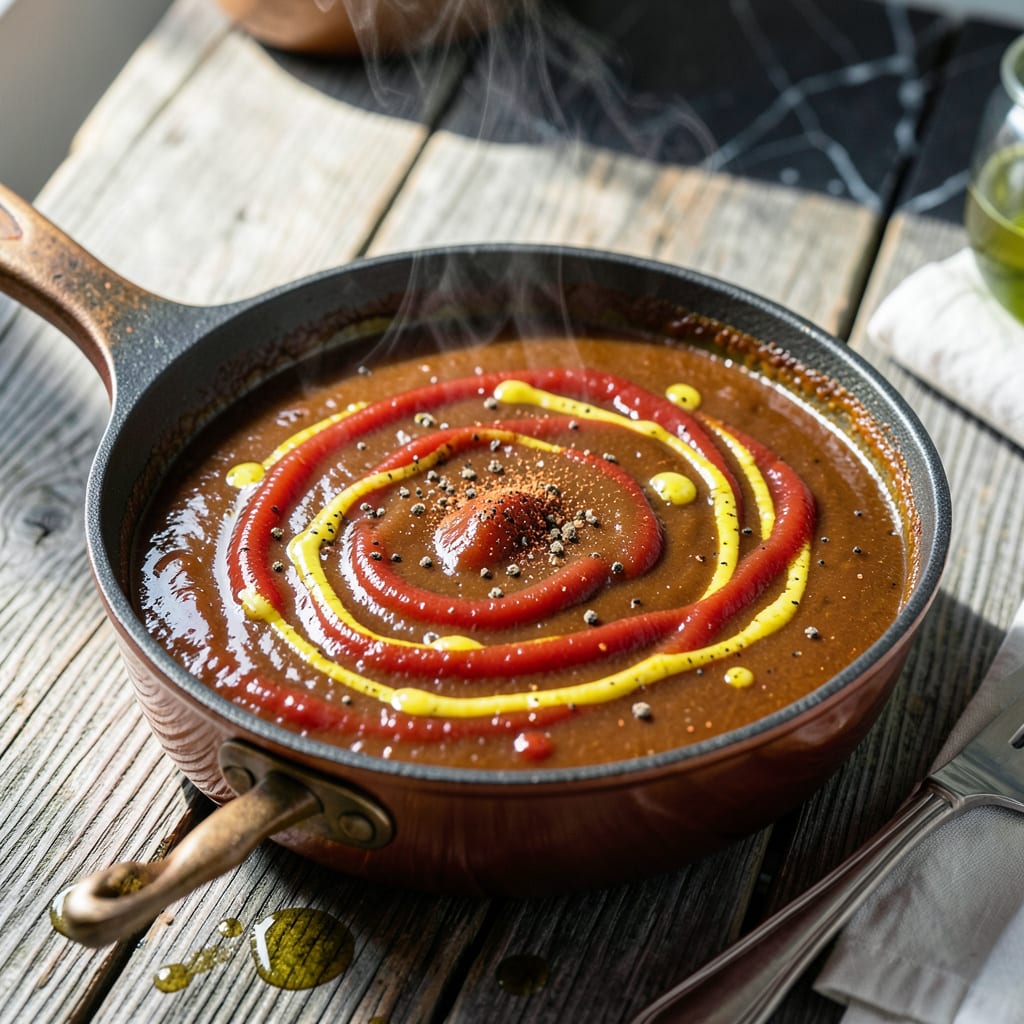
This vinegar-based sauce captures the essence of Carolina Treet with its signature tangy kick and bold flavor profile.
I developed this copycat through careful testing to match the original’s perfect balance of sweet, spicy, and acidic notes. The result is a versatile condiment that elevates any grilled or smoked dish.
Ingredients for Carolina Treet Bbq Sauce Copycat
Ten ingredients. One sauce. That signature Carolina tang you crave.
| Ingredient | Amount | Notes |
|---|---|---|
| Apple Cider Vinegar 🍏 | 2 cups | The base for tangy flavor |
| Ketchup 🍅 | 1 cup | For sweetness and body |
| White Sugar 🥘 | ½ cup | Balances acidity perfectly |
| Brown Sugar 🟤 | ½ cup | Adds depth to sweetness |
| Yellow Mustard 🟡 | ¼ cup | Essential for Carolina tang |
| Worcestershire Sauce 🫒 | 2 tbsp | Umami depth enhancer |
| Hot Sauce 🔥 | 2 tbsp | Adjust for heat preference |
| Garlic Powder 🧄 | 1 tsp | Savory background note |
| Onion Powder 🧅 | 1 tsp | Complements garlic perfectly |
| Salt 🧂 | 1 tsp | Diamond Crystal preferred |
| Black Pepper 🌶️ | 1 tsp | Freshly ground for best flavor |
[recipe_ingredient_scaler]
The vinegar is non-negotiable here—apple cider vinegar gives that bright, sharp tang that defines Carolina style. For ketchup, Heinz is my go-to (consistent flavor, right thickness), but any brand works in a pinch. The sugars balance the acidity; brown sugar adds molasses notes that white can’t. I grab my vinegar and ketchup in bulk from Costco when I’m making big batches.
No apple cider vinegar? White vinegar at half the amount gets you close but misses some depth. Short on ketchup? Tomato paste thinned with water plus extra sugar works. For heat, any hot sauce is fine—Texas Pete is classic, but Crystal or Tabasco bring different vibes. The Worcestershire can be swapped for soy sauce, though the flavor profile shifts slightly.
This keeps forever—literally 6-12 months in the fridge. The flavor actually improves after 24 hours as everything melds. I make double batches and keep extras in mason jars. Perfect for slathering on pulled pork (the reason this sauce exists).
Why You’ll Love This Recipe
- Five-Minute Mix: No chopping, no fuss—just dump the vinegar, ketchup, sugars, and mustard in a pot and stir.
- Tangy Sweet Kick: That sharp apple cider vinegar cuts through the sweetness, while the mustard gives it a punch my picky brother actually asks for seconds of.
- Grill Night MVP: I slather it on pulled pork, ribs, even chicken sandwiches—works for weeknight dinners or back yard cookouts.
- Pantry Stash: All the ingredients are already in my cabinet, and one batch makes enough to last through two BBQs without breaking the bank.
Step-by-Step Instructions for Carolina Treet BBQ Sauce
Here’s the method I use to nail that signature Carolina tang every time.
Step 1: Combine the Vinegar and Sugars
In a medium saucepan, pour in the 2 cups Apple Cider Vinegar. This is your foundation—it delivers that sharp, tangy backbone Carolina BBQ sauce is known for.
Add the 0.5 cup White Sugar and 0.5 cup Brown Sugar. The white sugar balances the acidity, while the brown sugar adds molasses depth. Stir well to begin dissolving the sugars.
Place the saucepan over medium heat and bring to a gentle simmer. You’ll see the sugars start to melt and the vinegar take on a slightly syrupy appearance.
Step 2: Incorporate the Flavor Builders
Stir in the 1 cup Ketchup, 0.25 cup Yellow Mustard, 2 tbsp Worcestershire Sauce, and 2 tbsp Hot Sauce. The ketchup adds body and sweetness, while the mustard gives it that unmistakable Carolina kick.
The Worcestershire sauce contributes umami depth, and the hot sauce brings the heat. I always taste here—if you prefer milder sauce, reduce the hot sauce slightly.
Maintain the gentle simmer and stir frequently. You’ll notice the mixture thickening slightly as the sugar continues to dissolve.
Step 3: Season and Simmer to Perfection
Add the 1 tsp Garlic Powder, 1 tsp Onion Powder, 1 tsp Salt, and 1 tsp Black Pepper. These dry seasonings provide the savory base notes that round out the bold tanginess.
Reduce the heat to low and let the sauce simmer for 15-20 minutes. You’re looking for a consistency that coats the back of a spoon but still pours easily.
Stir occasionally to prevent sticking, especially as the sauce thickens. The color will deepen to a rich, reddish-brown, and the flavors will meld into that characteristic Carolina profile.
Step 4: Cool and Adjust
Remove the saucepan from heat and let the sauce cool to room temperature. As it cools, it will thicken further—this is normal.
Give it a final taste. If it needs more tang, a splash of vinegar will do the trick. Want it sweeter? A pinch more brown sugar can be stirred in while the sauce is still warm.
Transfer to a jar or airtight container. The sauce will keep in the refrigerator for up to 2 weeks, and the flavors will continue to develop over time.
Pro Tips For Making Carolina Treet Bbq Sauce Copycat
- Simmer Low and Slow: I learned this the hard way—boiling the vinegar and sugars too hot makes the sauce bitter. Keep it at a gentle simmer for 15-20 minutes to let the flavors meld without scorching.
- Balance the Vinegar: Sounds weird, but it works: if the apple cider vinegar taste is too sharp, add a teaspoon of brown sugar at a time until it mellows. The original Carolina Treet has that perfect tangy-sweet balance.
- Skip the Cheap Ketchup: After burning three batches with watery ketchup, I finally figured out that a thicker, higher-quality ketchup keeps the sauce from turning into a runny mess.
- Stir in Mustard Last: My grandmother swore by this, and she was right: wait until the sauce cools slightly before stirring in the yellow mustard—it keeps the flavor bright and prevents separation.
Wine and Beer Pairings for This carolina treet bbq sauce copycat
Craft Beer Pairings
An American amber ale like Fat Tire complements the tangy vinegar base beautifully, with its caramel malt sweetness balancing the acidity. The moderate hop bitterness cleanses your palate between bites. I love this pairing after a long coastal ride on my vintage motorcycle. 🍺
IPA Options
A West Coast IPA with its bold citrus notes can stand up to the sauce’s acidity. Stone IPA or Green Flash work particularly well. The hoppy profile enhances the vinegar tang without overpowering the sauce’s complexity.
Lighter Beer Choices
For a more subtle pairing, try a crisp pilsner like Samuel Adams Noble Pils. Its clean, refreshing profile lets the sauce’s flavors shine while providing a cooling contrast to any spicy heat from the hot sauce in the recipe.
Wine Pairings
A chilled Riesling with its natural sweetness and acidity mirrors the sauce’s balance. Look for an off-dry German Kabinett – the residual sugar will complement the vinegar base perfectly. I find this pairing works especially well with grilled chicken.
Rosè Option
A dry Provence rosé offers a different approach with its crisp acidity and subtle red fruit notes. The wine’s brightness enhances the sauce’s tang while its body stands up to the bold flavors. Serve well-chilled for best results.
White Wine Choice
For white wine lovers, a Viognier with its stone fruit notes and slight oiliness provides a rich contrast to the sauce’s sharpness. The wine’s texture helps mellow the vinegar’s bite while maintaining the pairing’s balance. 🍷
Nutrition Facts

Trained in classic French technique but raised on slow-cooked ribs and spicy rubs, she blends culinary skill with smoke and soul.
- Recipe for Boneless Pork Chops in Cast Iron Skillet: Sear and Baste to Juicy Perfection - October 3, 2026
- Recipe for Boneless Cross Rib Roast: Slow-Roasted Beef with Herb Crust - October 3, 2026
- Hamburgers in Sauce Recipe Crock Pot: Slow-Cooked Savory Delight - October 3, 2026