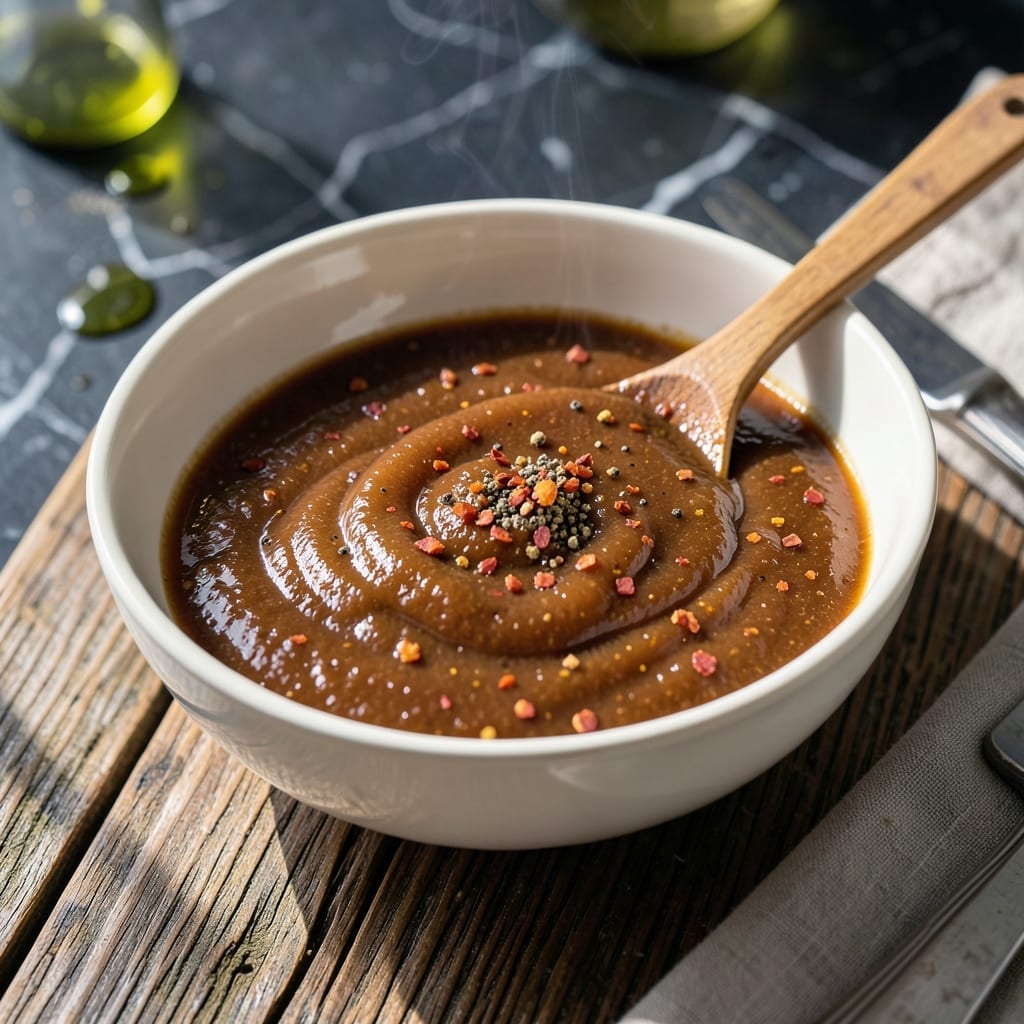
This vinegar-based sauce delivers the authentic tang that defines Eastern North Carolina barbecue. A perfect balance of sharp vinegar and subtle sweetness cuts through rich meats beautifully.
Simple to make with pantry staples, this tangy sauce keeps well and enhances any grilled dish. The traditional flavor profile sets it apart from thicker, sweeter alternatives.
Ingredients for Carolina Vinegar Barbecue Sauce
Eight pantry staples create this tangy Eastern North Carolina classic sauce.
| Ingredient | Amount | Notes |
|---|---|---|
| Apple Cider Vinegar 🍏 | 2 cups | Provides signature tangy base |
| White Vinegar 🧪 | ½ cup | Balances flavor profile |
| Brown Sugar 🧈 | ¼ cup | For subtle sweetness |
| Ketchup 🍅 | ¼ cup | Adds depth and color |
| Crushed Red Pepper Flakes 🌶️ | 1 tsp | Adjustable for heat preference |
| Ground Black Pepper 🌶️ | 1 tsp | Freshly ground preferred |
| Kosher Salt 🧂 | 1 tsp | Diamond Crystal recommended |
| Hot Sauce 🔥 | 1 tbsp | Optional for extra kick |
[recipe_ingredient_scaler]
The vinegars are non-negotiable here. Bragg apple cider vinegar is the gold standard for authenticity, but any raw, unfiltered kind works. White vinegar adds the sharpness that defines this style—Heinz is reliable. Brown sugar should be light for the proper balance (dark can overpower). Most supermarkets carry everything you need in the condiment aisle.
No apple cider vinegar? White vinegar with a splash of apple juice can substitute in a pinch (not ideal but works). Want more sweetness? Add a tablespoon of molasses instead of increasing brown sugar. The ketchup can be omitted entirely for a clearer sauce, but it helps mellow the acidity. Texas Pete hot sauce is the regional favorite for that extra kick.
This keeps indefinitely in the fridge—vinegar preserves everything. Store in a glass jar (mason jars work well). Shake before using as ingredients may settle. The flavor actually improves after 24-48 hours as everything melds together.
Why You’ll Love This Recipe
- 5-Minute Mix: I just dump everything in a saucepan and let it simmer—no chopping, no fuss.
- Tangy Kick: That sharp vinegar bite balanced with brown sugar’s sweetness hits just right every time.
- Grill or Drizzle: I slather it on pulled pork one night, then use it as a marinade the next.
- Pantry Staples: Between us, I always have vinegar and ketchup on hand, so this costs me almost nothing.
Step-by-Step Instructions for Carolina Vinegar Barbecue Sauce
Mastering this traditional sauce requires precision in balancing its signature tang with subtle sweetness and heat.
Step 1: Combine the Vinegar Base
In a medium saucepan, pour the 2 cups Apple Cider Vinegar and 0.5 cup White Vinegar together. I always use a non-reactive pan like stainless steel or enamel to prevent any metallic reactions with the acidic ingredients.
Place the saucepan over medium heat and bring to a gentle simmer. You’ll notice the vinegar aroma becoming more pronounced as it heats—this is normal. Maintain the simmer for 2-3 minutes to allow the flavors to begin melding.
Step 2: Incorporate Sweet and Tangy Elements
Add the 0.25 cup Brown Sugar and 0.25 cup Ketchup to the simmering vinegar mixture. Stir well with a whisk to dissolve the brown sugar completely. The ketchup will add body to the sauce and help balance the sharp acidity.
The mixture will take on a slightly thicker consistency as the sugar dissolves. Continue simmering for another 3-4 minutes, stirring occasionally, until the sauce begins to develop a glossy sheen.
Step 3: Season and Adjust Heat Profile
Stir in the 1 tsp Crushed Red Pepper Flakes, 1 tsp Ground Black Pepper, and 1 tsp Kosher Salt. These dry ingredients will bloom in the warm liquid, releasing their flavors and creating the sauce’s characteristic depth.
For those who prefer a spicier profile, this is the moment to add the 1 tbsp Hot Sauce. I recommend tasting first, then adding the hot sauce gradually—you can always add more heat, but you can’t take it away.
Step 4: Simmer to Perfection and Final Adjustments
Reduce the heat to low and let the sauce simmer gently for 10-12 minutes. The goal is to concentrate the flavors without reducing the volume too much—you want a pourable consistency, not a thick glaze.
Taste the sauce and adjust seasoning if needed. Remember that the flavors will intensify slightly as it cools. The finished sauce should have a bright, tangy character with a subtle sweetness and a gentle heat that builds gradually.
Remove from heat and let it cool to room temperature. The sauce will continue to develop complexity as it rests. Transfer to a clean jar and store in the refrigerator for up to 2 weeks.
Pro Tips For Making Carolina Vinegar Barbecue Sauce
- Simmer Low and Slow: Keep the heat at a gentle simmer—too high and the vinegar will evaporate too quickly, leaving your sauce harsh instead of tangy. I learned this the hard way after my first batch tasted like pure acid.
- Balance the Vinegars: Use a 2:1 ratio of apple cider vinegar to white vinegar for depth. Sounds weird, but it works—white vinegar sharpens the flavor while the apple cider adds fruity complexity.
- Dissolve the Sugar: Stir the brown sugar into the warm vinegar mixture first until fully dissolved. Skipping this step leaves you with gritty sauce, and nobody wants that.
- Rest Before Using: Let the sauce sit for at least 30 minutes after cooking—flavors meld and the heat mellows. I was skeptical until I tried it, but the difference is noticeable.
Common Mistakes When Making Great carolina vinegar barbecue sauce
Over-Reducing the Sauce
This sauce should remain thin and pourable. I see many cooks boil it down too much, creating a syrupy glaze. Aim for 10-12 minutes of gentle simmering max. The vinegar base needs to stay liquid to properly baste meats.
Skipping the Taste Test
Vinegar strengths vary by brand. Always taste before finalizing. I adjust with 1 tsp increments of brown sugar or salt as needed. Texas Pete hot sauce can rescue a batch that’s too mild.
Using Reactive Pans
Aluminum or cast iron can react with the vinegar, imparting metallic flavors. Stick to stainless steel or enamel-coated pots. This is one of those details that separates good sauce from great.
Adding All Heat at Once
The crushed red pepper and hot sauce pack serious punch. Start with half the 1 tsp crushed red pepper, taste, then add more. Same goes for the 1 tbsp hot sauce—you can’t remove heat once it’s in there. 🌶️
Storing in Metal Containers
Even after cooking, vinegar can react with metal. Always use glass jars. I prefer mason jars—they’re airtight and let me see the sauce’s beautiful amber color. This also prevents any off flavors from developing during storage.
Rushing the Rest Period
Let the sauce cool completely before using. The flavors need 24-48 hours to fully meld. I’ve noticed the difference—fresh sauce is good, but rested sauce is transcendent. 💡
Nutrition Facts
Frequently Asked Questions
Can I use only apple cider vinegar?
For authentic flavor, use both vinegars. But in a pinch, substitute the white vinegar with more apple cider vinegar. The tang will be fruitier and slightly sweeter.
How long does this sauce keep?
Stored in a glass jar in the fridge, it stays fresh for 2-3 months. The vinegar preserves it naturally. Shake before each use as ingredients may settle.
What meats pair best with this sauce?
Traditionally, it’s used on pulled pork, but it works beautifully with chicken, ribs, and even as a marinade for vegetables. Its tang cuts through rich, fatty meats perfectly.
Can I make it less tangy?
Reduce the vinegar by 1/4 cup and add a tablespoon of honey or molasses. Adjust gradually to avoid over-sweetening. Taste as you go.

Trained in classic French technique but raised on slow-cooked ribs and spicy rubs, she blends culinary skill with smoke and soul.
- Recipe for Boneless Pork Chops in Cast Iron Skillet: Sear and Baste to Juicy Perfection - October 3, 2026
- Recipe for Boneless Cross Rib Roast: Slow-Roasted Beef with Herb Crust - October 3, 2026
- Hamburgers in Sauce Recipe Crock Pot: Slow-Cooked Savory Delight - October 3, 2026