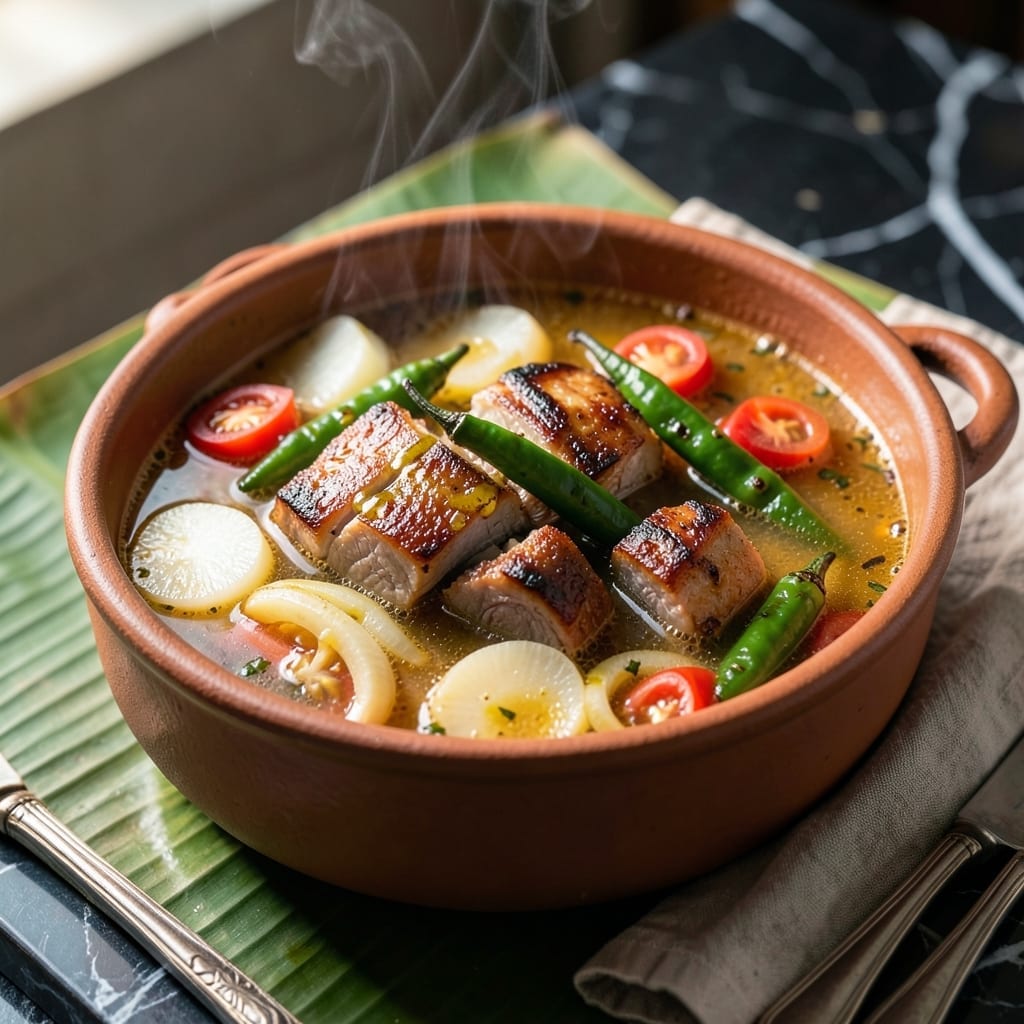
This Filipino classic delivers a perfect balance of sour and savory in every spoonful. The tamarind broth creates a tangy foundation that highlights the pork’s richness.
Fresh vegetables add texture and brightness, making this dish both comforting and refreshing. Traditional techniques ensure authentic flavor in every bite.
Ingredients for Filipino Pork Sinigang
Traditional Filipino ingredients create this iconic sour and savory pork stew with vibrant vegetables.
| Ingredient | Amount | Notes |
|---|---|---|
| Pork Shoulder 🥩 | 1 ½ lb | Cut into bite-sized pieces |
| Tamarind Soup Base 🍈 | 1 package | Or 8 oz tamarind pulp |
| Yellow Onion 🧅 | 1 whole | Quartered for broth base |
| Tomatoes 🍅 | 2 whole | Quartered for acidity |
| Daikon Radish 🥕 | 8 oz | Peeled, sliced into rounds |
| Long Green Chili Pepper 🌶️ | 2 whole | Optional for heat |
| Kangkong (Water Spinach) 🌿 | 4 cups | Or substitute baby spinach |
| Eggplant 🍆 | 1 whole | Cut into 1-inch pieces |
| String Beans 🌱 | 6 oz | Trimmed, cut into 2-inch lengths |
| Taro Root 🥔 | 8 oz | Peeled, sliced (optional) |
| Water 💧 | 8 cups | For simmering broth |
| Fish Sauce 🐟 | 2 tbsp | For umami depth |
| Salt 🧂 | 1 tsp | Adjust to taste |
[recipe_ingredient_scaler]
The pork shoulder is essential for authentic texture—bone-in pieces add depth to the broth. Source from Asian markets for better marbling, or use pork belly for extra richness. Tamarind soup base packets (like Mama Sita’s) are convenient and consistent. For fresh tamarind, Latino or Southeast Asian grocers often carry the pulp. Look for firm daikon and unblemished eggplant.
No tamarind? Guava or calamansi provides similar sourness. Kangkong can be swapped with bok choy or Chinese broccoli—just add them later. For a meatier broth, pork ribs work well. Omit fish sauce for vegetarian versions (use soy sauce or salt instead). String beans can be replaced with green bell peppers if needed.
This stew tastes even better the next day as flavors meld. Store in the fridge for up to 3 days or freeze for 3 months. Reheat gently to preserve vegetable texture. Always cook the pork fresh—never freeze raw meat in the broth.
Why You’ll Love This Recipe
- One Pot Wonder: I just dump everything in, let the tamarind soup base work its magic with the pork shoulder, and walk away.
- Tangy Satisfaction: That sour tamarind punch with the sweet daikon radish and juicy tomatoes? It hits all the right notes.
- Feeds the Gang: I make a big batch for Sunday lunch, and honestly, it’s the one dish my whole family agrees on.
- Tastes Better Tomorrow: Leftovers? Even more flavorful the next day—perfect for packing lunch or a quick reheat dinner.
Step-by-Step Instructions for Filipino Pork Sinigang
Master the technique of building layers of tangy, savory flavor in this classic Filipino soup.
Step 1: Brown the Pork Shoulder and Build the Broth Base
Heat a large pot over medium-high heat and add the 1.5 lb Pork Shoulder pieces. Sear until lightly browned on all sides, about 5-7 minutes. This step develops a rich, meaty depth that will infuse the entire dish.
Add the 1 whole Yellow Onion and 2 whole Tomatoes, quartered, to the pot. Stir for 2 minutes until they begin to soften and release their juices. Pour in the 8 cups Water and bring to a boil. Skim off any foam that rises to the surface for a clean, clear broth.
Step 2: Infuse the Tamarind and Simmer the Pork
Once boiling, add the 1 package Tamarind Soup Base to the pot. Stir well to dissolve completely. Reduce heat to medium-low and let the broth simmer uncovered for 30-40 minutes until the pork becomes tender and the broth takes on a deep, tangy aroma.
Taste the broth and adjust the tamarind flavor if needed—it should be pleasantly sour but not overpowering. The pork should be fork-tender but still hold its shape. Add the 1 tsp Salt and 2 tbsp Fish Sauce at this stage to build the savory foundation.
Step 3: Add Hard Vegetables for Layered Texture
Increase heat to medium and add the 8 oz Daikon Radish, peeled and sliced into rounds, along with the 8 oz Taro Root, peeled and sliced. Simmer for 10 minutes until the vegetables begin to soften but still retain a slight bite.
Add the 6 oz String Beans, trimmed and cut into 2-inch lengths, and the 1 whole Eggplant, cut into 1-inch pieces. These vegetables need less time to cook and will add variety to the texture of the dish.
Step 4: Finish with Leafy Greens and Chili
Stir in the 4 cups Kangkong (Water Spinach) and the 2 whole Long Green Chili Pepper. Cook for 2-3 minutes until the kangkong wilts and the chili infuses the broth with a subtle heat. The kangkong should remain bright green and slightly crisp.
Taste the broth one final time and adjust seasoning if necessary. The balance should be tangy from the tamarind, savory from the pork and fish sauce, and slightly spicy from the chili. Serve hot in deep bowls, ensuring each serving has a generous portion of pork and vegetables.
Pro Tips For Making Filipino Pork Sinigang
- Boil Pork First: Parboil the pork shoulder for 10 minutes before adding other ingredients to remove impurities and keep your broth clear.
- Use Fresh Tamarind: If you can find it, fresh tamarind pulp gives a brighter, more complex sour flavor than powdered soup base.
- Add Daikon Last: Daikon radish turns mushy if cooked too long—add it 10-15 minutes before serving to keep it firm yet tender.
- Squeeze the Tomatoes: After chopping the tomatoes, squeeze them slightly to release their juices and deepen the sour-sweet flavor of the broth.
Dietary Considerations for These Flavors
Gluten-Free Friendly
This dish is naturally gluten-free as long as you verify your tamarind soup base. I always check labels for hidden wheat—Mama Sita’s brand is a safe bet. The vegetables and pork contain no gluten, making this a worry-free option for anyone avoiding it.
Low-Carb Adaptations
To reduce carbs, simply adjust the vegetables. Skip the taro root and use extra kangkong or spinach. The tamarind broth remains the star, and the pork provides satisfying protein. I often make this version for my keto friends.
Dairy-Free Naturally
Traditional sinigang contains no dairy, so it’s perfect for lactose-intolerant diners. The tangy tamarind and umami-rich fish sauce deliver all the flavor without any milk products. I’ve served this to many dairy-sensitive guests with rave reviews.
Vegetarian Option
Swap the pork shoulder for firm tofu or mushrooms to make a hearty vegetarian version. Use soy sauce instead of fish sauce for depth. The tamarind broth and fresh vegetables still create that signature sour-savory balance. 💛
Allergen Notes
Be mindful of the fish sauce for those with seafood allergies. Substitute soy sauce or salt if needed. Also, ensure your tamarind paste or soup base doesn’t contain any allergens. Always double-check ingredient labels.
Balanced Meal
This soup offers a complete meal with protein, fiber-rich vegetables, and complex flavors. The tamarind provides vitamin C, while the pork adds iron and B vitamins. It’s a nourishing dish that satisfies without heaviness. 💪
Nutrition Facts
Frequently Asked Questions
What can I use if I don’t have tamarind?
Try guava, calamansi, or even green mango for similar sourness. Lemon or lime juice works in a pinch, but add gradually to avoid over-acidifying the broth.
How do I know when the pork is done?
The pork is ready when it’s fork-tender and easily pulls apart, usually after 30-40 minutes of simmering. Avoid overcooking to keep it juicy and flavorful.
Can I make this dish ahead of time?
Yes! The flavors deepen overnight. Store in the fridge for up to 3 days or freeze for 3 months. Reheat gently to preserve the vegetable texture.

Trained in classic French technique but raised on slow-cooked ribs and spicy rubs, she blends culinary skill with smoke and soul.
- Recipe for Boneless Pork Chops in Cast Iron Skillet: Sear and Baste to Juicy Perfection - October 3, 2026
- Recipe for Boneless Cross Rib Roast: Slow-Roasted Beef with Herb Crust - October 3, 2026
- Hamburgers in Sauce Recipe Crock Pot: Slow-Cooked Savory Delight - October 3, 2026