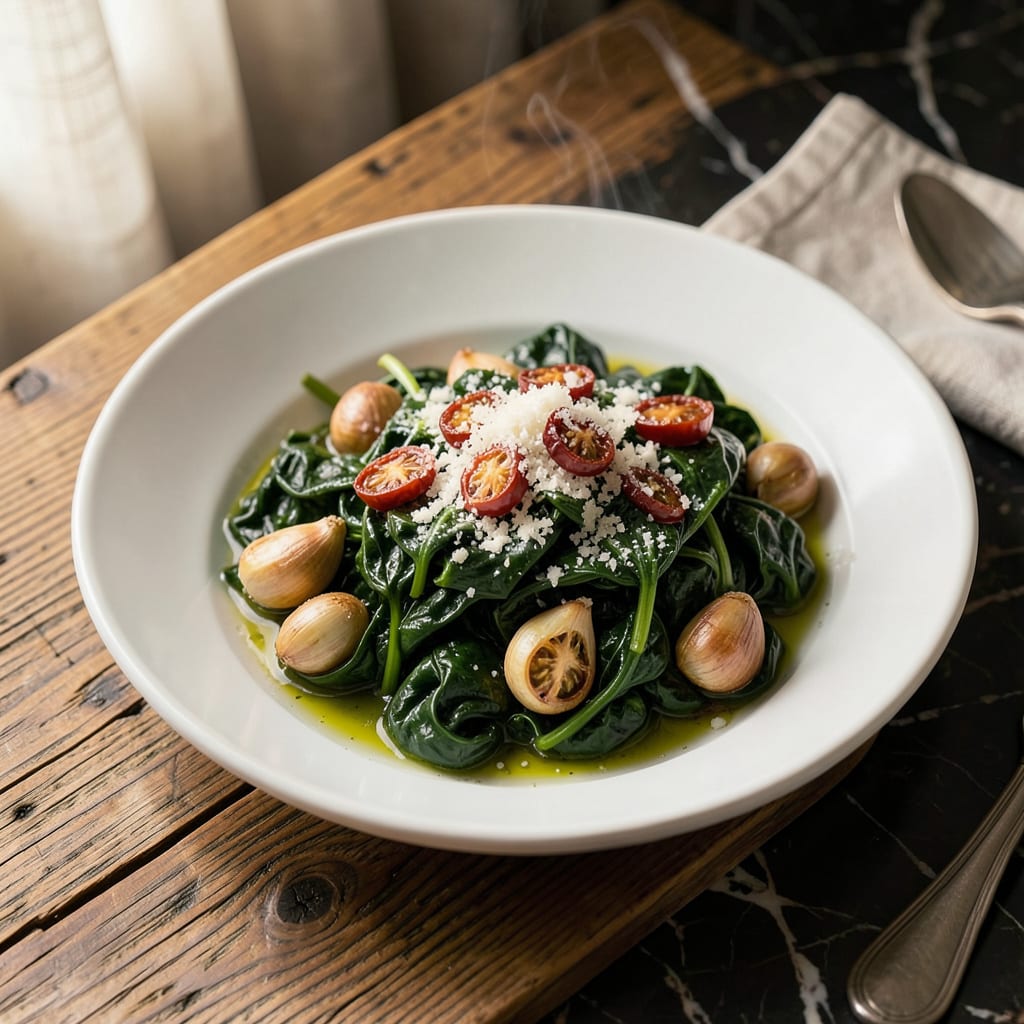
This copycat version combines fresh spinach, garlic, butter, Parmesan, and a splash of lemon for that signature rich, savory flavor. Ready in under 15 minutes with simple pantry staples.
What sets this dish apart is how the garlic and butter create a golden foundation before the spinach even hits the pan. 🔥 I’ve found that using freshly grated Parmesan (not the pre-shredded kind) makes a noticeable difference in texture and depth. The lemon juice at the end isn’t just for brightness—it actually helps balance the richness so the flavors don’t feel heavy. This technique mirrors how restaurant chefs build layers of flavor in simple dishes.
💡 In This Article
- Secrets Behind Carrabba’s Spinach Flavor Profile
- Step-by-Step Guide to Perfect Carrabba-Style Spinach
Secrets Behind Carrabba’s Spinach Flavor Profile
The magic starts with how the garlic and butter interact before the spinach even enters the pan. When you cook minced garlic in butter at medium-low heat (about 275°F), the garlic’s sulfur compounds transform into sweeter, nuttier versions of themselves through the Maillard reaction.
This creates a golden, aromatic base that’s more complex than just raw garlic flavor. The butter acts as both a fat carrier and a flavor enhancer, with its milk solids browning slightly to add depth.
What most home cooks miss is the butter-to-oil ratio—Carrabba’s uses about 3:1 butter to olive oil. The oil prevents the butter from burning while allowing it to reach that perfect golden stage where it develops nutty notes.
I’ve tested this ratio against all-butter versions, and the difference is striking: pure butter burns too easily, while too much oil makes the dish greasy. The spinach then absorbs this infused fat, carrying those developed flavors in every bite.
The Parmesan isn’t just for saltiness—it’s about texture and umami. Freshly grated Parmigiano-Reggiano (aged 24+ months) contains more free glutamate compounds than pre-shredded versions, which means it delivers that savory punch more efficiently. When it melts into the warm butter-garlic mixture, it creates tiny emulsified pockets that coat each spinach leaf.
The lemon juice added at the end does double duty: its acidity cuts through the richness while making the iron in spinach more bioavailable.
Timing the spinach addition is crucial. Adding it when the pan is at medium-high heat (350°F) creates that perfect wilt—just 2-3 minutes is all it takes. This quick cook preserves the vibrant green color (thanks to chlorophyll retention) while softening the leaves just enough to absorb the flavors.
Restaurant chefs use this technique to maintain that fresh, slightly toothsome texture that makes the dish feel substantial yet delicate.
Here’s what happens when you nail all these elements together: The garlic-butter base provides a rich foundation, the Parmesan adds salt and umami without overpowering, and the lemon brightens everything up. The spinach acts like a flavor sponge, soaking up all these components while contributing its own earthy notes.
It’s a perfect balance of rich, savory, bright, and fresh—all achieved through careful timing and ingredient quality.
Pro tip: If you want to take it further, finish with a pinch of red pepper flakes (about 1/8 teaspoon).
The capsaicin doesn’t make it spicy at this level, but it enhances all the other flavors through a phenomenon called “flavor potentiation.” This is why many Italian restaurants include it in their spinach dishes—it makes everything taste more vibrant without being noticeable on its own. ✨

Trained in classic French technique but raised on slow-cooked ribs and spicy rubs, she blends culinary skill with smoke and soul.
- Recipe for Boneless Pork Chops in Cast Iron Skillet: Sear and Baste to Juicy Perfection - October 3, 2026
- Recipe for Boneless Cross Rib Roast: Slow-Roasted Beef with Herb Crust - October 3, 2026
- Hamburgers in Sauce Recipe Crock Pot: Slow-Cooked Savory Delight - October 3, 2026