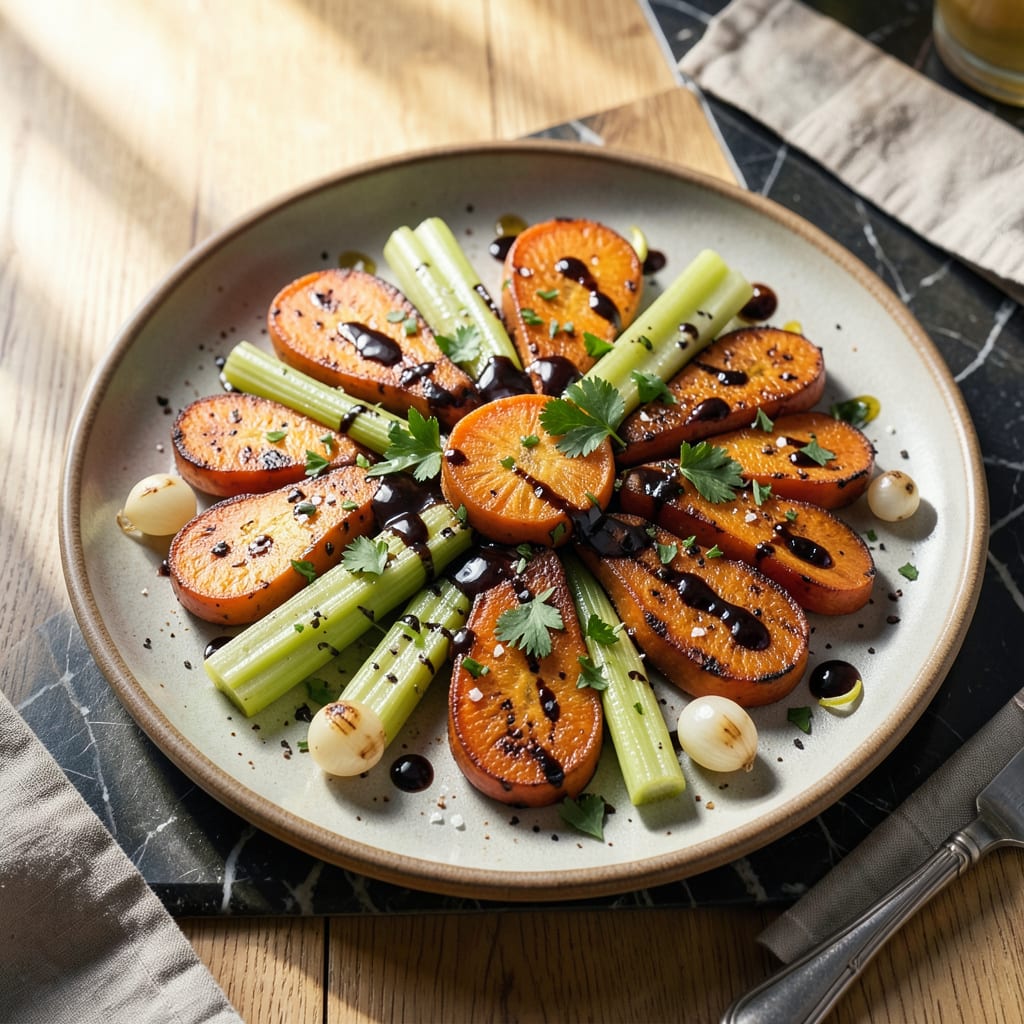
Carrot, celery, and onion form the classic soffritto base—finely diced and sautéed in olive oil to build deep, aromatic flavor in soups, stews, and sauces. The trio balances sweetness, earthiness, and sharpness for a rich foundation.
This humble combination is the backbone of countless dishes across cultures, from Italian ragù to French mirepoix. 🔥 The magic happens when the natural sugars in carrots caramelize, celery’s subtle bitterness mellows, and onions develop their sweet, savory depth—creating a complex flavor profile that’s greater than the sum of its parts. I’ve found that mastering the proper dice size (about 1/4-inch pieces) and cooking time (8-10 minutes on medium-low) makes all the difference in achieving that perfect golden-brown base without burning.
What’s fascinating is how this simple technique transforms ordinary ingredients into a flavor powerhouse. ✨ The slow cooking process allows the vegetables to release their moisture and then reabsorb it, concentrating their essences. This creates what chefs call “fundamental flavor”—a building block that enhances everything from hearty beef stews to delicate vegetable broths.
💡 In This Article
- Why Carrot, Celery, and Onion Work Perfectly Together
- 5 Creative Ways to Use Soffritto Beyond Soups
Why Carrot, Celery, and Onion Work Perfectly Together
This vegetable trio creates culinary magic through chemistry. Carrots bring natural sugars that caramelize at 320°F, developing sweet, toasty notes. Celery contributes subtle bitterness and umami compounds called phthalides, while onions release sulfur-based flavor molecules when heated. Together, they form a perfect balance of sweet, savory, and aromatic elements that deepen as they cook.
The Maillard reaction is key here. When you sauté these vegetables in olive oil at medium-low heat for 8-10 minutes, their amino acids and reducing sugars combine to create hundreds of new flavor compounds. 🔥 The onions’ sulfur compounds react with carrot sugars to form pyrazines—earthy, roasted aromas that make your kitchen smell incredible.
Celery’s phthalides act as flavor amplifiers, enhancing the other ingredients’ natural tastes.
Historically, this combination emerged independently in both Italian (soffritto) and French (mirepoix) cuisine during the 18th century. Italian cooks favored a 2:1:1 ratio (onion:carrot:celery), while the French used equal parts. The difference comes from regional preferences—Italians wanted more onion sweetness, while French cuisine balanced the trio equally for versatile use in sauces and stocks.
What makes this base so effective is its ability to adapt. The vegetables’ cell walls break down during cooking, releasing pectin that helps thicken sauces naturally. Their moisture content (about 85-90%) creates steam that carries aromatic compounds throughout your dish.
I’ve found that adding a pinch of salt early helps draw out moisture faster, accelerating the flavor concentration process.
The size matters too. A proper 1/4-inch dice ensures even cooking and maximum surface area for browning. Larger pieces won’t develop flavor uniformly, while smaller bits risk burning before they can caramelize properly.
This precise cut allows the vegetables to cook at the same rate, with onions softening just as carrots become tender and celery loses its fibrous texture.
Temperature control is everything. Too high and the sugars burn; too low and the vegetables steam instead of brown. The ideal range is 275-325°F—hot enough for Maillard reactions but gentle enough to prevent bitterness.
✨ This is why professional kitchens often use heavy-bottomed pans that distribute heat evenly, preventing hot spots that could scorch the delicate mixture.
What’s remarkable is how this simple combination can transform a dish’s entire character. The same base that makes a rich beef stew hearty can also create a delicate foundation for a light vegetable consommé. The secret lies in cooking time—5 minutes for bright, fresh flavors or up to 20 minutes for deep, concentrated richness. 💫

Trained in classic French technique but raised on slow-cooked ribs and spicy rubs, she blends culinary skill with smoke and soul.
- Recipe for Boneless Pork Chops in Cast Iron Skillet: Sear and Baste to Juicy Perfection - October 3, 2026
- Recipe for Boneless Cross Rib Roast: Slow-Roasted Beef with Herb Crust - October 3, 2026
- Hamburgers in Sauce Recipe Crock Pot: Slow-Cooked Savory Delight - October 3, 2026