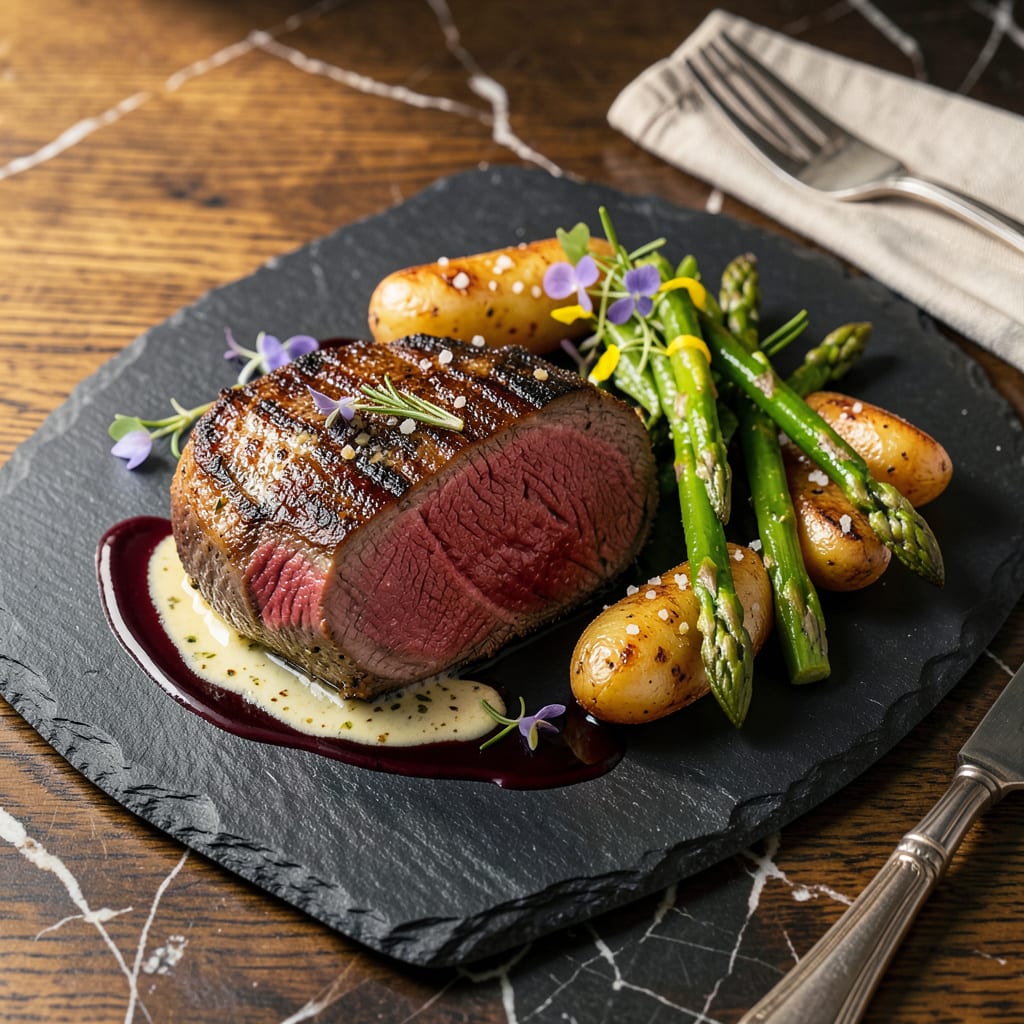
Center cut steak comes from the middle of the rib or loin primal, offering exceptional tenderness and rich beefy flavor. It includes cuts like ribeye, filet mignon, and New York strip, prized for their marbling and juiciness.
As a pitmaster who’s worked with every cut imaginable, I can tell you these middle-section steaks are the crown jewels of the cow. 🔥 The secret lies in their minimal connective tissue—these muscles do less work, so they stay buttery-soft. What really sets them apart is the fat distribution: ribeyes bring bold marbling, filets offer lean elegance, and strips deliver that perfect balance. I always recommend these cuts when someone wants restaurant-quality results at home.
What most people don’t realize is how the cow’s anatomy affects flavor. These center cuts come from areas protected by bone and fat, which means they develop richer taste profiles. ✨ The rib section gives you that iconic beefy punch, while loin cuts offer a more refined experience. I’ve found that understanding this anatomy helps home cooks choose the right cut for their meal—whether they want a showstopping ribeye or a delicate filet.
💡 In This Article
- Anatomy of a Center Cut Steak: Why Location Matters
- Mastering Cooking Techniques for Center Cut Steaks
Anatomy of a Center Cut Steak: Why Location Matters
Let me take you through the cow’s anatomy like a butcher’s map. The center cuts come from the rib and short loin sections—areas that see minimal movement compared to the shoulder or leg. This lack of exercise means less connective tissue development, resulting in naturally tender meat.
The rib section (where ribeyes come from) has abundant intramuscular fat, while the loin (home to filets and strips) offers leaner but still exceptionally tender cuts. 🔥
The magic happens in the fat distribution. Ribeyes showcase dramatic marbling—those white fat streaks that melt at 130-140°F, basting the meat from within. Filets, from the tenderloin, have almost no marbling but compensate with silky texture. New York strips strike the perfect balance with moderate marbling and firm bite.
Compare this to chuck cuts (from the shoulder) which develop more connective tissue from constant movement, requiring long cooking to break down.
What really sets center cuts apart is their position along the spine. These muscles are protected by bone and fat deposits, creating an insulated environment that develops richer flavor compounds. The rib section’s proximity to the spine means it gets more blood flow during the animal’s life, enhancing its beefy intensity.
Meanwhile, the loin’s position away from major weight-bearing means its fibers stay loose and tender. ✨
Consider the temperature differences too. Center cuts cook faster because their loose muscle structure transfers heat more efficiently. A 1.5-inch ribeye will reach medium-rare (130°F) in about 4-5 minutes per side on a hot grill, while a chuck steak of the same thickness might need 6-8 minutes just to break down its tougher fibers.
This efficiency makes center cuts ideal for quick, high-heat cooking methods.
The fat cap on ribeyes isn’t just for show—it renders down during cooking, creating that signature crust while keeping the interior juicy. Filets lack this external fat, which is why they benefit from being wrapped in bacon or basted with butter.
💫 Even the grain direction matters: center cuts have more uniform fiber alignment, making them easier to slice against the grain for maximum tenderness.
Here’s a pro tip from my butcher days: Look for the “eye” of the steak—the central muscle. In center cuts, this eye should be plump and well-defined, not stringy or separated. The more pronounced this central muscle appears, the better the steak will hold up to high-heat cooking while remaining tender.
This visual cue separates premium center cuts from their tougher counterparts.
Remember that marbling score matters too. USDA Prime center cuts have abundant marbling (about 8-12% fat content), while Choice typically has 4-7%. That extra fat translates directly to flavor and moisture retention during cooking.
When I’m selecting steaks for my motorcycle club’s cookouts, I always go for the center cuts with the most even fat distribution—it’s the difference between good and extraordinary. ⚡

Trained in classic French technique but raised on slow-cooked ribs and spicy rubs, she blends culinary skill with smoke and soul.
- Recipe for Boneless Pork Chops in Cast Iron Skillet: Sear and Baste to Juicy Perfection - October 3, 2026
- Recipe for Boneless Cross Rib Roast: Slow-Roasted Beef with Herb Crust - October 3, 2026
- Hamburgers in Sauce Recipe Crock Pot: Slow-Cooked Savory Delight - October 3, 2026