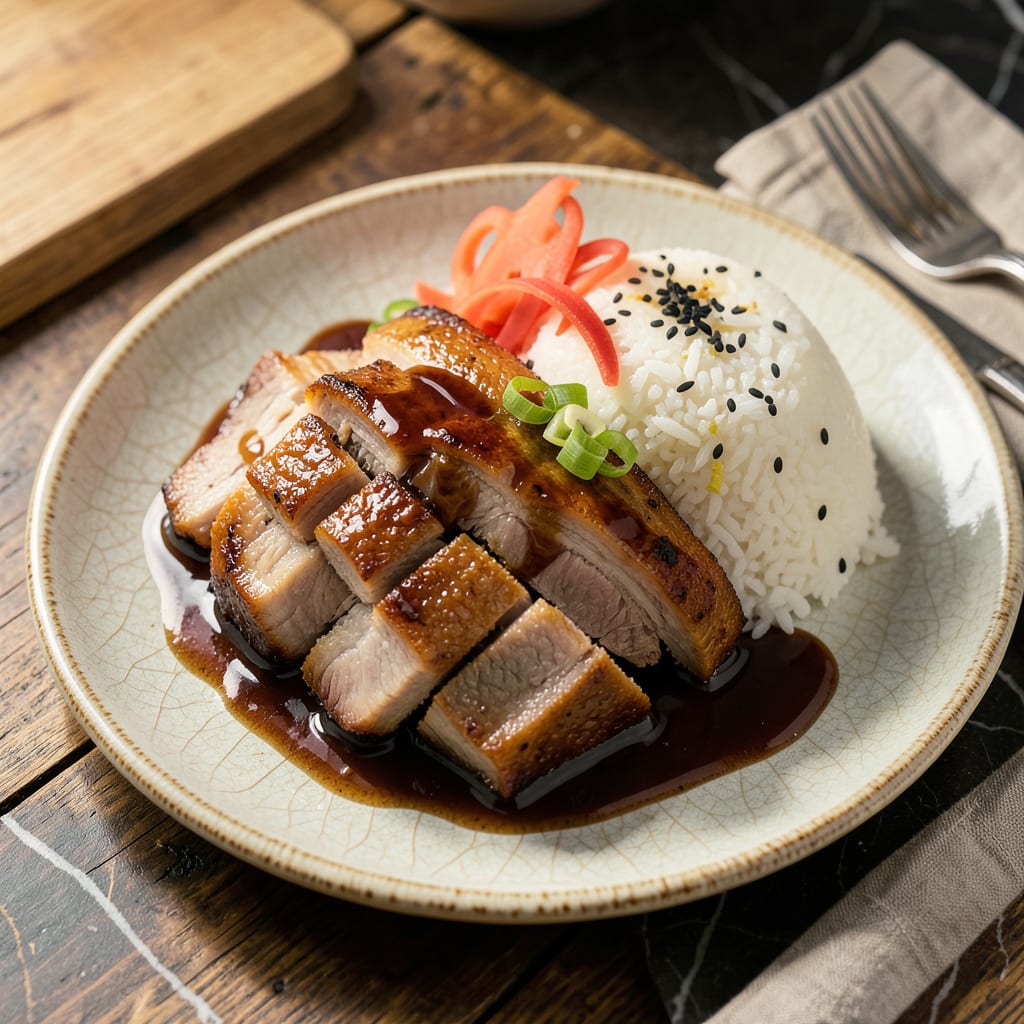
Chashu is a Japanese braised pork dish featuring tender, fatty cuts slow-cooked in a sweet-savory soy-based broth until melt-in-your-mouth tender. It’s a staple in ramen and donburi bowls, known for its rich umami flavor and glossy caramelized exterior.
This isn’t just any braised pork—it’s a masterclass in balancing fat, sweetness, and salt. The magic happens during the long, gentle simmer where pork belly or shoulder transforms into something luxurious. 🔥 I love how the rolling technique creates those perfect spiral slices you see in ramen shops, while the broth reduces to a sticky glaze that clings to every bite.
What really sets chashu apart is its versatility beyond ramen. The same techniques that create those tender slices work beautifully with chicken thighs or Short Ribs Recipe Oven: Fall-Off-The-Bone Tender Perfection”>Beef Short Ribs Recipe Grill: Fall-Off-The-Bone Tender Perfection”>beef short ribs. I’ve even used leftover chashu to elevate simple rice bowls or stuff steamed baos—it’s the kind of dish that makes everyday meals feel special.
💡 In This Article
- How Traditional Chashu Pork Achieves Its Signature Texture
- Ways to Use Chashu Beyond Ramen: Creative Serving Ideas
How Traditional Chashu Pork Achieves Its Signature Texture
The secret starts with the cut—pork belly or shoulder are non-negotiable for authentic chashu. These cuts contain high levels of collagen and fat marbling that transform during the 2-3 hour braise. At temperatures between 160-180°F, collagen slowly converts to gelatin, creating that unmistakable silky mouthfeel.
The fat renders gradually, basting the meat from within while keeping it impossibly moist. 🔥
Here’s where technique matters: the pork is tightly rolled and tied before cooking. This creates even layers that cook uniformly, preventing dry edges while allowing the center to reach perfect tenderness. The rolling also forms those beautiful spiral slices you see in ramen bowls—each piece has an ideal fat-to-meat ratio.
Professional chefs often use butcher’s twine at 1-inch intervals to maintain the roll’s shape during the long cook.
The braising liquid works double duty as both cook and flavor developer. A precise balance of soy sauce (for umami), mirin or sugar (for sweetness), and aromatics like garlic and ginger creates a chemical reaction during reduction.
As the liquid simmers, the sugars caramelize while soy proteins undergo Maillard reactions, forming that signature glossy, flavor-packed exterior. The final reduction to a glaze concentration is what makes each bite burst with complex sweet-savory notes.
Temperature control is everything in this process. Too hot and the proteins seize up, creating tough meat; too cool and the collagen won’t break down properly. The ideal range of 160-180°F allows for gentle protein denaturation while giving collagen time to convert.
I’ve found that maintaining this window requires patience—rushing with higher heat leads to dry, stringy results rather than the desired melt-in-your-mouth texture. ✨
What most home cooks overlook is the resting period. After braising, the chashu should rest in its cooking liquid for at least 30 minutes before slicing. This allows the muscle fibers to relax and reabsorb some of the braising juices, ensuring maximum moisture in every slice.
The resting also lets the flavors penetrate deeper into the meat, creating that consistent taste throughout each piece.
The fat cap plays a crucial role beyond just flavor. As it renders during cooking, it creates a natural basting system that continuously coats the meat. This self-basting effect is why chashu stays juicy even after slicing and reheating.
The rendered fat also contributes to the glaze’s richness, helping it cling to the meat’s surface in that characteristic sticky-sweet finish.
For the most tender results, the pork should be cooked until it reaches an internal temperature of 195-203°F. At this point, collagen has fully converted to gelatin, and the meat fibers have broken down sufficiently to create that “fall apart at the touch of chopsticks” texture.
Using a meat thermometer takes the guesswork out of determining doneness—especially important when working with larger rolls that might cook unevenly otherwise. ⚡

Trained in classic French technique but raised on slow-cooked ribs and spicy rubs, she blends culinary skill with smoke and soul.
- Recipe for Boneless Pork Chops in Cast Iron Skillet: Sear and Baste to Juicy Perfection - October 3, 2026
- Recipe for Boneless Cross Rib Roast: Slow-Roasted Beef with Herb Crust - October 3, 2026
- Hamburgers in Sauce Recipe Crock Pot: Slow-Cooked Savory Delight - October 3, 2026