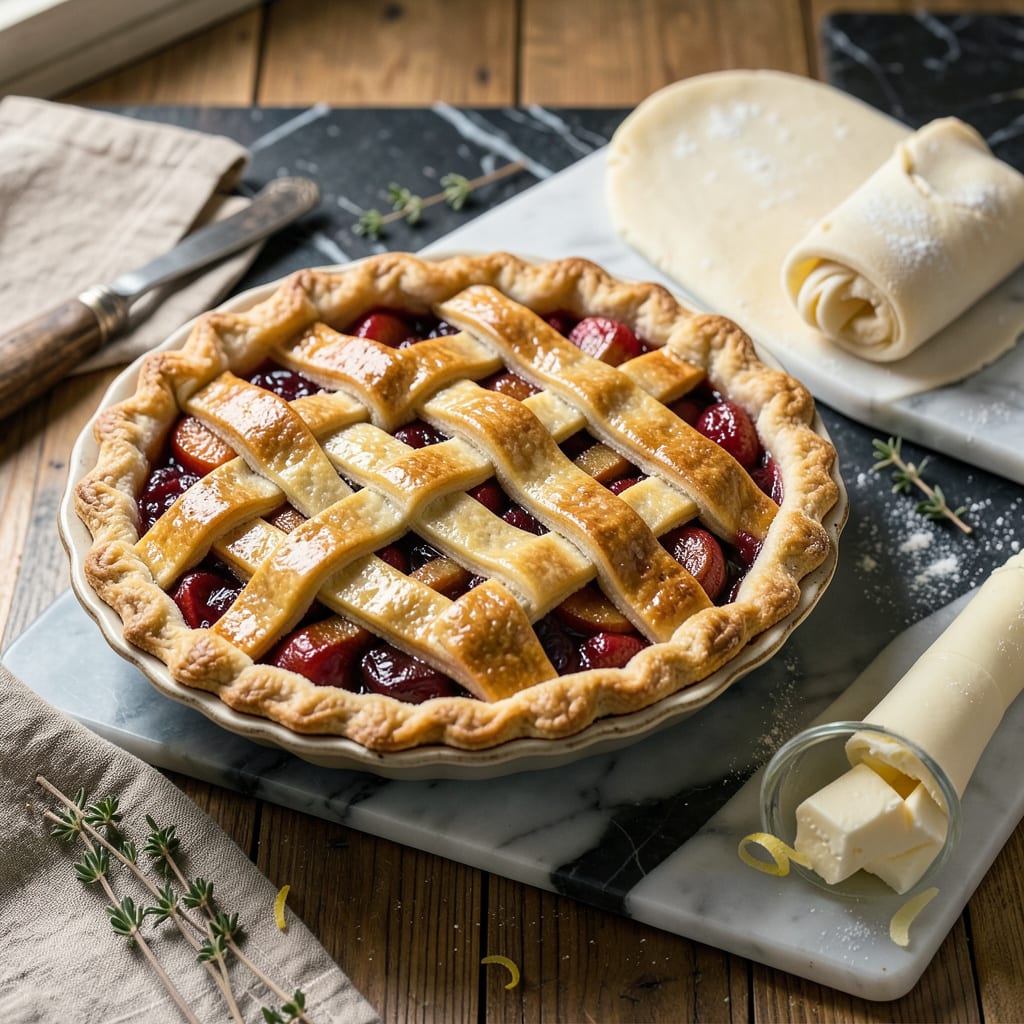
Unbaked pie crust lasts 2-3 days in the fridge if wrapped tightly, while baked crust stays fresh for 4-5 days. Freezing extends shelf life to 2-3 months for both types.
As a chef who’s worked with delicate pastries for years, I’ve learned that air exposure is the biggest enemy of pie crust. 🔥 The butter in unbaked dough oxidizes quickly, developing off-flavors, while baked crusts absorb fridge odors if not sealed properly. My pro tip: Double-wrap in plastic AND foil to create an airtight barrier—this mimics commercial packaging and preserves that flaky texture you worked so hard to create.
Temperature fluctuations also play a huge role in crust longevity. The fridge door (where many people store dough) is actually the warmest spot, causing butter to soften unevenly. I always recommend storing crust in the coldest part of your fridge—usually the back of the bottom shelf—where temperatures stay consistently between 34-38°F.
💡 In This Article
- Signs Your Refrigerated Pie Crust Has Spoiled
- Maximizing Pie Crust Freshness in the Fridge
Signs Your Refrigerated Pie Crust Has Spoiled
When pie crust goes bad, your nose knows first. The butter in unbaked dough begins oxidizing after 48 hours, producing a telltale rancid aroma similar to old paint or wet cardboard. 🚨 Baked crusts develop a sour, almost cheesy smell when the fats break down.
This happens because the emulsified butter separates and the flour starches start fermenting from moisture absorption.
Visually, you’ll spot grayish patches on unbaked dough—this is oxidized fat surfacing. Baked crusts show dark brown or black speckles (not to be confused with intentional browning) when the proteins have degraded. Mold appears as fuzzy white, green, or black spots, typically starting at edges where air exposure is highest.
A slimy film indicates bacterial growth from condensation trapped in the wrapping.
The texture changes dramatically when spoilage begins. Fresh dough should spring back when pressed, but spoiled crust feels gummy or cracks excessively. Baked crusts lose their crispness entirely, becoming either soggy (from absorbed moisture) or brittle (from fat separation).
The “snap” test works well—fresh crust breaks cleanly, while bad crust either bends or crumbles into fine particles.
Here’s what’s actually happening at the microscopic level: The flour’s gluten network weakens as proteins denature, while the butter’s milk solids oxidize. This double degradation creates that unmistakable “off” flavor. 🔬 Moisture is the silent accelerator—every 10% increase in humidity cuts shelf life by about 24 hours through enhanced microbial activity.
Pro tip: The “fridge test” reveals hidden spoilage. Place a small piece of dough on your tongue—if it leaves a metallic or soapy aftertaste, the fats have turned. Baked crusts should taste clean and buttery; any bitter or sharp notes mean the flour has started fermenting.
I once ruined a peach pie by using dough that passed the smell test but failed this critical taste check!
Temperature abuse leaves clues too. Crust stored above 40°F develops greasy sweat beads on the surface within 12 hours. Below 32°F, ice crystals form that rupture cell structures, creating mealy texture when thawed. The sweet spot is 34-38°F—cold enough to slow oxidation but not freeze the butter.
Remember that homemade crusts spoil faster than commercial versions due to lack of preservatives. Store-bought dough contains dough conditioners that extend life by about 30%, while artisanal crusts with European butter (higher fat content) may turn rancid 24 hours sooner than those made with standard butter.

Trained in classic French technique but raised on slow-cooked ribs and spicy rubs, she blends culinary skill with smoke and soul.
- Recipe for Boneless Pork Chops in Cast Iron Skillet: Sear and Baste to Juicy Perfection - October 3, 2026
- Recipe for Boneless Cross Rib Roast: Slow-Roasted Beef with Herb Crust - October 3, 2026
- Hamburgers in Sauce Recipe Crock Pot: Slow-Cooked Savory Delight - October 3, 2026