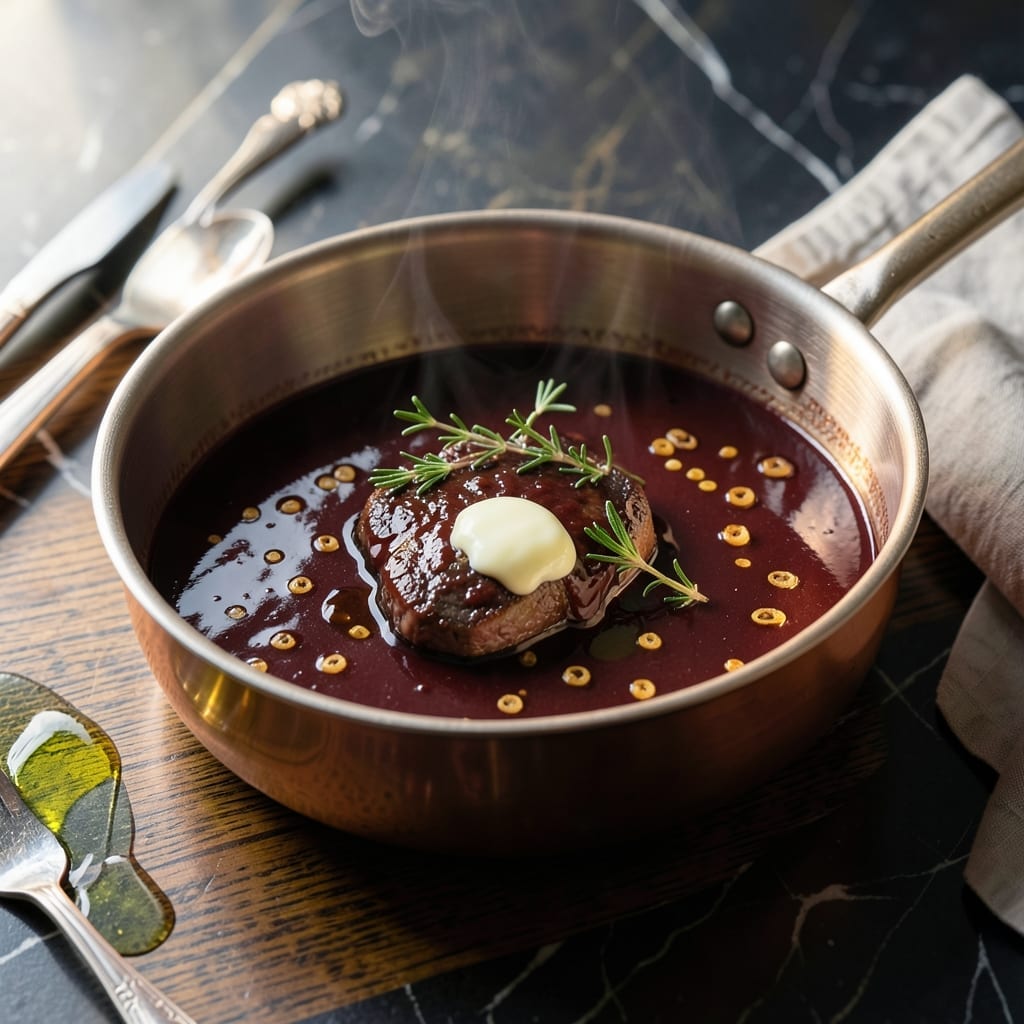
This red wine reduction transforms good steak into restaurant-quality chateaubriand with minimal effort. I developed this sauce after years of testing in my tiny Boston kitchen, perfecting the balance of rich and bright flavors.
The secret lies in reducing red wine with shallots until syrupy, then finishing with butter for a velvety texture. This technique creates depth without overwhelming the natural beef flavor. It’s the same method my Nonna used, adapted for home cooks.
What you’ll achieve is a glossy, deeply flavored sauce that clings beautifully to steak. The wine reduction concentrates into a complex base, while the butter adds a luxurious finish that makes every bite memorable.
Store leftovers in the fridge for up to 3 days, or make it ahead to let flavors meld further.
Ingredients for Chateaubriand Sauce
Nine ingredients for a velvety, restaurant-quality sauce that elevates any steak night.
| Ingredient | Amount | Notes |
|---|---|---|
| Dry Red Wine 🍷 | 2 cups | Bold and dry variety |
| Shallots 🧅 | ½ cup | Finely minced |
| Unsalted Butter 🧈 | ½ cup | Cold, cubed for finishing |
| Beef Stock 🥩 | ½ cup | Low-sodium preferred |
| Fresh Thyme Sprigs 🌿 | 2 whole | Stems removed, leaves only |
| Fresh Rosemary Sprig 🌿 | 1 whole | Stem removed, finely chopped |
| Black Peppercorns 🌶️ | 1 tsp | Whole, for reduction |
| Dijon Mustard 🟡 | 1 tbsp | For depth and tang |
| Salt 🧂 | ½ tsp | Kosher or sea salt |
[recipe_ingredient_scaler]
The wine sets the foundation here. Cabernet Sauvignon or Merlot work beautifully—avoid anything too sweet. I grab mine from Trader Joe’s or Whole Foods for quality without the markup. Shallots are non-negotiable (no onion swaps), and fresh herbs make all the difference. The beef stock should be rich and dark—Better Than Bouillon paste is my go-to for depth.
No shallots? Yellow onion at half the amount in a pinch, but the flavor won’t be as delicate. Fresh out of thyme? Dried at one-third the amount works, but add it earlier in the reduction. The butter must be unsalted—this gives you control over the seasoning. For a non-alcoholic version, substitute with extra beef stock plus a splash of balsamic vinegar for acidity.
This sauce keeps in the fridge for 3 days—reheat gently to avoid separating. For longer storage, freeze in ice cube trays (good for 3 months). The flavors actually improve overnight, so make it ahead if you can.
Why You’ll Love This Recipe
- One Pot Wonder: I just toss the wine, shallots, and thyme into a pan and let them simmer while the steak rests—hardly any cleanup.
- Rich and Deep: The butter and beef stock blend into this velvety, wine-infused sauce that coats every bite of steak.
- Dinner Party Star: It’s my secret for making weeknight filets taste like a fancy restaurant meal.
- Budget Stretcher: A little red wine and stock go a long way, so I get restaurant flavor without the bill.
Step-by-Step Instructions for Chateaubriand Sauce
This elegant reduction comes together in stages—each layer builds depth and richness.
Step 1: Reduce the Wine with Aromatics
Combine the 2 cups Dry Red Wine, 0.5 cup Shallots, 2 whole Fresh Thyme Sprigs, 1 whole Fresh Rosemary Sprig, and 1 tsp Black Peppercorns in a saucepan. I always use a bold, dry wine here for maximum flavor concentration.
Bring to a boil over medium-high heat, then reduce to medium and let it simmer for 15-20 minutes until the liquid reduces by half. You’ll know it’s ready when the shallots are translucent and the wine has taken on a syrupy consistency with a deep, concentrated aroma.
Step 2: Incorporate Beef Stock and Reduce Further
Add the 0.5 cup Beef Stock and 0.5 tsp Salt to the reduced wine mixture. Return to a simmer and cook for another 10-12 minutes until the liquid reduces by about a third. This step deepens the umami base that defines this sauce.
Watch for the mixture to thicken slightly and coat the back of a spoon. The surface should have a glossy sheen, and the aroma will be rich and savory. Don’t rush this reduction—patience ensures a velvety texture in the final sauce.
Step 3: Finish with Butter and Mustard
Strain the reduction through a fine-mesh sieve into a clean saucepan to remove the solids. This creates a smooth foundation for the final sauce. Press the shallots gently to extract all their flavor.
Return the strained liquid to low heat. Whisk in the 1 tbsp Dijon Mustard until fully incorporated. Then gradually add the 0.5 cup Unsalted Butter, cubed, whisking constantly until each piece melts and emulsifies into the sauce. The butter should create a silky, glossy finish without separating.
Step 4: Adjust and Serve Immediately
Taste and adjust seasoning if needed, though the reduction process should have concentrated all the flavors beautifully. The sauce should be thick enough to nappe (coat the back of a spoon) but still pourable.
Serve immediately over grilled or roasted beef. This sauce doesn’t hold well, so plan to use it right away for the best texture and flavor. The combination of wine, herbs, and butter creates a luxurious complement to any steak.
Pro Tips For Making Chateaubriand Sauce
- Reduce by Half: After adding the red wine and shallots, let it simmer until the liquid reduces by at least half—this concentrates the flavor and ensures the final sauce isn’t thin or watery.
- Cold Butter Only: Always use cold, cubed unsalted butter when finishing the sauce; it emulsifies better and gives that glossy, velvety texture you want.
- Skip the Salt: Since you’re reducing wine and stock, resist the urge to salt early—the flavor intensifies as it cooks, and you can adjust at the end.
- Strain the Shallots: After simmering, strain out the shallots for a silky-smooth sauce, unless you prefer a rustic texture—I learned this the hard way after serving a chunky version to picky eaters.
Flavor Customization for This Recipe
Herb Variations
For a more pronounced herbal note, add 1 tbsp fresh tarragon with the thyme and rosemary. I love how tarragon brings a subtle anise flavor that pairs beautifully with beef. Try 1 tsp dried herbes de Provence if you want a Provençal twist. 🌿
Wine Swaps
While Cabernet Sauvignon is classic, a bold Syrah adds peppery depth. For a fruitier profile, try Pinot Noir—it creates a lighter, more approachable sauce. I once used a Malbec from my local Boston wine shop, and the results were stunning.
Creamy Version
To make a richer, creamy variation, whisk in ¼ cup heavy cream at the end with the butter. This creates a velvety texture that’s perfect for colder months. Just be sure to keep the heat low to prevent curdling.
Tangy Boost
Add 1 tsp balsamic vinegar or 1 tbsp fresh lemon juice at the end for a bright, tangy contrast to the rich wine reduction. This small addition cuts through the richness beautifully.
Spiced Depth
For warmth, include 1 crushed garlic clove and ½ tsp whole juniper berries in the initial reduction. Strain them out before finishing with butter. This adds a subtle, aromatic complexity. 💫
Salt-Free Option
Omit the salt entirely and rely on the natural depth of the wine and beef stock. This works well if you’re using a well-seasoned steak or serving guests who prefer less salt. The sauce will still be deeply flavorful.
Nutrition Facts
Frequently Asked Questions
Can I use a different wine for this sauce?
Yes! A bold Syrah or Malbec adds depth, while Pinot Noir creates a lighter sauce. Avoid sweet wines—they won’t reduce properly.
Why does my sauce look separated?
This usually happens if the butter gets too hot. Keep heat on low and whisk constantly when adding butter to create a smooth emulsion.
How do I make this sauce ahead of time?
Prepare up to the straining step, then refrigerate. Reheat gently on low and whisk in cold butter just before serving.
Can I use dried herbs instead of fresh?
Yes, use 1/3 the amount of dried herbs. Add them earlier in the reduction to develop flavor.

Trained in classic French technique but raised on slow-cooked ribs and spicy rubs, she blends culinary skill with smoke and soul.
- Recipe for Boneless Pork Chops in Cast Iron Skillet: Sear and Baste to Juicy Perfection - October 3, 2026
- Recipe for Boneless Cross Rib Roast: Slow-Roasted Beef with Herb Crust - October 3, 2026
- Hamburgers in Sauce Recipe Crock Pot: Slow-Cooked Savory Delight - October 3, 2026