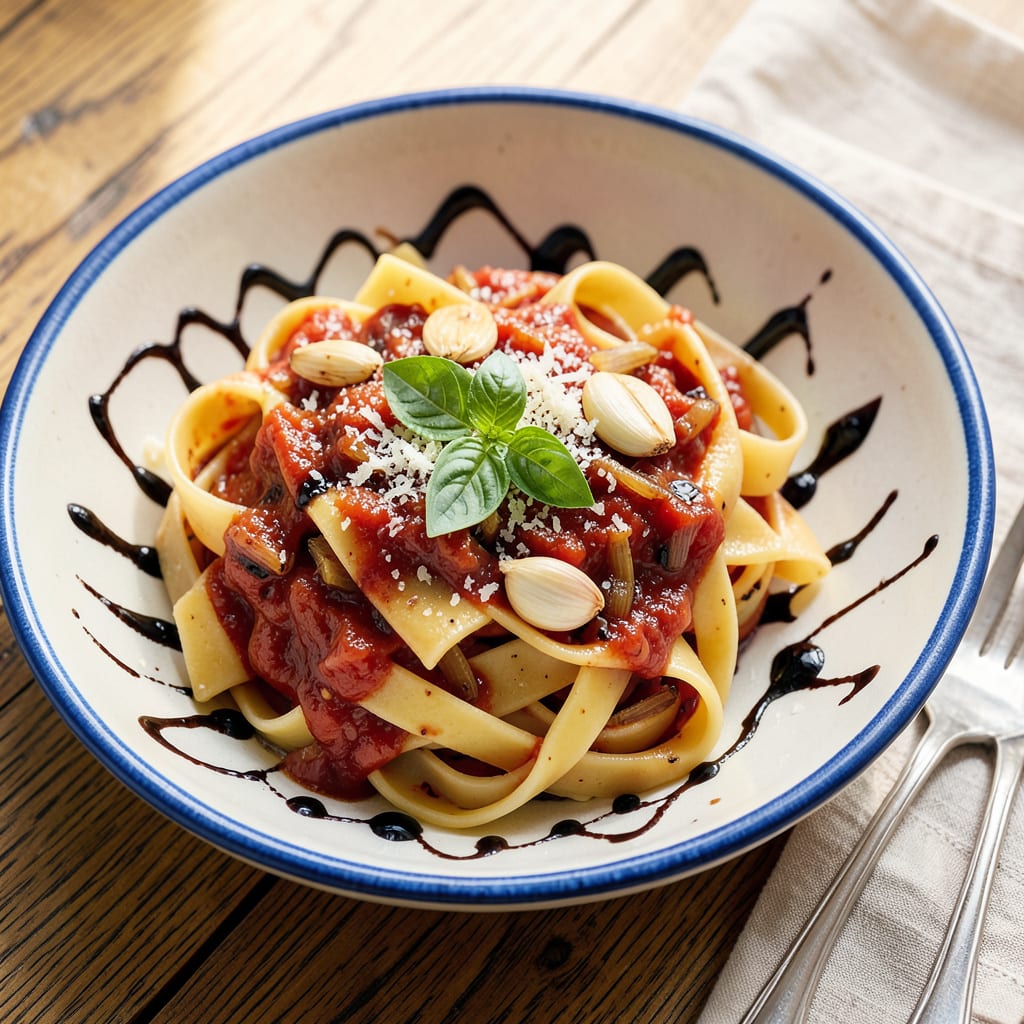
I’ll be real with you: most homemade pasta sauces miss that restaurant-quality depth. Then I discovered the secret weapon—balsamic vinegar. A splash transforms flat tomato sauce into something rich, complex, and worth licking off the plate. No fancy ingredients required, just one smart addition that changes everything.
This sauce starts with a proper reduction, where balsamic vinegar caramelizes with tomatoes and garlic, creating layers of sweet-tangy flavor. I balance it with fresh basil and oregano (because herbs matter) and let it simmer until thick enough to cling to pasta. The vinegar doesn’t make it sour—it makes it deeply savory, like sauce that’s been simmering all day.
You’ll end up with about 2 cups of velvety sauce that tastes like it came from your favorite Italian spot. It keeps for 5 days in the fridge or freezes beautifully, so make a double batch. Toss with 12 oz pasta, drizzle over grilled chicken, or use as dip for crusty bread—the possibilities go way beyond spaghetti night.
Between you and me, once you try this, you’ll never go back to jarred sauce. The balsamic trick is that simple, and the results are that good. Here’s how to make it happen in your kitchen.
📚 In This Guide
- What You’ll Need
- Instructions
- Tips and Common Mistakes
What Youll Need
- ● Pasta sauce base: 2 cups (16 oz) tomato purée or crushed tomatoes (San Marzano preferred for sweetness 🍅).
- ● Balsamic vinegar: 2–3 tbsp aged balsamic vinegar (12+ years for depth; avoid cheap imitations!).
- ○ Aromatics: 1 small yellow onion (finely diced), 3 garlic cloves (minced), and 1 tsp red pepper flakes (optional for heat 🌶️).
- ● Herbs & spices: 1 tsp dried oregano, 1 tsp dried basil, ½ tsp black pepper, and 1 bay leaf.
- ○ Sweetener (optional): 1 tsp honey or brown sugar to balance acidity.
- ● Fat: 2 tbsp extra-virgin olive oil (cold-pressed for flavor).
- ● Salt: 1 tsp sea salt (adjust to taste).
- ● Pasta water: ¼ cup (reserved from cooking 1 lb of pasta).
- ● Medium saucepan (2–3 qt, heavy-bottomed for even heating).
- ● Wooden spoon or silicone spatula (to stir without scratching).
- ● Chef’s knife + cutting board (for prep).
- ● Measuring spoons/cups (precision matters!).
- ○ Immersion blender (optional, for smooth texture).
- ● Cooked pasta (1 lb al dente—save that starchy water!).
- ● Taste-testing spoons (because adjusting is key!).
- ● Patience: Simmer for at least 20 minutes to meld flavors.
Instructions for Incorporating Balsamic Vinegar in Pasta Sauce
Let me walk you through the simple process that transforms ordinary pasta sauce into something extraordinary.
Build Your Base Sauce
Start by preparing your basic tomato sauce. I like to begin with a good quality olive oil heated over medium heat in a deep skillet. Add your aromatics—typically minced garlic and diced onions—and sauté until they become translucent and fragrant, about 5-7 minutes.
This foundation is crucial because it develops the flavor base that will support the balsamic vinegar. You want the onions to soften completely without browning, creating a sweet backdrop for the tangy vinegar you’ll add later. Stir in your crushed tomatoes and let the sauce simmer gently for 15-20 minutes until it thickens slightly.
Introduce the Balsamic Vinegar
Here’s where the magic happens. Once your base sauce has simmered and developed its initial flavors, it’s time to add the balsamic vinegar. I recommend starting with 1-2 tablespoons for a standard batch of sauce (enough for 4 servings). Pour it in while the sauce is still simmering, then stir well to incorporate.
You’ll notice an immediate change—the vinegar will add a bright, tangy note that cuts through the richness of the tomatoes. Let the sauce continue to simmer for another 5-10 minutes after adding the vinegar. This allows the acidity to mellow slightly and integrate with the other flavors rather than standing out harshly.
Balance the Flavors
After the vinegar has had time to blend, taste your sauce carefully. The balsamic should add depth without overpowering the dish. If the sauce tastes too sharp, add a pinch of sugar or let it simmer a bit longer to soften the acidity. If you want more richness, stir in a pat of butter or a splash of heavy cream at the very end.
Remember, balsamic vinegar reduces as it cooks, so its flavor will concentrate. I often add a final splash of 1 teaspoon right before serving to brighten the sauce. This last-minute addition preserves that fresh, tangy quality that makes the dish special. The sauce should coat the back of a spoon but still flow easily when you tilt the pan.
Finish and Serve
Once your sauce has reached the perfect balance of tangy and sweet, remove it from the heat. I like to finish with a sprinkle of fresh basil or parsley for brightness, and a generous grating of Parmesan cheese. The cheese adds a salty contrast that complements the balsamic’s complexity.
Toss the sauce with your cooked pasta immediately, using a bit of the pasta water to help it cling to every strand. The heat from the pasta will help the flavors meld together beautifully. Serve right away while the sauce is still glossy and fragrant—the balsamic’s aroma is most pronounced when the dish is freshly prepared.
Tips and Common Mistakes
Let me share what I’ve learned from making this sauce countless times—these small details make all the difference between good and extraordinary.
Medium Heat Mastery: That medium heat setting in Step 1 is crucial for developing flavors without burning. I’ve found that if your onions start to brown before the 5-minute mark, your heat is too high. You want them to soften gradually, releasing their natural sweetness to balance the balsamic’s tang. If they sizzle aggressively, lower the heat slightly and give them more time to become translucent.
Simmering Strategy: During the 15-20 minute simmer in Step 1, keep the heat low enough that you see just occasional bubbles breaking the surface. This gentle simmer allows the tomatoes to concentrate their flavor while maintaining a smooth texture. If you notice the sauce reducing too quickly or sticking to the pan, add a splash of water and reduce the heat slightly.
Vinegar Timing: Those 5-10 minutes after adding balsamic in Step 2 are when the magic happens. The vinegar needs this time to mellow—its sharp edges will soften while the fruity notes come forward. I always set a timer for 5 minutes, then taste and decide if it needs the full 10. You’ll notice the sauce transforms from sharply acidic to richly complex during this window.
Final Balance: When you add that final 1 teaspoon of vinegar in Step 3, stir it in just before serving—don’t let it cook. This preserves the bright, fresh quality that makes the dish special. I like to pour it around the edges of the pan rather than directly into the center, then give one final stir to distribute it evenly without overmixing.
Pro Tips for Balsamic Vinegar In Pasta Sauce
- Let me share what I’ve learned from making this sauce countless times—these small details make all the difference bet…
- Medium Heat Mastery: That medium heat setting in Step 1 is crucial for developing flavors without burning. I’ve found…
- Simmering Strategy: During the 15-20 minute simmer in Step 1, keep the heat low enough that you see just occasional b…
Frequently Asked Questions
Can I use balsamic vinegar in any pasta sauce?
Yes! Balsamic vinegar works well in tomato-based, cream, and even oil-based sauces. Start with ½–1 tsp per serving and adjust to taste. Its sweet-tangy flavor enhances rich dishes like ragù or alfredo, but skip it in delicate sauces like aglio e olio—it can overpower simple flavors.
When should I add balsamic vinegar to pasta sauce?
Add it near the end of cooking (last 2–3 minutes) to preserve its bright flavor. If simmering longer (e.g., in a slow-cooked marinara), stir it in during the final 10 minutes to avoid over-reducing. Pro tip: Drizzle a splash over plated pasta for a finishing touch!
What’s a good substitute if I don’t have balsamic vinegar?
Try these swaps (use half the amount first):
- Red wine vinegar + ½ tsp honey (for tang/sweetness)
- Apple cider vinegar (milder, fruitier)
- Lemon juice + a pinch of sugar (bright but less complex)
Avoid white vinegar—it’s too harsh!
Why does my sauce taste too sharp after adding balsamic?
Balsamic’s acidity can dominate if overused. Fix it by:
- Balancing with a pinch of sugar or butter (for cream sauces).
- Diluting with a splash of pasta water or broth.
- Adding grated Parmesan or heavy cream to mellow it.
Start with less next time—you can always add more!
Does balsamic vinegar in pasta sauce need to be refrigerated?
If the sauce is homemade, refrigerate it in an airtight container for up to 5 days. The vinegar’s acidity helps preserve it, but dairy/cream sauces spoil faster. For long-term storage, freeze without cream (up to 3 months). Thaw and reheat gently—flavor deepens over time!
Balsamic vinegar is your secret weapon for transforming simple pasta sauce into a rich, complex masterpiece with minimal effort. 🍝 Whether you’re balancing sweetness, adding depth, or brightening heavy flavors, a splash of this tangy elixir elevates every bite—just like your favorite Italian restaurant!
Ready to experiment? Start with a small drizzle in your next batch of marinara or Alfredo, then tweak to taste. For extra inspiration, try pairing it with these chef-approved recipes—your taste buds (and dinner guests) will thank you!

Trained in classic French technique but raised on slow-cooked ribs and spicy rubs, she blends culinary skill with smoke and soul.
- Recipe for Boneless Pork Chops in Cast Iron Skillet: Sear and Baste to Juicy Perfection - October 3, 2026
- Recipe for Boneless Cross Rib Roast: Slow-Roasted Beef with Herb Crust - October 3, 2026
- Hamburgers in Sauce Recipe Crock Pot: Slow-Cooked Savory Delight - October 3, 2026