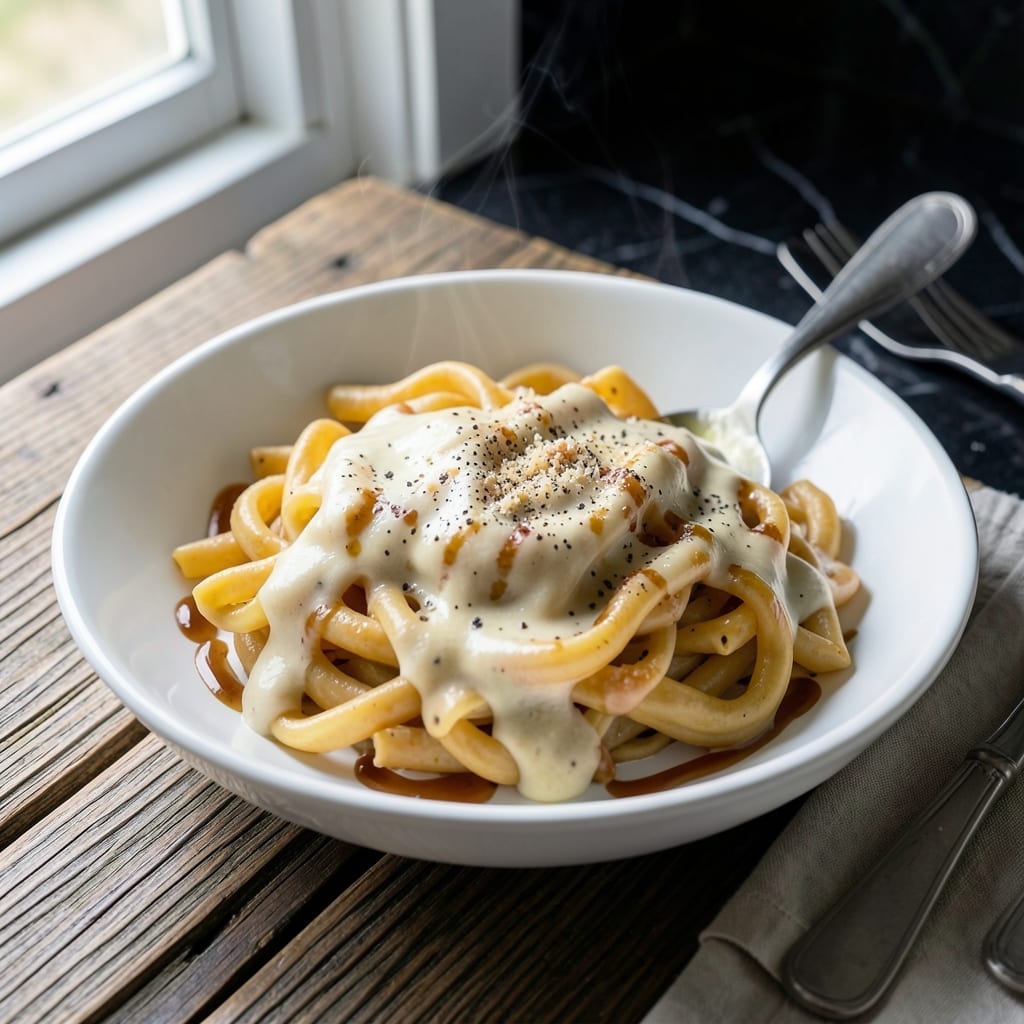
This velvety Mornay-style cheese sauce transforms any pasta into a restaurant-quality dish with minimal effort. The secret lies in the perfect balance of melted cheese, creamy butter, and a smooth roux base.
With just a few simple ingredients and precise timing, you’ll achieve a smooth, rich sauce that clings beautifully to every noodle. It’s the ultimate comfort upgrade for your next meal.
Ingredients for Cheese Sauce Recipe for Pasta
Nine ingredients deliver that restaurant-quality cheese sauce for your pasta night.
| Ingredient | Amount | Notes |
|---|---|---|
| Unsalted Butter 🧈 | ¼ cup | For smooth roux base |
| All-Purpose Flour 🌾 | ¼ cup | Creates thickened foundation |
| Whole Milk 🥛 | 2 cups | Warmed for seamless blending |
| Gruyère Cheese 🧀 | 1 ½ cups | Freshly grated for melt |
| Sharp Cheddar Cheese 🧀 | 1 cup | Freshly grated for depth |
| Dijon Mustard 🟡 | 1 tsp | Adds subtle tang |
| Ground Nutmeg 🌰 | 0.125 tsp | Freshly ground preferred |
| Salt 🧂 | ½ tsp | Kosher or sea salt |
| White Pepper 🌶️ | ¼ tsp | Freshly ground |
| Dry White Wine 🍷 | ¼ cup | Optional for acidity |
[recipe_ingredient_scaler]
The cheese is non-negotiable here. Gruyère and sharp cheddar give you that Mornay depth—skip the pre-shredded stuff (it’s coated in anti-caking agents that mess with melt). Whole Foods or Murray’s Cheese have great selections. I always grate my own—takes 2 minutes, tastes 10 times better. The butter should be unsalted so you control the seasoning. Warm your milk first—cold milk makes a lumpy roux.
No Gruyère? Emmental or Comté work as backups. Skipping the wine? Extra milk with a squeeze of lemon mimics the acidity. The mustard might seem weird but Dijon cuts through the richness—don’t substitute yellow. Nutmeg is the classic Mornay touch (freshly ground if you’ve got it). If the sauce gets too thick, thin with warm milk a tablespoon at a time.
Sauce keeps 3-4 days in the fridge (reheat gently with a splash of milk). Freezes for 1 month—portion into ice cube trays for easy pasta upgrades. The roux base also works for other sauces (add different cheeses, herbs, or veggies).
Why You’ll Love This Recipe
- One Pot Wonder: I melt the butter, whisk in flour, and pour in milk—no fancy steps, just smooth, creamy goodness.
- Rich & Nutty: Gruyère adds that deep, nutty flavor while sharp cheddar brings the bold kick I crave.
- Feeds a Crowd: Honestly, it stretches easily for family dinners or meal prep—just double the batch.
- Budget Friendly: A little cheese goes a long way, and pantry staples like flour and milk keep costs low.
Step-by-Step Instructions for Cheese Sauce for Pasta
Here’s the method I swear by for that restaurant-quality velvety texture.
Step 1: Create a Smooth Roux Base
Melt the 0.25 cup Unsalted Butter in a heavy saucepan over medium heat until it just begins to foam. Immediately whisk in the 0.25 cup All-Purpose Flour and cook for 1-2 minutes, stirring constantly.
You’re looking for a pale golden color and a nutty aroma. This is your roux—it thickens the sauce while cooking out the raw flour taste. If it browns too quickly, reduce the heat. The mixture should resemble wet sand when done.
Step 2: Gradually Incorporate Warm Milk
Slowly pour in the 2 cups Whole Milk while whisking vigorously to prevent lumps. I warm the milk first (just to room temperature) for seamless blending—cold milk can cause the roux to seize.
Continue whisking until the mixture thickens enough to coat the back of a spoon, about 5-7 minutes. The sauce should be smooth and velvety at this stage, with no floury taste remaining.
Step 3: Build Flavor with Wine and Seasonings
Add the 0.25 cup Dry White Wine and simmer for 2 minutes to cook off the alcohol. Then stir in the 1 tsp Dijon Mustard, 0.125 tsp Ground Nutmeg, 0.5 tsp Salt, and 0.25 tsp White Pepper.
The wine adds a subtle depth, while the nutmeg and mustard provide that classic Mornay character. Taste now—you should detect a balanced savory foundation before the cheese goes in.
Step 4: Melt in the Cheeses for Ultimate Creaminess
Reduce heat to low and gradually add the 1.5 cups Gruyère Cheese and 1 cup Sharp Cheddar Cheese, stirring constantly until fully melted. I always use freshly grated cheese because pre-shredded contains anti-caking agents that prevent smooth melting.
The sauce should become luxuriously thick and glossy. If it’s too tight, add a splash of warm milk. Remember—patience here prevents graininess. It takes about 3-5 minutes for the cheese to incorporate completely.
Step 5: Adjust Consistency and Serve Immediately
If the sauce is thicker than you’d like, thin it with a little additional warm milk. For pasta, you want it to coat the back of a spoon but still drip slowly.
Use this immediately while hot—the cheese can separate if reheated. Toss with freshly cooked pasta and serve right away. The sauce should cling beautifully to every strand, with a rich, complex flavor in every bite.
Pro Tips For Making Cheese Sauce Recipe For Pasta
- Low and Slow Heat: Cook your roux over medium-low heat for 3-4 minutes to eliminate the raw flour taste—I learned this the hard way after my first batch tasted like paste.
- Shred Your Own: Grate the Gruyère and cheddar yourself instead of buying pre-shredded; the anti-caking agents in bagged cheese make the sauce grainy.
- Warm the Milk: Heat the whole milk in the microwave for 30 seconds before adding it to the roux, or you’ll end up with a lumpy, separated mess.
- Add Cheese Off Heat: Remove the sauce from heat when stirring in the cheese to prevent it from turning stringy or oily—sounds weird, but it works.
Troubleshooting This Dish
🧀 Too Dry or Tough?
This usually happens if the sauce was overcooked or too much flour was used. High heat can cause the cheese to separate and dry out.
Quick Fix: Stir in warm milk or cream, 1 tablespoon at a time, until the sauce is smooth and creamy again.
🥛 Sauce Too Thin or Runny?
If the sauce didn’t thicken properly, it might be due to insufficient cooking time or not enough roux (butter-flour mixture).
Quick Fix: Mix 1 teaspoon of cornstarch with cold water, then stir it into the sauce while heating. Simmer until thickened.
🧈 Grainy or Lumpy Texture?
Graininess often occurs when cheese melts unevenly or if the sauce was heated too quickly. Pre-shredded cheese with anti-caking agents can also cause this.
Quick Fix: Lower the heat and whisk vigorously. For stubborn lumps, blend briefly with an immersion blender.
🌡️ Sauce Separating or Oily?
Cheese sauces can split if overheated or if the dairy and cheese don’t emulsify properly. Adding cold ingredients to hot sauce can also cause separation.
Quick Fix: Remove from heat and whisk in 1 teaspoon of lemon juice or a splash of cold milk to bring it back together.
Nutrition Facts

Trained in classic French technique but raised on slow-cooked ribs and spicy rubs, she blends culinary skill with smoke and soul.
- Recipe for Boneless Pork Chops in Cast Iron Skillet: Sear and Baste to Juicy Perfection - October 3, 2026
- Recipe for Boneless Cross Rib Roast: Slow-Roasted Beef with Herb Crust - October 3, 2026
- Hamburgers in Sauce Recipe Crock Pot: Slow-Cooked Savory Delight - October 3, 2026