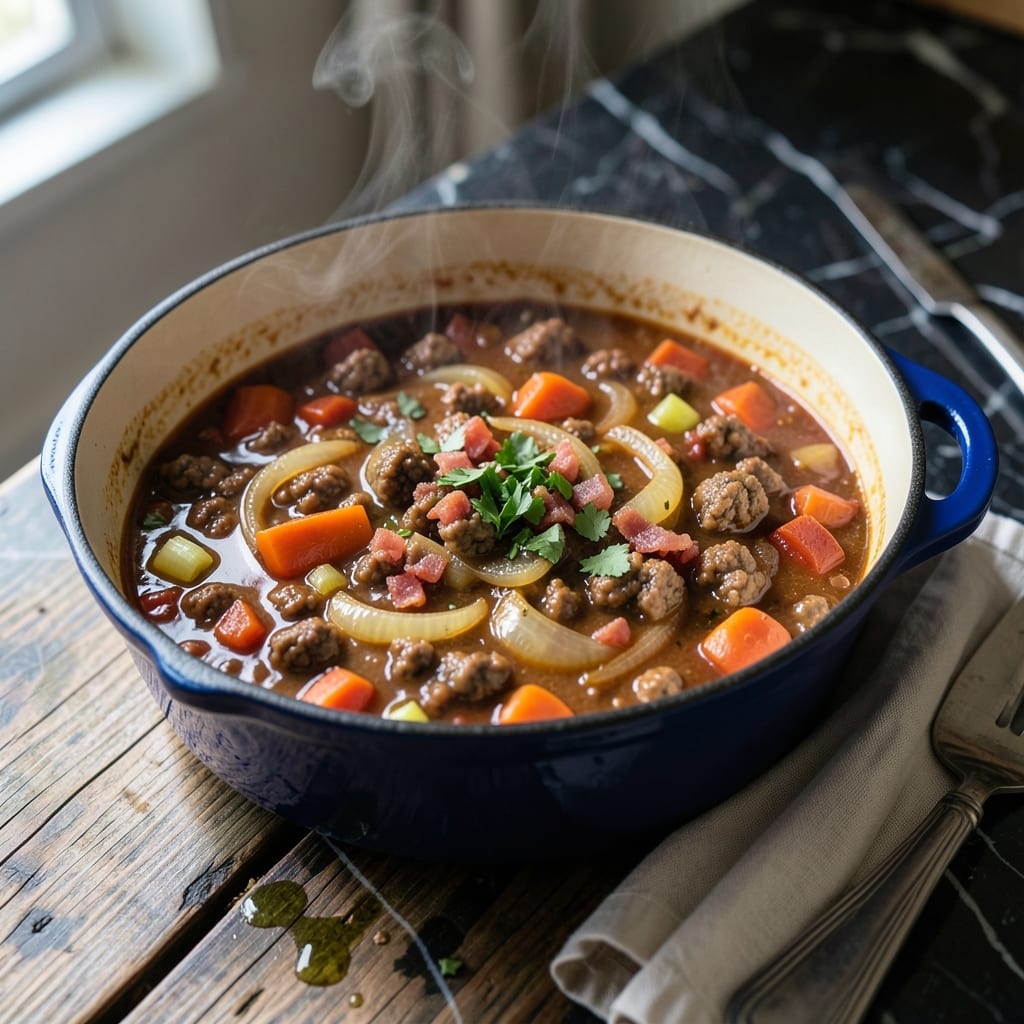
This sauce transforms ordinary pasta into an extraordinary meal with its deep, meaty richness. The slow-simmered technique allows flavors to meld perfectly.
With simple, quality ingredients and patience, you’ll create a restaurant-quality Bolognese that clings beautifully to every noodle. The aroma alone will have everyone gathering in the kitchen.
Ingredients for Italian Bolognese Sauce Recipe Giada
Ten ingredients create this restaurant-quality sauce with deep, meaty richness for pasta night.
| Ingredient | Amount | Notes |
|---|---|---|
| Ground Beef 🥩 | 1 ½ lb | 80/20 lean-to-fat ratio |
| Ground Pork 🥩 | ½ lb | Or substitute veal |
| Yellow Onion 🧅 | 1 whole | Finely diced |
| Carrots 🥕 | 2 whole | Peeled and finely diced |
| Celery Stalks 🌿 | 2 whole | Finely diced for soffritto |
| Garlic Cloves 🧄 | 4 cloves | Minced finely |
| Tomato Paste 🍅 | 3 tbsp | Double-concentrated preferred |
| Dry White Wine 🍷 | 1 cup | Pinot Grigio or Sauvignon Blanc |
| Whole Milk 🥛 | 1 cup | Full-fat for creaminess |
| San Marzano Canned Tomatoes 🍅 | 1 can | 28 oz can, crushed by hand |
[recipe_ingredient_scaler]
The meat blend is crucial for authentic Bolognese. 80/20 ground beef provides fat for flavor, while ground pork adds richness. Source from a reputable butcher or Whole Foods for quality. The soffritto base—onion, carrot, celery—must be finely diced (almost paste-like) for proper melting into the sauce. San Marzano tomatoes are non-negotiable for their sweet, low-acid profile.
No white wine? Substitute with beef broth plus 1 tbsp lemon juice. Skip the pork if needed, but use extra beef. For a quicker version, food-process the vegetables into a fine dice. The milk tempers the acidity—use whole milk, not skim. If tomato paste comes in a can, freeze the remainder in ice cube trays for future use.
Sauce develops flavor as it sits. Refrigerate in an airtight container for up to 5 days, or freeze for 3 months. For best results, make a day ahead—the flavors meld and deepen overnight. Reheat gently to preserve the rich texture.
Why You’ll Love This Recipe
- One Pot Wonder: I love that this comes together in a single Dutch oven—brown the beef and pork, toss in the onion, carrots, and celery, and let it simmer.
- Rich and Meaty: The combo of beef and pork with those veggies creates a depth of flavor that’s honestly restaurant-quality.
- Meal Prep Dream: I make a double batch on Sunday and freeze half—it reheats like it’s fresh.
- Budget Friendly: Ground beef and pork stretch far, and those humble veggies bulk it up without breaking the bank.
Step-by-Step Instructions for Italian Bolognese Sauce
This traditional method yields a deeply flavorful sauce with perfect texture and balance.
Step 1: Build the Soffritto Foundation
Heat a heavy Dutch oven over medium heat until warm. Add the 1.5 lb Ground Beef and 0.5 lb Ground Pork, breaking them up with a wooden spoon. Cook for 8-10 minutes until the meat is fully browned and no pink remains.
Using a slotted spoon, transfer the cooked meat to a bowl, leaving the rendered fat in the pot. To this fat, add the finely diced 1 whole Yellow Onion, 2 whole Carrots, and 2 whole Celery Stalks. Cook for 6-8 minutes until the vegetables soften and become translucent.
Step 2: Develop Flavor with Aromatics and Tomato Paste
Stir in the 4 cloves Garlic Cloves and cook for 30 seconds until fragrant but not browned. Immediately add the 3 tbsp Tomato Paste and cook for 2-3 minutes, stirring constantly, until it darkens slightly and begins to caramelize at the edges.
This step is crucial—it builds the base flavor that defines authentic Bolognese. The tomato paste should turn a deeper red, which indicates the sugars are developing and the raw flavor is cooking out.
Step 3: Deglaze and Simmer the Base
Pour in the 1 cup Dry White Wine and stir, scraping up any browned bits from the bottom of the pot. Simmer for 3-4 minutes until the liquid reduces by half and the alcohol smell dissipates.
Return the cooked meat to the pot and stir to combine. Add the 1 can San Marzano Canned Tomatoes, crushing them by hand as you incorporate them. The tomatoes should break down easily, releasing their juices into the sauce.
Step 4: Slow Simmer with Milk for Tenderness
Reduce the heat to low and pour in the 1 cup Whole Milk. Stir well to combine. Partially cover the pot and let it simmer gently for 2 to 2.5 hours, stirring occasionally.
The milk tenderizes the meat and balances the acidity of the tomatoes. The sauce should maintain a gentle bubble—adjust the heat if it starts to boil too vigorously. You’ll know it’s ready when the sauce thickens and the flavors meld into a rich, cohesive mixture.
Step 5: Adjust and Finish
After simmering, the sauce should be thick enough to coat the back of a spoon. If it seems too thin, simmer uncovered for an additional 10-15 minutes. Taste and adjust seasoning with salt and pepper as needed.
Let the sauce rest for 10 minutes before serving. This allows the flavors to settle and the sauce to reach its optimal consistency. Toss with pasta or use as a topping for lasagna or other dishes.
Pro Tips For Making Italian Bolognese Sauce Recipe Giada
- Brown the Meat Well: Don’t rush this step—cook the ground beef and pork until deeply browned, not just gray. This builds the rich, meaty flavor base that defines Giada’s bolognese.
- Finely Dice the Veggies: Take the time to mince the onion, carrots, and celery into tiny, even pieces. They should melt into the sauce, not stand out as chunks.
- Skip the Overcrowding: Brown the meat in batches if needed—crowding the pan steams it instead of searing, and you’ll lose that crucial caramelized flavor.
- Add Milk for Tenderness: Sounds weird, but it works: stir in a splash of milk while the meat cooks. It softens the texture and balances the acidity in the sauce.
Regional Styles of This Recipe
Emilia-Romagna Style 🍝
The birthplace of ragù alla bolognese, Emilia-Romagna’s version is the gold standard. This style uses a soffritto (onion, carrot, celery) base, ground beef (or a mix of beef and pork), white wine, and a touch of milk or cream to tenderize the meat. Tomato is used sparingly, often as a paste or a small addition, letting the meat shine. Simmered for 3-4 hours, it’s rich, creamy, and perfect with tagliatelle.
Roman Style 🥘
In Rome, ragù takes a simpler approach. Known as ragù alla romana, it often includes guanciale (cured pork cheek) or pancetta alongside ground beef. Tomatoes play a bigger role here, creating a slightly sweeter, more tomato-forward sauce. It’s traditionally served with rigatoni or pappardelle, and the cooking time is slightly shorter, around 2-3 hours.
Neapolitan Style 🔥
Neapolitan ragù napoletano is heartier, often made with larger pieces of meat like braised beef or pork ribs instead of ground meat. It includes more tomatoes, giving it a deeper red color and a robust, tangy flavor. The sauce is slow-cooked for 4-6 hours until the meat falls apart, and it’s typically served with paccheri or gnocchi.
Northern Italian Style ⏰
In Northern Italy, especially in regions like Piedmont, ragù may incorporate red wine and sometimes even chocolate or cinnamon for depth. The meat is finely minced, and the sauce is often lighter, with a balance of tomatoes and broth. It pairs beautifully with pappardelle or polenta, showcasing the region’s love for slow, layered flavors.
Nutrition Facts

Trained in classic French technique but raised on slow-cooked ribs and spicy rubs, she blends culinary skill with smoke and soul.
- Recipe for Boneless Pork Chops in Cast Iron Skillet: Sear and Baste to Juicy Perfection - October 3, 2026
- Recipe for Boneless Cross Rib Roast: Slow-Roasted Beef with Herb Crust - October 3, 2026
- Hamburgers in Sauce Recipe Crock Pot: Slow-Cooked Savory Delight - October 3, 2026