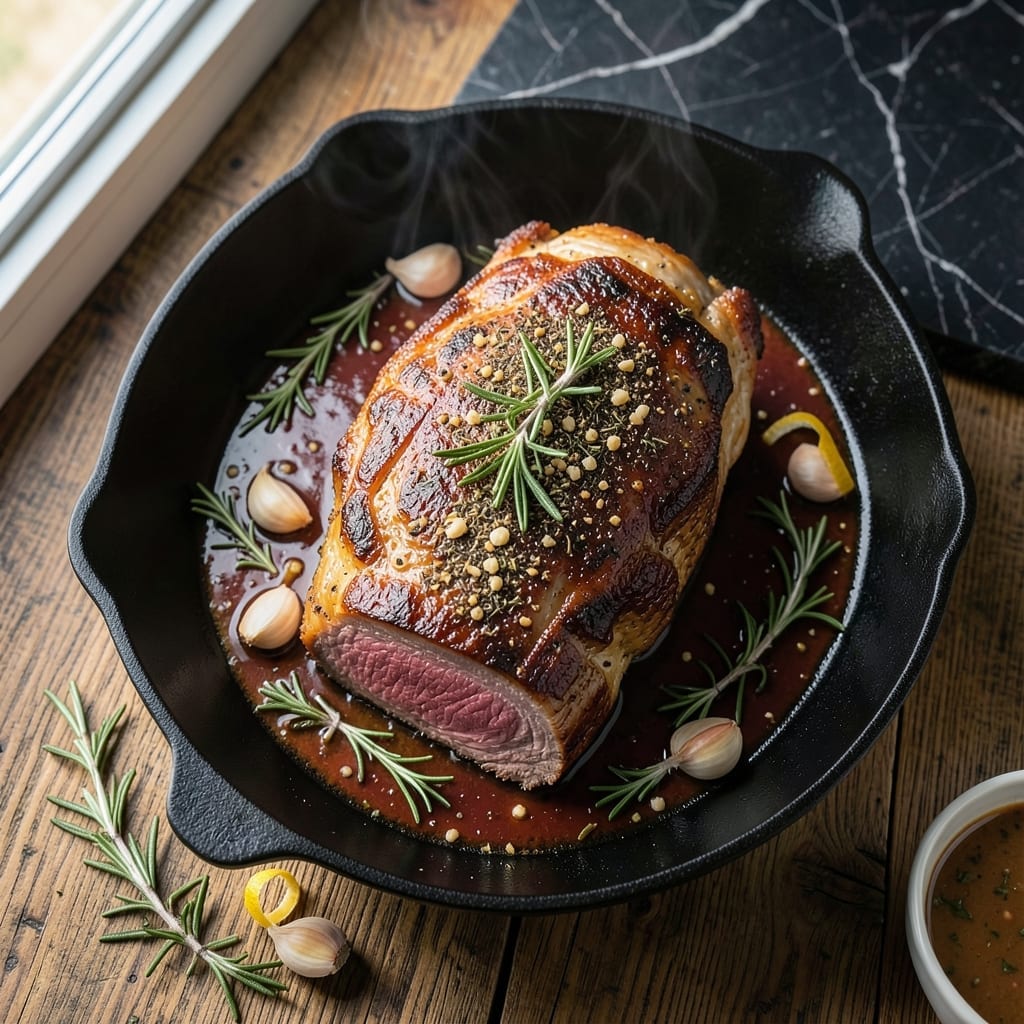
Achieving a perfect prime rib demands precision in both technique and timing, a challenge I’ve embraced throughout my career. This herb-crusted version represents the pinnacle of roast beef preparation.
The key lies in a carefully calibrated oven temperature and a resting period that ensures even doneness. Every slice reveals the ideal balance of crust and tender, rosy interior.
Ingredients for Chef John’s Prime Rib
Precision starts with quality ingredients for this herb-crusted centerpiece roast.
| Ingredient | Amount | Notes |
|---|---|---|
| Prime Rib Roast 🥩 | 5 lb | Bone-in, well-marbled preferred |
| Kosher Salt 🧂 | 2 tbsp | Diamond Crystal preferred for texture |
| Freshly Ground Black Pepper 🌶️ | 1 ½ tbsp | Coarse grind for crust |
| Fresh Rosemary 🌿 | 3 tbsp | Finely chopped, stems discarded |
| Fresh Thyme Leaves 🍃 | 2 tbsp | Stems removed, loosely packed |
| Garlic Cloves 🧄 | 6 cloves | Minced to fine paste |
| Dijon Mustard 🟡 | ¼ cup | For herb crust binding |
| Extra-Virgin Olive Oil 🫒 | 2 tbsp | For searing and crust |
| Unsalted Butter 🧈 | 4 tbsp | Softened for finishing |
| Red Wine 🍷 | 1 cup | Dry variety for deglazing |
| Beef Stock 💧 | 1 cup | Low-sodium preferred |
| All-Purpose Flour 🌾 | 2 tbsp | For thickening pan sauce |
[recipe_ingredient_scaler]
The prime rib itself is non-negotiable—USDA Prime or Choice grade with abundant marbling. Costco or a trusted butcher are ideal sources. Request a bone-in cut (ribs add flavor and act as a natural rack). The herb quality matters too: fresh rosemary and thyme from the produce section outperform dried by miles. Look for vibrant green sprigs with no wilting. The garlic should be firm, with tight papery skin.
No red wine? Dry sherry or additional beef stock works for deglazing. Out of fresh herbs? Dried at one-third the quantity (though fresh is superior for crust texture). For the mustard, whole-grain Dijon adds pleasant texture. Want to skip the pan sauce? The roast is magnificent solo—just reduce the stock and wine. The butter can be omitted for a leaner finish, but it adds unbeatable richness.
Store the raw roast uncovered on a wire rack for 1-2 days before cooking for a better crust. Leftovers keep 4-5 days refrigerated, or freeze carved slices for 3 months. The herb crust mixture can be prepped 1 day ahead—cover and refrigerate until ready to use.
Why You’ll Love This Recipe
- Set and Forget: I rub the roast with salt, pepper, rosemary, and thyme, pop it in the oven, and let it do its thing—no constant basting or flipping required.
- Herb-Crusted Heaven: That crust from the fresh rosemary and thyme? Crispy, aromatic, and worth every bite.
- Holiday Hero: This is my go-to for Christmas dinner, but honestly, it’s impressive enough for any Sunday supper.
- Leftovers Luxury: The slices reheat beautifully for sandwiches or tacos the next day—if there are any left, that is.
Step-by-Step Instructions for Herb-Crusted Prime Rib Roast
Master this technique for a perfectly cooked roast with a flavorful herb crust every time.
Step 1: Prepare the Herb Crust and Season the Roast
In a small bowl, combine the 2 tbsp kosher salt, 1.5 tbsp freshly ground black pepper, 3 tbsp fresh rosemary, 2 tbsp fresh thyme leaves, and 6 cloves minced garlic. This aromatic blend forms the base of your herb crust.
Pat the 5 lb prime rib roast dry with paper towels, then brush it evenly with the 0.25 cup Dijon mustard. The mustard acts as a binder for the herb mixture. Press the herb blend onto all surfaces of the roast, creating a thick, even coating. Let it sit at room temperature for 1 hour to allow the flavors to penetrate.
Step 2: Sear the Roast for a Flavorful Crust
Preheat your oven to 450°F. In a large oven-safe roasting pan, heat the 2 tbsp extra-virgin olive oil over high heat until shimmering. Carefully place the prime rib roast in the pan, fat-side down, and sear for 3-4 minutes until deeply browned.
Turn the roast and sear the remaining sides for 2-3 minutes each. This high-heat searing creates a rich crust that locks in juices and enhances flavor. Transfer the pan to the preheated oven.
Step 3: Roast to Perfection
Roast the prime rib for 15 minutes at 450°F, then reduce the oven temperature to 325°F. Continue roasting until the internal temperature reaches 120-125°F for medium-rare, which should take approximately 1.5 to 2 hours for a 5 lb roast.
Use a meat thermometer to check the temperature in the thickest part of the roast, avoiding the bone. The roast is done when it reaches your desired internal temperature. Remove it from the oven and transfer to a cutting board.
Step 4: Make the Pan Sauce
Place the roasting pan on the stovetop over medium heat. Add the 2 tbsp all-purpose flour to the pan drippings and whisk to combine, cooking for 1-2 minutes to create a roux. Gradually pour in the 1 cup red wine, scraping up any browned bits from the bottom of the pan.
Add the 1 cup beef stock and bring to a simmer. Cook for 5-7 minutes, stirring occasionally, until the sauce thickens. Remove from heat and whisk in the 4 tbsp unsalted butter, one tablespoon at a time, until smooth and glossy.
Step 5: Rest and Serve
Let the prime rib rest for 20-30 minutes before slicing. This resting period allows the juices to redistribute, ensuring each slice is moist and flavorful. Tent the roast loosely with foil to keep it warm.
Slice the prime rib between the bones for even portions. Serve with the pan sauce drizzled over the top or on the side. The sauce adds a rich, savory depth that complements the herb-crusted roast perfectly.
Pro Tips For Making Chef John’S Prime Rib
- Salt the Night Before: I learned this the hard way—dry-brining the prime rib with kosher salt 12-24 hours ahead actually changes the outcome, giving you a deeper seasoning and better crust.
- Room Temp Start: Pull the roast out of the fridge 2-3 hours before cooking—cold meat seizes up in the oven and cooks unevenly, no matter how good your thermometer is.
- Skip the Overcrowding: Resist the urge to pile on the rosemary and thyme; a light, even layer of fresh herbs sticks better and won’t burn, while a thick layer just turns bitter.
- Reverse Sear Works: Start low at 250°F until the internal temp hits 110°F, then blast it at 500°F for 15 minutes for a perfect medium-rare with a killer crust—I was skeptical until I tried it.
Perfect Pairings for This chef johns prime rib
Wine Pairings
A bold Cabernet Sauvignon from Napa Valley stands up to the rich, herb-crusted flavors. The tannins cut through the fat while the dark fruit notes complement the rosemary and thyme. I always keep a bottle of Caymus on hand for prime rib nights. 🍷
Classic Sides
Creamy horseradish mashed potatoes are non-negotiable—they balance the meat’s richness. I mix 2 lbs Yukon Golds with ½ cup sour cream and 3 tbsp prepared horseradish. The spicy kick elevates every bite.
Vegetable Pairings
Roasted Brussels sprouts with pancetta add smoky depth. Toss 1.5 lbs trimmed sprouts with ¼ lb diced pancetta and roast at 400°F for 25 minutes. The crispy edges are irresistible.
Bread Options
A warm sourdough baguette is perfect for soaking up pan juices. I grab mine from the local bakery the morning of. For extra flair, toast slices with garlic butter right before serving.
Alternative Sauces
Offer au jus alongside the pan sauce for dipping. Simmer the reserved beef stock with 1 tsp Worcestershire and 1 crushed garlic clove. Strain before serving for a clean, rich accompaniment.
Nutrition Facts
Frequently Asked Questions
How do I know when it’s done?
Use a meat thermometer to check the thickest part. For medium-rare, pull it at 120-125°F. The temperature will rise 5-10°F during resting.
Can I use dried herbs instead of fresh?
Yes, but reduce the amount to 1/3 of fresh. Dried herbs are more concentrated. The texture will differ slightly, but the flavor will still shine.
Why does it need to rest before slicing?
Resting for 20-30 minutes lets juices redistribute. Slicing too soon causes them to spill out, leaving the meat dry. Patience pays off with juicier slices.
What if I don’t have red wine for the sauce?
Substitute with dry sherry or extra beef stock. The acidity in wine balances the richness, but stock alone still makes a delicious sauce.

Trained in classic French technique but raised on slow-cooked ribs and spicy rubs, she blends culinary skill with smoke and soul.
- Recipe for Boneless Pork Chops in Cast Iron Skillet: Sear and Baste to Juicy Perfection - October 3, 2026
- Recipe for Boneless Cross Rib Roast: Slow-Roasted Beef with Herb Crust - October 3, 2026
- Hamburgers in Sauce Recipe Crock Pot: Slow-Cooked Savory Delight - October 3, 2026