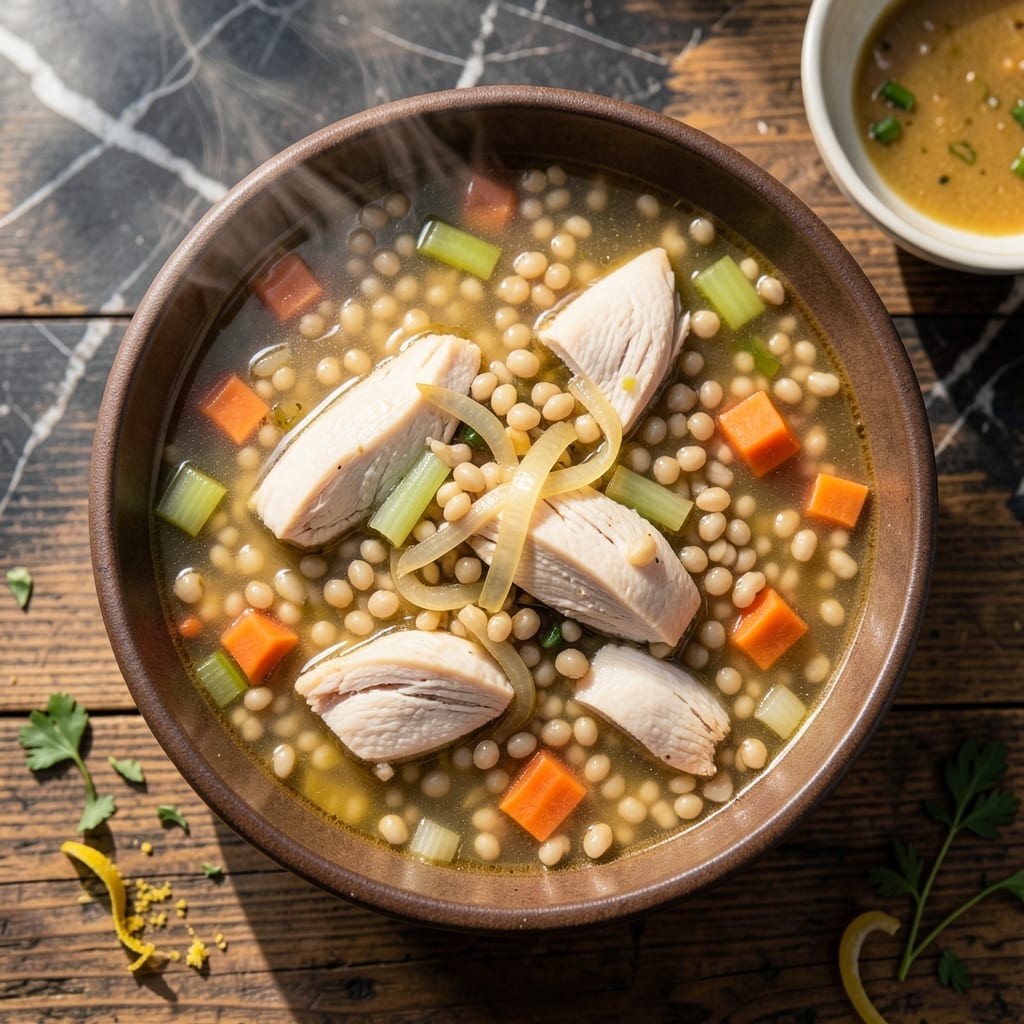
Hearty barley and tender chicken create a comforting soup that warms from the first spoonful. This classic combination delivers rustic flavor in every bite.
Simmered slowly, the grains soften perfectly while the chicken stays juicy and succulent. It’s the ideal meal for chilly days or when you need something nourishing.
Ingredients for Chicken and Barley Soup
Simple pantry ingredients build this cozy, rustic soup from scratch.
| Ingredient | Amount | Notes |
|---|---|---|
| Boneless Skinless Chicken Breasts 🍗 | 1 ½ lb | Cut into bite-sized pieces |
| Pearl Barley 🌾 | ¾ cup | Rinsed before cooking |
| Yellow Onion 🧅 | 1 whole | Medium, finely diced |
| Carrots 🥕 | 2 whole | Peeled and diced |
| Celery Stalks 🥬 | 2 whole | Diced for base flavor |
| Garlic Cloves 🧄 | 3 cloves | Minced for depth |
| Chicken Stock 🍲 | 6 cups | Low-sodium preferred |
| Dried Thyme 🍃 | 1 tsp | For earthy warmth |
| Bay Leaf 🌿 | 1 whole | Remove before serving |
| Salt 🧂 | 1 tsp | Adjust to taste |
| Black Pepper 🌶️ | ½ tsp | Freshly cracked best |
| Extra-Virgin Olive Oil 🫒 | 2 tbsp | For sautéing vegetables |
| Fresh Parsley 🌿 | ¼ cup | Chopped, for garnish |
[recipe_ingredient_scaler]
The chicken is the star here. Boneless, skinless breasts stay tender when cut into even pieces—avoid overcooking by pulling them as soon as they hit 165°F. Pearl barley holds its shape better than hull-less for soups. I grab mine from the bulk bins at Whole Foods where it’s always fresh. The stock matters too—low-sodium lets you control the seasoning.
Swap the chicken for thighs if you prefer darker meat (they’re more forgiving). No barley? Farro or wheat berries work in a pinch. Short on time? Pre-diced mirepoix from Trader Joe’s saves chopping. The thyme can be fresh—just triple the amount. And if you’ve got leftover rotisserie chicken? Perfect shortcut (add it at the end to avoid drying out).
This tastes even better the next day once flavors meld. Keeps 4-5 days in the fridge, freezes for 3 months. Reheat gently to keep the chicken tender—microwave works but stovetop is kinder.
Why You’ll Love This Recipe
- One Pot Wonder: I toss in the chicken, barley, and veggies, then let the stove do the work—hardly any cleanup.
- Rich Broth Magic: The barley soaks up all the chicken and veggie flavors, making every spoonful hearty and comforting.
- Meal Prep Hero: I make a big batch on Sunday and it reheats beautifully for lunches all week.
- Stretches Further: Between us, this pot feeds my family for two nights, and the leftovers taste even better.
Step-by-Step Instructions for Chicken and Barley Soup
Here’s the method. Straightforward, tested, works every time.
Step 1: Sauté the Aromatic Base
Heat the 2 tbsp extra-virgin olive oil in a large pot over medium heat. Add the finely diced 1 whole yellow onion, diced 2 whole carrots, and diced 2 whole celery stalks. Cook for 5-7 minutes, stirring occasionally, until the vegetables soften and the onion becomes translucent.
This is where the flavor foundation builds. You’ll smell the aroma change as the vegetables release their natural sweetness. Don’t let them brown—just soften. Add the minced 3 cloves garlic cloves and cook for 30 seconds until fragrant, stirring constantly to prevent burning.
Step 2: Brown the Chicken and Toast the Barley
Add the bite-sized pieces of 1.5 lb boneless skinless chicken breasts to the pot. Cook for 4-5 minutes, stirring occasionally, until the chicken is lightly browned on all sides but not fully cooked through. The pieces will finish cooking in the broth, so don’t overdo it here.
Stir in the 0.75 cup pearl barley and cook for 1 minute to lightly toast it. You’ll notice a subtle nutty aroma—this step enhances the barley’s flavor and prevents it from becoming mushy. Season with the 1 tsp salt and 0.5 tsp black pepper.
Step 3: Simmer Until Tender and Flavorful
Pour in the 6 cups chicken stock, then add the 1 tsp dried thyme and 1 whole bay leaf. Stir to combine, scraping up any browned bits from the bottom of the pot. These bits are packed with flavor and will dissolve into the soup as it simmers.
Bring the mixture to a boil, then reduce the heat to low. Cover the pot and let it simmer gently for 35-40 minutes, stirring occasionally. The soup is ready when the barley is tender but still slightly chewy and the chicken is cooked through and easily shreds with a fork.
Step 4: Finish and Serve
Remove the pot from the heat. Discard the bay leaf—it’s done its job infusing the broth with its subtle earthiness. Taste the soup and adjust the seasoning with more salt if needed, though remember the flavors will concentrate slightly as it sits.
Ladle the soup into bowls and garnish each serving with a sprinkle of the chopped 0.25 cup fresh parsley. The parsley adds a pop of color and a fresh, bright contrast to the hearty soup. Serve hot, with crusty bread for dipping if you like. This soup tastes even better the next day as the flavors meld together.
Pro Tips For Making Chicken And Barley Soup
- Pre-cook the barley: Pearl barley needs 30-40 minutes to soften—start it in simmering broth before adding chicken, or it’ll stay stubbornly chewy. I learned this the hard way after too many bowls of underdone grains.
- Shred the chicken: Once the breasts are poached, pull them apart with forks while warm. It absorbs broth better than cubed chicken and saves you from dry, stringy bites.
- Sweat the veggies: Cook the onion, carrots, and celery in a little oil for 5-7 minutes until soft—raw celery in soup is a sad surprise. Sounds basic, but skipping this leaves your soup tasting flat.
- Use better stock: If you’re using store-bought broth, add a bouillon cube or a splash of soy sauce. My grandmother swore by this, and she was right: it fills in the flavor gaps cheap broth leaves behind.
Troubleshooting Great chicken and barley soup
Barley Too Mushy
If your barley loses its texture, you likely simmered it too long or used too much liquid. Stick to 35-40 minutes of gentle simmering in 6 cups chicken stock. I find pearl barley holds up better than hull-less varieties for soups.
Chicken Turns Tough
Overcooked chicken becomes dry and stringy. Brown the pieces just until lightly colored, then let them finish in the simmering broth. Pull them at 165°F internal temperature—they’ll stay tender. Honestly, this is where most home cooks go wrong. 💡
Bland Flavor Profile
If your soup tastes flat, check your stock first. I always use low-sodium chicken stock so I can control the seasoning. Add more salt gradually, and don’t forget the bay leaf and dried thyme—they’re essential for depth.
Vegetables Too Soft
Celery, carrots, and onions should soften but retain some bite. Dice them uniformly (¼-inch pieces) and add them at the start. If they’re turning to mush, reduce your simmer time by 5 minutes next time.
Broth Too Thin
For a thicker broth, mash a few barley grains against the pot’s side to release their starch. Alternatively, mix 1 tbsp cornstarch with 2 tbsp cold water and stir it in during the last 5 minutes of cooking.
Parsley Wilts Immediately
Add the 0.25 cup fresh parsley right before serving, not during cooking. The heat will turn it dull and mushy. A sprinkle on top keeps it vibrant and fresh—just like my grandmother taught me.
Nutrition Facts
Frequently Asked Questions
Can I use chicken thighs instead of breasts?
Thighs add richer flavor and are more forgiving. Use 1.5 lb and follow the same cooking time. They’ll stay juicier than breasts.
How do I know when the barley is done?
Taste a grain—it should be tender but still slightly chewy after 35-40 minutes. If it’s mushy, reduce simmer time next batch.
Can I make this soup in a slow cooker?
Yes! Sauté veggies first, then add everything except parsley. Cook on low for 6-7 hours or high for 3-4 hours.
Why does my soup taste bland?
Start with low-sodium stock and season gradually. Don’t skip the bay leaf and thyme—they add depth.

Trained in classic French technique but raised on slow-cooked ribs and spicy rubs, she blends culinary skill with smoke and soul.
- Recipe for Boneless Pork Chops in Cast Iron Skillet: Sear and Baste to Juicy Perfection - October 3, 2026
- Recipe for Boneless Cross Rib Roast: Slow-Roasted Beef with Herb Crust - October 3, 2026
- Hamburgers in Sauce Recipe Crock Pot: Slow-Cooked Savory Delight - October 3, 2026