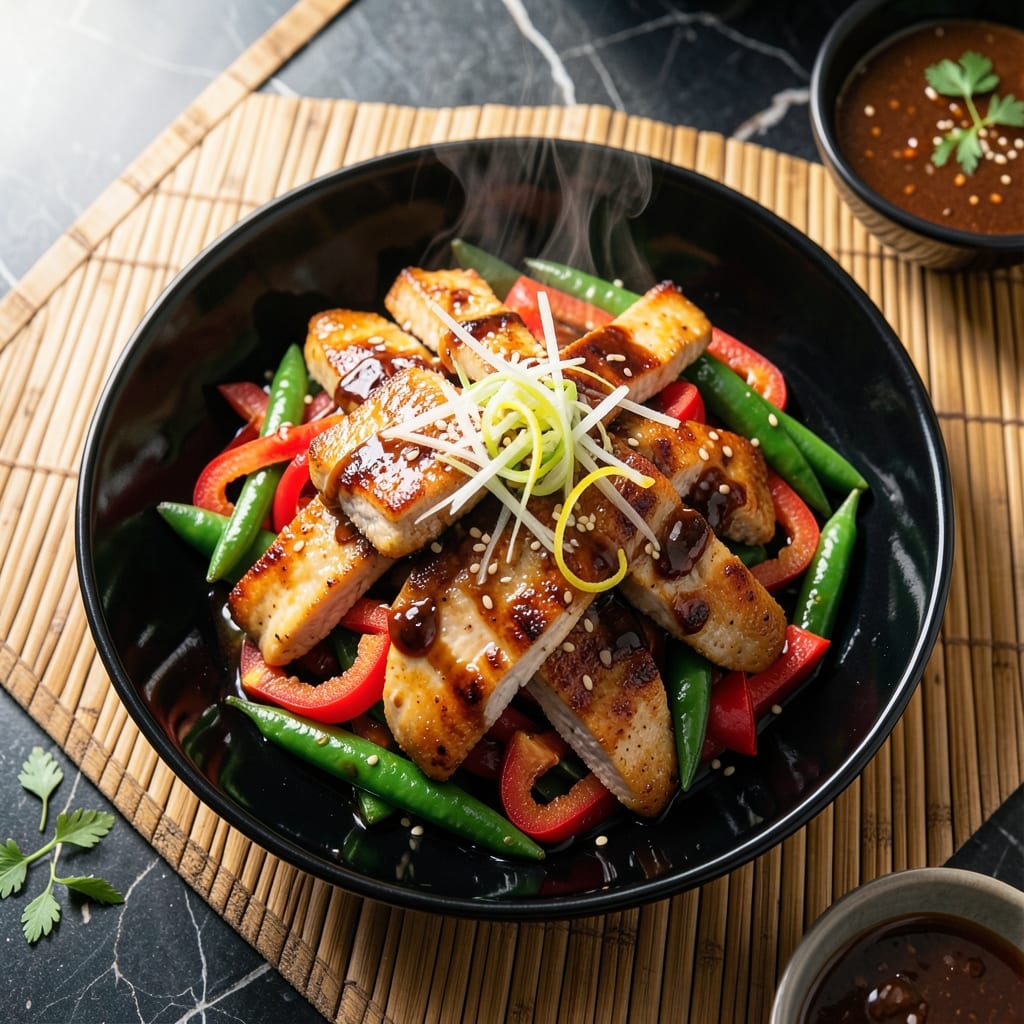
There’s a reason the wok remains the gold standard for stir fry—its high, sloping sides and quick heat distribution create perfectly seared chicken and crisp-tender vegetables every time.
This method delivers restaurant-quality results at home with simple ingredients and a foolproof technique. The key is prepping everything before you start cooking, as stir fry moves fast once the wok gets hot.
You’ll achieve chicken that’s juicy inside with caramelized edges, vegetables that retain their bright color and snap, all coated in a glossy, umami-rich sauce. The wok’s design ensures even cooking without steaming your ingredients.
Serve immediately over steamed rice to soak up every drop of that savory sauce. Here’s how to master this classic dish.
Ingredients for Chicken Stir Fry Wok
High-heat cooking requires prepped ingredients and a well-seasoned wok for best results every time.
| Ingredient | Amount | Notes |
|---|---|---|
| Boneless Skinless Chicken Breast 🍗 | 1 ½ lb | Cut into thin strips |
| Soy Sauce 🫙 | ⅓ cup | Low-sodium preferred |
| Oyster Sauce 🫙 | 2 tbsp | For umami depth |
| Sesame Oil 🫒 | 1 tbsp | Toasted variety for aroma |
| Rice Vinegar 🍶 | 1 tbsp | Balances sweet and salty |
| Brown Sugar 🍚 | 1 tbsp | Light or dark acceptable |
| Garlic Cloves 🧄 | 4 cloves | Minced finely |
| Fresh Ginger 🌿 | 1 tbsp | Peeled and grated |
| Red Bell Pepper 🌶️ | 1 whole | Thinly sliced |
| Broccoli Florets 🥦 | 2 cups | Fresh or frozen works |
| Carrots 🥕 | 2 whole | Julienned for even cooking |
| Green Onions 🧅 | 3 whole | Sliced on diagonal |
| Neutral Cooking Oil 🫒 | 3 tbsp | High smoke point required |
| Cornstarch 🌾 | 1 tbsp | For sauce thickening |
| Red Pepper Flakes 🌶️ | ½ tsp | Adjust to spice preference |
[recipe_ingredient_scaler]
The chicken quality is paramount. Air-chilled, hormone-free breasts from Whole Foods or Trader Joe’s yield the most tender, juicy results. Avoid pre-cut strips—they dry out faster. For vegetables, organic bell peppers and fresh broccoli crowns provide superior texture and color. The ginger should be firm with smooth skin; old ginger develops fibrous strings that are unpleasant to eat.
No oyster sauce? Vegetarian stir-fry sauce works in a pinch, though the flavor profile differs. Tamari for soy sauce at a 1:1 ratio maintains the umami balance. Fresh ginger is non-negotiable, but ground ginger at one-third the amount can substitute. For heat, Sriracha or gochujang offers complexity beyond red pepper flakes. The cornstarch slurry can use potato starch if that’s what’s in your pantry.
Prepped ingredients stay fresh in the fridge for 24 hours before cooking. Cooked stir fry keeps 3-4 days in airtight containers, though vegetables soften over time. For meal prep, undercook the veggies slightly—they’ll finish in the microwave. Always reheat with a splash of water to revive the sauce’s glossy texture.
Why You’ll Love This Recipe
- One Pan Wonder: I toss everything in the wok and it’s done in 15 minutes—no extra pots, no fuss.
- Umami Bomb: The mix of soy, oyster sauce, and sesame oil hits that deep, savory note I crave every time.
- Meal Prep Hero: I make a big batch on Sunday and it tastes even better reheated for lunch all week.
- Budget Friendly: Boneless chicken breast and a few pantry staples feed my family without breaking the bank.
Step-by-Step Instructions for Chicken Stir Fry
Master the wok technique with precise timing and layering for restaurant-quality results.
Step 1: Velvet the Chicken for Maximum Tenderness
Cut the 1.5 lb Boneless Skinless Chicken Breast into ¼-inch thick strips against the grain for tenderness. In a bowl, combine the chicken with 1 tbsp Cornstarch, 1 tbsp Soy Sauce, and 1 tbsp Sesame Oil. Mix thoroughly to coat each piece evenly.
This velveting process ensures the chicken remains juicy and tender during the high-heat cooking. Let it marinate for 15 minutes at room temperature while you prepare the remaining ingredients. The cornstarch creates a protective layer that locks in moisture and promotes browning.
Step 2: Prepare the Sauce and Vegetables
In a small bowl, whisk together the remaining 0.33 cup Soy Sauce, 2 tbsp Oyster Sauce, 1 tbsp Rice Vinegar, 1 tbsp Brown Sugar, and 0.5 tsp Red Pepper Flakes until the sugar dissolves completely. Set aside.
Thinly slice the 1 whole Red Bell Pepper into strips, julienne the 2 whole Carrots, and slice the 3 whole Green Onions on a diagonal. Mince the 4 cloves Garlic Cloves and grate the 1 tbsp Fresh Ginger. Keep all vegetables separated by type for sequential cooking.
Step 3: Stir-Fry in Batches for Optimal Texture
Heat 1 tbsp Neutral Cooking Oil in a wok or large skillet over high heat until shimmering. Add half the chicken in a single layer and sear undisturbed for 1-2 minutes until the edges turn opaque and lightly browned. Stir-fry for another 30 seconds until just cooked through. Remove and repeat with remaining chicken and oil.
This batch cooking prevents steaming and ensures each piece develops a proper sear. The chicken should be 95% cooked at this stage—it will finish in the final step. Wipe the wok clean between batches to prevent burning.
Step 4: Cook Vegetables and Combine with Sauce
Add the remaining 1 tbsp Neutral Cooking Oil to the wok over high heat. Stir-fry the 4 cloves Garlic Cloves and 1 tbsp Fresh Ginger for 15 seconds until fragrant. Add the 2 whole Carrots and cook for 1 minute, then add the 1 whole Red Bell Pepper and 2 cups Broccoli Florets.
Stir-fry for 2-3 minutes until the vegetables are crisp-tender but still vibrant. Return all chicken to the wok, pour in the sauce, and toss continuously for 1-2 minutes until everything is glossy and the chicken is fully cooked. The sauce should cling lightly to each piece.
Step 5: Finish and Serve Immediately
Remove from heat and stir in the 3 whole Green Onions. The residual heat will soften them slightly while maintaining their bright color and crisp texture. Taste and adjust seasoning if needed, though the sauce should be perfectly balanced.
Serve immediately over steamed rice while the stir-fry is at its peak—vegetables still crisp, chicken tender, and sauce glossy. The contrast of textures and the layered flavors of the sauce will be most pronounced when freshly cooked.
Pro Tips For Making Chicken Stir Fry Wok
- Velocity Slicing: Cut the chicken breast into uniform, thin strips—about ¼-inch thick and 2 inches long. This ensures quick, even cooking over high heat without drying out the meat.
- Blistering Heat: Get your wok screaming hot before adding oil. I learned this the hard way—medium heat just steams the chicken instead of searing it.
- Marinate Briefly: Toss the chicken with 1 tablespoon soy sauce and 1 teaspoon rice vinegar for 10 minutes before cooking. It adds flavor without making the meat mushy.
- Skip the Overcrowding: Cook the chicken in two batches if needed. Sounds tedious, but it prevents the wok from cooling down and turning your stir fry into a sad, soggy mess.
Common Mistakes When Making Great chicken stir fry wok
Overcrowding the Wok
This is the most common mistake I see with stir fry. Adding too much chicken or vegetables at once lowers the wok’s temperature, causing your ingredients to steam instead of sear. Cook in 2-3 batches for that perfect caramelization. 🔥
Underprepared Ingredients
Stir fry moves fast—you won’t have time to chop while cooking. I always prep all ingredients before heating the wok. Have your garlic minced, ginger grated, and vegetables sliced into uniform pieces. This ensures even cooking and prevents burning.
Skipping the Velveting Step
The cornstarch coating on chicken isn’t optional. Without it, your chicken will likely dry out during high-heat cooking. I mix 1 tbsp cornstarch with the marinade for tender, juicy results every time. The protective layer also helps create that restaurant-style texture.
Using the Wrong Oil
Not all oils can handle wok temperatures. I recommend peanut or avocado oil for their high smoke points (around 450°F). Save your extra virgin olive oil for dressings—it’ll burn and create bitter flavors in your stir fry.
Sauce Too Thick or Thin
Your sauce should coat the back of a spoon but still flow easily. I always make a cornstarch slurry (equal parts cornstarch and water) to thicken the sauce at the end. Add it gradually—you can always add more, but you can’t take it out.
Overcooking Vegetables
The secret to crisp-tender veggies is quick cooking over high heat. I add the heartier vegetables first (carrots), then the softer ones (bell peppers) last. They should retain their bright color and slight crunch when done. 💡
Nutrition Facts
Frequently Asked Questions
Should I use chicken thighs instead of breasts?
Thighs work great and stay juicier! Use 1.5 lb boneless skinless thighs, trim excess fat, and slice thinly. They handle high heat better than breasts but may need 30 seconds extra cooking.
What if I don’t own a wok?
A large, deep skillet with sloped sides works fine. Use high heat and cook in batches to avoid steaming. Cast iron retains heat well but may require more oil.
How do I make it gluten-free?
Swap regular soy sauce for tamari and ensure oyster sauce is gluten-free. Check labels on all sauces. Cornstarch is naturally gluten-free.
Can I add other vegetables?
Try snap peas, mushrooms, or baby corn. Add denser veggies first, delicate ones last. Keep pieces uniform for even cooking.

Trained in classic French technique but raised on slow-cooked ribs and spicy rubs, she blends culinary skill with smoke and soul.
- Recipe for Boneless Pork Chops in Cast Iron Skillet: Sear and Baste to Juicy Perfection - October 3, 2026
- Recipe for Boneless Cross Rib Roast: Slow-Roasted Beef with Herb Crust - October 3, 2026
- Hamburgers in Sauce Recipe Crock Pot: Slow-Cooked Savory Delight - October 3, 2026