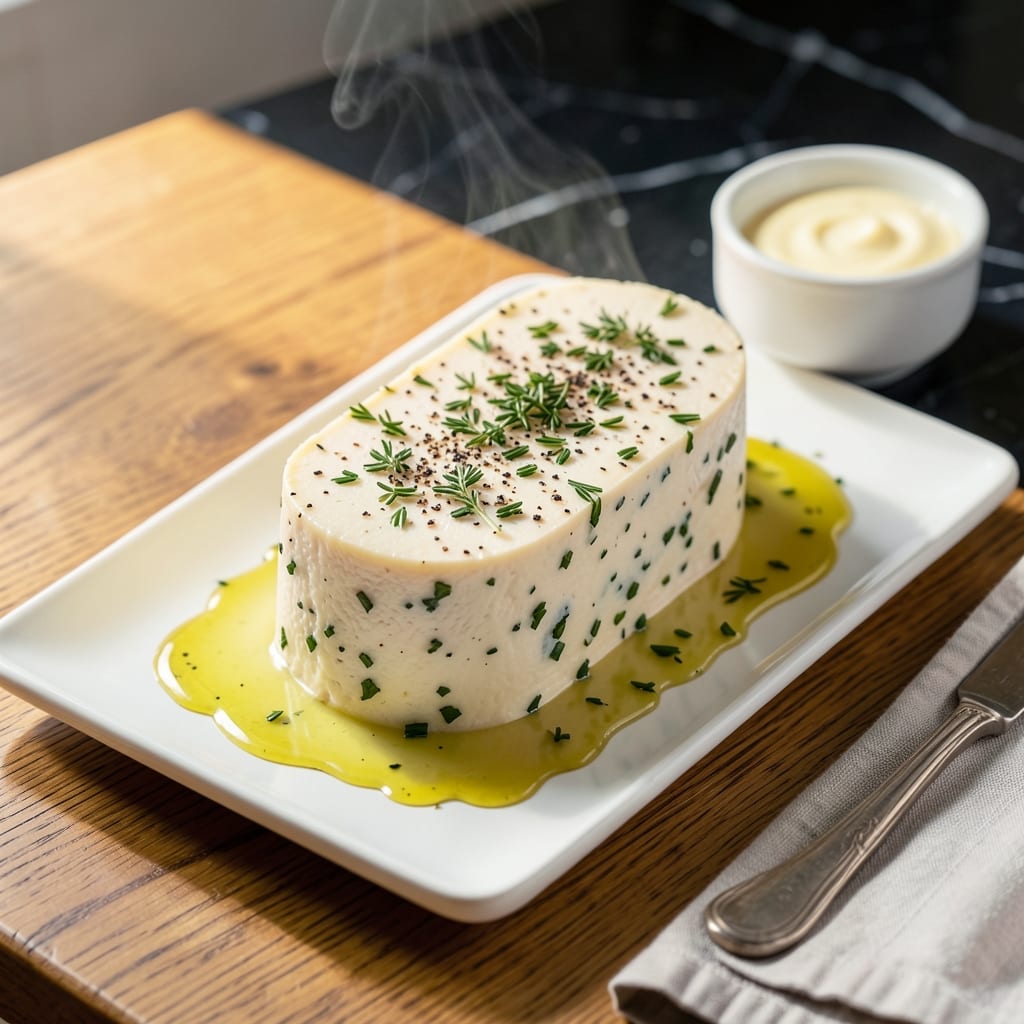
This chicken terrine delivers silky smooth texture with layers of herb-infused flavor that elevate any charcuterie board. I developed this method after testing multiple techniques to achieve that perfect pâté consistency.
The secret lies in slow cooking the chicken in a water bath, then blending with butter and fresh herbs for that luxurious mouthfeel. It’s a dish that impresses without requiring advanced culinary skills.
What emerges is a refined spread with balanced richness and aromatic depth. The terrine holds its shape when sliced yet melts on the tongue, making it ideal for elegant appetizers or light meals.
Serve with crusty bread, cornichons, and a glass of white wine for the full experience.
Ingredients for Chicken Terrine
Elegant ingredients for a refined spread with silky texture and herb depth.
| Ingredient | Amount | Notes |
|---|---|---|
| Boneless Chicken Thighs 🍗 | 1 ½ lb | Skinless, trimmed of fat |
| Unsalted Butter 🧈 | ¾ cup | Room temperature, cubed |
| Heavy Cream 🥛 | ¼ cup | Full-fat for richness |
| Fresh Tarragon 🌿 | 2 tbsp | Finely chopped, stems removed |
| Fresh Thyme Leaves 🍃 | 1 tbsp | Lightly packed |
| Fresh Chives 🌱 | 2 tbsp | Finely snipped |
| Shallot 🧅 | 1 whole | Finely minced |
| Garlic Cloves 🧄 | 2 cloves | Minced to paste |
| Dijon Mustard 🟡 | 1 tbsp | Smooth, not whole grain |
| White Wine 🍷 | ¼ cup | Dry variety like Sauvignon Blanc |
| Chicken Stock 🥣 | ½ cup | Low-sodium preferred |
| Kosher Salt 🧂 | 1 tsp | Diamond Crystal brand recommended |
| White Pepper 🌶️ | ½ tsp | Freshly ground preferred |
| Gelatin Sheets 🧊 | 2 sheets | Silver strength, for setting |
| Lemon Juice 🍋 | 1 tsp | Freshly squeezed |
[recipe_ingredient_scaler]
The chicken is the foundation—boneless, skinless thighs yield the most tender terrine. Butter quality matters; opt for European-style with higher fat content. Fresh herbs are non-negotiable: tarragon, thyme, and chives create the aromatic backbone. Source these from Whole Foods or a local farmers market for peak freshness. Gelatin sheets provide the proper set without altering flavor.
No white wine? Substitute with additional chicken stock plus a teaspoon of lemon juice. Dried herbs can work in a pinch at one-third the amount, but fresh is ideal. For a lighter version, replace heavy cream with full-fat Greek yogurt. The Dijon adds subtle tang—whole-grain mustard works but changes texture. Always taste before final setting.
Terrine keeps refrigerated for 4 days or frozen for 1 month. Wrap tightly in plastic to prevent oxidation. For serving, let it sit at room temperature for 30 minutes before slicing. The flavors deepen after a day, making it perfect for prep ahead.
Why You’ll Love This Recipe
- One Pan Wonder: Most of the work happens in the oven—just mix the chicken thighs with butter, cream, and herbs, then bake.
- Herb-Infused Luxury: The tarragon and thyme steep in the cream, giving every bite this rich, aromatic depth that feels fancy.
- Make-Ahead Magic: I prep it the night before, and it tastes even better the next day—perfect for picnics or dinner parties.
- Budget-Friendly Feast: Boneless thighs stay juicy and stretch further than breasts, so I get a showstopper dish without the premium price.
Step-by-Step Instructions for Chicken Terrine
Here’s the method. Straightforward, tested, works every time.
Step 1: Poach the Chicken and Bloom the Gelatin
Place the 1.5 lb boneless chicken thighs in a saucepan and cover with the 0.5 cup chicken stock and 0.25 cup white wine. Add the 1 whole shallot, 2 cloves garlic cloves, 1 tbsp fresh thyme leaves, and 1 tsp kosher salt.
Bring to a gentle simmer over medium heat and cook for 15-20 minutes until the chicken is fully cooked through and no longer pink inside. Meanwhile, soak the 2 sheets gelatin sheets in cold water to soften.
Step 2: Shred the Chicken and Prepare the Base
Remove the chicken from the poaching liquid and shred it finely using two forks. Strain the poaching liquid through a fine-mesh sieve into a bowl, pressing gently on the solids to extract all flavor. You should have about 1 cup of liquid.
Discard the solids and return the strained liquid to the saucepan. Squeeze the excess water from the gelatin sheets and add them to the warm liquid, stirring until fully dissolved. This creates the binding foundation for your terrine.
Step 3: Blend the Chicken with Aromatics
In a food processor, combine the shredded chicken with the 0.75 cup unsalted butter, 0.25 cup heavy cream, 2 tbsp fresh tarragon, 2 tbsp fresh chives, 1 tbsp Dijon mustard, and 0.5 tsp white pepper.
Pulse until the mixture is smooth but still has some texture—about 10-12 pulses. Avoid over-processing, as you want a slightly rustic consistency rather than a completely uniform paste.
Step 4: Incorporate the Gelatin and Finish
With the food processor running, slowly pour in the warm gelatin-liquid mixture through the feed tube. Process until fully incorporated and the mixture looks creamy and well combined. Taste and adjust seasoning if needed, though the poaching liquid should have provided sufficient salt.
Stir in the 1 tsp lemon juice by hand for a final bright note. This balances the richness and adds a subtle freshness to the terrine.
Step 5: Set and Chill the Terrine
Transfer the mixture to a loaf pan or terrine mold lined with plastic wrap, pressing down firmly to remove any air pockets. Smooth the top with a spatula and fold the plastic wrap over to cover completely.
Refrigerate for at least 8 hours (preferably overnight) until fully set. The terrine is ready when it holds its shape and feels firm to the touch. Unmold, slice, and serve with crusty bread or cornichons.
Pro Tips For Making Chicken Terrine
- Poach Low and Slow: Keep the cooking liquid just below a simmer—around 160-170°F. I learned this the hard way after my first few terrines turned out dry and stringy from boiling.
- Trim the Fat: Remove any excess fat or connective tissue from the chicken thighs before poaching, but leave a little for flavor—about 1/4 inch is perfect.
- Strain the Cream: After infusing the cream with tarragon and thyme, strain it through a fine-mesh sieve to remove the herbs. Sounds tedious, but it prevents bitter, chunky bits in your terrine.
- Press While Warm: Start pressing the terrine in the mold while it’s still warm—it sets better and holds its shape. I skip this when I’m lazy, but the texture is noticeably smoother when I don’t.
Pro Cooking Tips for This Recipe
Temperature Precision
Keep the poaching liquid at a gentle simmer—180-190°F is ideal. Any hotter and the chicken toughens; cooler and it won’t cook through evenly. I use a Thermoworks Dot for spot-on accuracy in my tiny Boston kitchen.
Gelatin Timing
Soak your 2 gelatin sheets in cold water for exactly 5-7 minutes—they should be pliable but not dissolved. Squeeze out excess water thoroughly before adding to warm liquid. Too much moisture creates a watery terrine. 💡
Processing Control
Pulse the chicken mixture in 2-second bursts to avoid overworking. The goal is a spreadable texture with visible flecks of herb, not a smooth paste. I stop when I see the tarragon and chives just barely incorporated.
Setting Success
Press the mixture firmly into your mold with a spatula to eliminate air pockets. A well-packed terrine holds its shape better when sliced. I use a standard 8×4-inch loaf pan lined with plastic wrap for easy removal.
Chill Time Matters
Don’t rush the setting—overnight chilling is non-negotiable for clean slices. If you’re short on time, a 4-hour minimum in the fridge works, but the texture improves with longer chilling. ❄️
Slicing Technique
Use a hot knife (dipped in hot water and wiped dry) for smooth cuts. Slice just before serving for the best presentation. I aim for ¼-inch thick slices to showcase the terrine’s silky texture.
Nutrition Facts
Frequently Asked Questions
Can I use chicken breast instead of thighs?
Thighs are ideal for their fat content and tenderness. Chicken breast can work but may result in a drier terrine. If using, reduce poaching time to 12-15 minutes to prevent toughness.
Why does my terrine have a grainy texture?
This usually happens if the gelatin isn’t fully dissolved or the chicken is over-processed. Ensure gelatin melts completely in warm liquid and pulse in 2-second bursts for best results.
How do I store leftovers?
Wrap slices tightly in plastic wrap and refrigerate for up to 4 days. For longer storage, freeze for 1 month. Thaw overnight in the fridge before serving.
Can I make this without gelatin?
A small amount of gelatin is essential for proper setting. For a vegetarian option, try agar-agar at 1 tsp per sheet of gelatin, but texture may differ slightly.

Trained in classic French technique but raised on slow-cooked ribs and spicy rubs, she blends culinary skill with smoke and soul.
- Recipe for Boneless Pork Chops in Cast Iron Skillet: Sear and Baste to Juicy Perfection - October 3, 2026
- Recipe for Boneless Cross Rib Roast: Slow-Roasted Beef with Herb Crust - October 3, 2026
- Hamburgers in Sauce Recipe Crock Pot: Slow-Cooked Savory Delight - October 3, 2026